3 Months Old Baby Milestone: What to Track
You've just watched another baby on social media lift their head, grin at the camera, and make a stream of cheerful sounds. Meanwhile, your baby had a short tummy-time attempt, stared at the ceiling, and fell asleep before producing a single coo. Searching for a 3 months old baby milestone can make an ordinary day feel like an examination you didn't study for.
Your baby's development is easier to understand when you look for patterns over time, not proof of a perfect skill on one particular day. Around this age, movement, attention, and communication often become easier to notice, but babies don't all show them in the same order or with the same confidence.
Table of Contents
- Rethinking the Three Month Checkpoint
- Physical and Social Skills Emerging Now
- Understanding Normal Developmental Variability
- Tracking Patterns Across Caregivers and Environments
- Simple Ways to Encourage Daily Development
- When to Consult Your Pediatrician
Rethinking the Three Month Checkpoint
At the morning handoff, one caregiver may report a bright, chatty baby, while another remembers a sleepy, unsettled day. Both observations can be accurate. A three-month-old's responses change with hunger, rest, stimulation, and the person providing care, so a single moment gives only a small part of the picture.
Pediatric milestone guidance describes early development as a window of commonly observed skills, not a birthday deadline. The CDC explains that its checklists focus on abilities that most babies, defined as at least 75%, can show by the target age. Relevant skills sit within the 2- to 4-month window, making three months a useful point for observation instead of a scored exam. You can read the CDC's infant milestone booklet for the wider context.
Look for a direction of change
Ask questions that reveal a pattern:
- What's becoming easier? Does your baby hold their head steadier than before?
- What's appearing more often? Are smiles, eye contact, or vocal sounds showing up more frequently?
- What helps? Does your baby engage after a nap, during a diaper change, or with a familiar caregiver?
- What varies by setting? Is your baby different at home, with a nanny, or after daycare?
A shared tracker can make these details easier to compare. Each caregiver can briefly record what happened, the setting, and what seemed to help. Over several days, those notes work like separate pieces of a map. They can show that your baby participates more after sleep, needs quieter surroundings, or is beginning to repeat a new behavior.
A baby who lifts their head briefly today and stays engaged a little longer next week is showing a meaningful direction of change. The skill may still look inconsistent while control develops.
A practical rule: One quiet day does not erase a week of progress.
Social media presents polished moments and leaves out the attempts beforehand. Your baby does not need to perform for a camera. You also do not need a packed activity schedule. Warm responses, ordinary care, and clear notes shared among caregivers give you a more useful view of development.
Physical and Social Skills Emerging Now
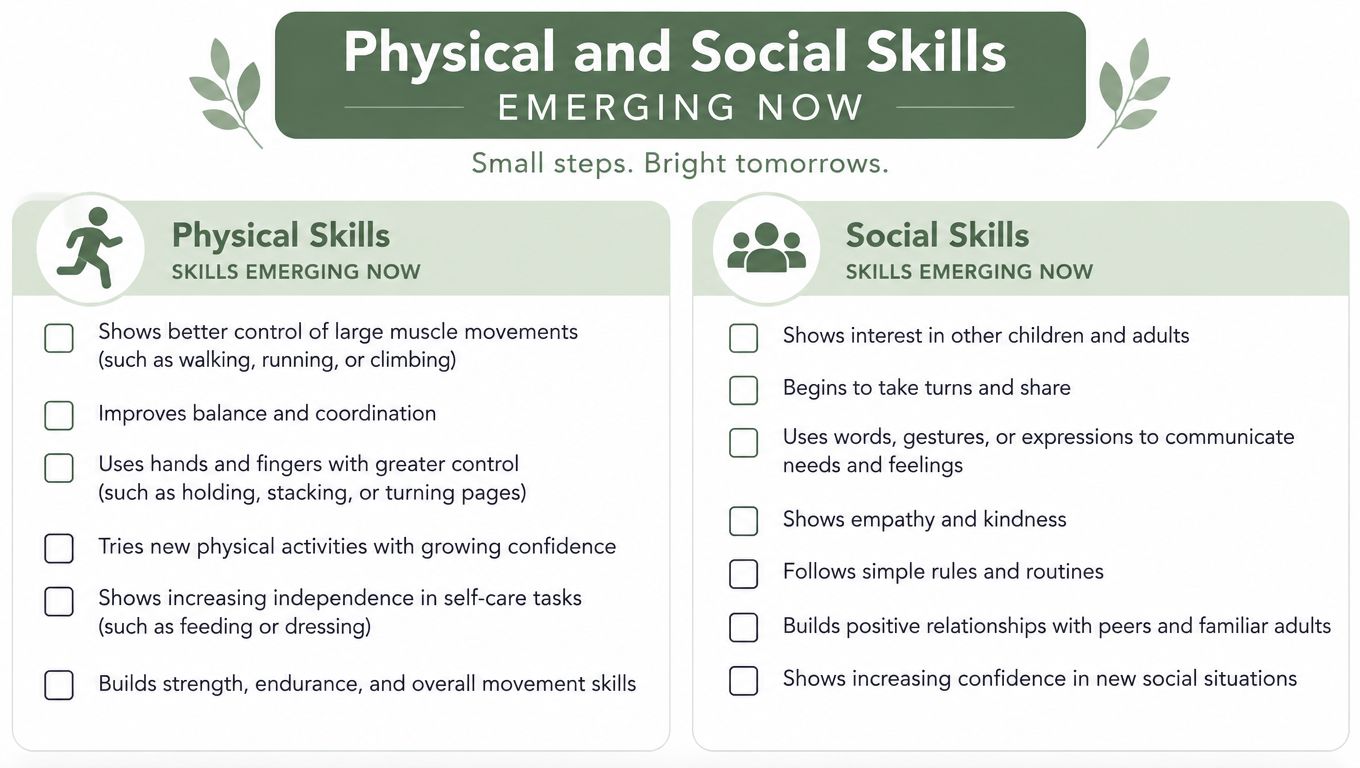
At this age, development often shows up during ordinary care. You may notice a steadier head during a cuddle, more active movement on the floor, or a baby who pauses to listen when you speak. These small changes reflect growing control of the neck, arms, eyes, and social attention.
Notice movement during floor play
During supervised tummy time, many babies begin lifting the head and chest and supporting themselves with their forearms. Some can hold their head steadier when supported upright. Guidance on three-month head and neck development describes this as one of the clearest physical changes to watch because it shows improving neck and upper-body strength.
You might also see your baby open and shut their hands, bring their hands to their mouth, kick their legs, or swipe toward something nearby. Reaching may look accidental at first. Your baby is learning to connect what their eyes notice with what their arms can do, so a missed reach still counts as useful practice.
If tummy time is difficult, use short, comfortable opportunities rather than treating it as a test. Your chest, lap, or a clean floor can offer different levels of support. You can also read this guide to tummy-time milestones for ideas that fit into regular play.
Listen for social responses
Social development often becomes more obvious through interaction. Your baby may smile back at a familiar person, look toward a voice, or make a soft coo or gurgle during face-to-face play. They may follow your face as you move across the room or watch a nearby object move from one side to another.
These behaviors are early signs of growing social engagement and communication. The Mayo Clinic's infant development guidance describes eye contact, responses to sounds, and emerging coordination between the hands and eyes as important observations around this period.
Try speaking during a diaper change and pausing afterward. Your baby may answer with a sound, a change in expression, a kick, or notably closer attention. All of these responses give you information about how your baby is participating in the exchange.
Understanding Normal Developmental Variability
Two babies can be the same age and have noticeably different strengths. One may make strong eye contact and coo often but tire quickly during tummy time. Another may lift their head confidently while remaining quiet and more reserved during conversation. Mixed development across areas is common, and a single uneven skill pattern doesn't explain the whole child.
Milestone checklists are useful because they give families and clinicians shared language. They don't usually describe the full range of normal timing, the effect of a difficult day, or how one skill can support another. That's why it's more helpful to record what your baby is gradually attempting than to label them based on one missed behavior.
Progress matters more than performance
Consider these examples:
- A baby who lifts their head for a moment, rests, and tries again is showing an emerging skill.
- A baby who dislikes floor tummy time but lifts their head while lying on a caregiver's chest may need a different opportunity to practice.
- A baby who watches faces closely but hasn't started making many sounds may be developing social attention before vocal communication.
- A baby who smiles more with one caregiver may just be responding to that person's voice, timing, or style of interaction.
Prematurity can affect how parents interpret timing, and feeding challenges or limited tummy-time opportunities can also influence what a baby gets to practice. Those factors don't automatically indicate a problem, but they're useful context to share with a pediatrician. If growth, feeding, or development is worrying you, bring the question to a pediatrician or lactation professional rather than trying to diagnose the cause yourself.
Development isn't a staircase where every baby takes the same step on the same day. It's closer to several paths that gradually become more connected.
A growth spurt can also change sleep, feeding, and alertness, which may make a previously engaging baby seem less predictable for a while. You can use this overview of three-month growth-spurt symptoms as a prompt for what to observe, not as a tool for deciding whether something is medically wrong.
Keep notes in neutral language. “Lifted head during chest-to-chest play and tracked Dad's face” is more useful than “failed tummy time.” Neutral notes help you see change without turning care into a daily judgment.
Tracking Patterns Across Caregivers and Environments
A one-time milestone check can miss what happens during the rest of the day. Your baby may coo during a morning conversation with a partner, sleep differently after daycare, or show stronger head control when a grandparent holds them upright. Those differences can reflect timing, comfort, hunger, stimulation, and the person's way of playing.
At three months, daily routines can reveal more than a single observation. Track the surrounding conditions as well as the behavior:
| Observation | Helpful context |
|---|---|
| Your baby lifted their head | Note whether they were on the floor, your chest, or in supported upright play |
| Your baby made new sounds | Record who was talking and whether your baby was rested or feeding |
| Your baby followed a face | Note the distance, lighting, and whether the room was quiet |
| Your baby seemed less engaged | Check whether this followed a nap change, busy outing, or difficult feed |
This isn't about collecting data for its own sake. It helps caregivers compare observations without arguing over whose memory is correct. A nanny can record a short period of alert play, a daycare caregiver can note a new sound, and a parent can see the same timeline at home.

Give every caregiver the same language
A shared record works best when everyone uses simple descriptions. “Tracked the rattle from left to right” is clearer than “seemed more alert.” “Cooed during the morning bottle” gives another caregiver something specific to look for without creating pressure to repeat it.
A shared tracker such as Cradlo can place milestone observations beside sleep, feeds, diapers, pumping, and other care notes. Parents, partners, grandparents, nannies, and daycare staff can contribute through separate identities, which avoids shared logins and keeps routine information in one timeline. A baby daily log template can help families decide which observations are worth recording.
You don't need to log every smile or movement. Choose a few recurring details, then review them across several days. Patterns can reduce anxiety because they show the difference between “not yet,” “sometimes,” and “wasn't interested today.”
For Spanish-speaking families, shared notes can also make handoffs easier when relatives or caregivers use different languages. Clear descriptions, familiar routine labels, and consistent names for activities help everyone contribute to the same picture of the baby's day.
Simple Ways to Encourage Daily Development
Your home doesn't need to resemble a therapy room. Babies build skills through responsive care, free movement, and repeated interaction during routines you're already doing.
Use ordinary moments as practice
Place your baby on your chest while you're awake and present, then talk softly. Your face gives them a reason to lift their head and look, while your voice supports early back-and-forth communication. If they fuss, pause and comfort them. Encouragement works better when it follows the baby's cues.
During floor play, lie nearby so your face becomes an inviting target. Move a safe object slowly enough for your baby to follow it with their eyes, then stop and give them time to respond. You don't need to keep the activity going if your baby turns away, yawns, or becomes upset.
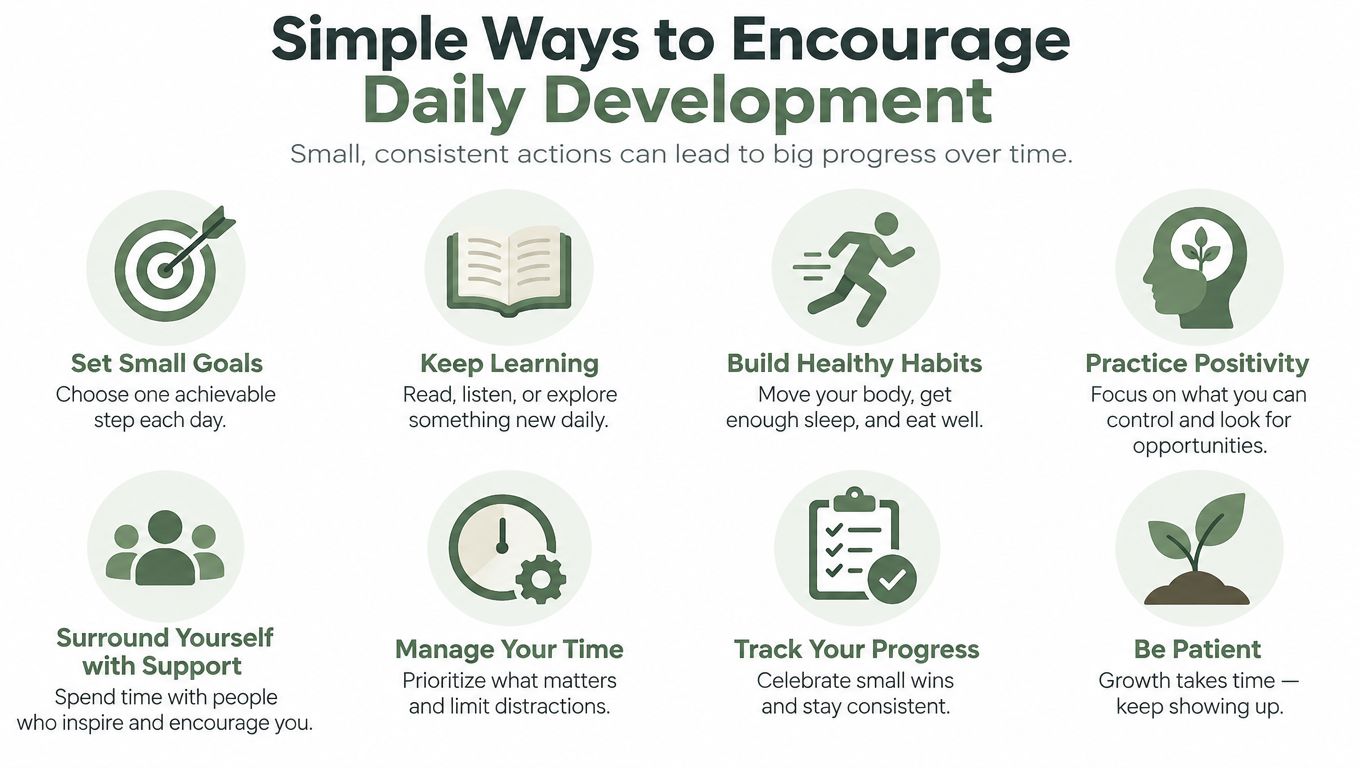
Try these low-pressure approaches:
- Talk during care: Describe the diaper change, name the caregiver, or answer your baby's sounds with a pause.
- Offer face time: Hold your baby close enough for comfortable eye contact and vary your expression naturally.
- Make space for movement: Give your baby supervised floor time so their arms and legs can move without being held in one position.
- Repeat familiar songs: A repeated tune can make interaction predictable for babies and easy for any caregiver to use.
- Follow interest: If your baby watches their hands, let them look. If they turn toward a voice, keep speaking from that direction.
- Keep tummy time flexible: Try it after a rest, during play, or against your chest. Stop when your baby needs a break.
- Share the routine: Ask a partner, grandparent, nanny, or daycare caregiver to use the same simple play ideas.
- Protect quiet time: Babies learn through rest and observation too. A calm pause isn't a missed opportunity.
The purpose is connection, not completion. A few responsive minutes can be meaningful even when the rest of the day includes feeding difficulties, chores, commuting, or a baby who wants to be held.
Feeding questions deserve individual guidance. If you're unsure about hunger cues, milk supply, pumping, formula, or your baby's intake, speak with your pediatrician or a lactation professional rather than changing feeding practices based on a milestone article.
When to Consult Your Pediatrician
Call your pediatrician whenever you have concerns about your baby's development, movement, hearing, vision, feeding, or overall behavior. You do not need to wait for a skill to disappear completely or prove that the concern is serious. A clear observation, such as “I'm seeing less head lifting than before,” gives the clinician a useful place to begin.
A shared tracker can bring together what different caregivers notice. Record whether a behavior appears during chest-to-chest play, floor time, or supported holding, and whether it changes after sleep or feeding. One note saying “not meeting milestones” offers less context than a pattern collected across home, childcare, and different times of day.
Use specific observations
Before the appointment, note:
- What you noticed: Describe the movement, sound, eye contact, or response in plain language.
- When it happened: Record whether it occurred once, occasionally, or repeatedly over several days.
- What preceded it: Include sleep, feeding, and caregiver context without guessing at the cause.
- What changed: Mention new progress, a loss of a previously seen ability, or a pattern that remains unchanged.
- What you want to know: Ask whether the observation fits your baby's overall development and whether follow-up is appropriate.
The CDC's milestone materials support conversations and early action, but they do not replace clinical judgment. The CDC's recommended developmental screening schedule includes formal screening at 9, 18, and 30 months, with autism screening at 18 and 24 months. The three-month period is therefore best used as an early observational baseline. You can review the broader schedule in the CDC milestone guidance and discuss questions with your pediatrician.
Your pediatrician can interpret the pattern alongside your baby's history and circumstances. Your role is to notice, record, and ask for help when something concerns you. You do not need to diagnose the cause.
Cradlo keeps milestones alongside feeds, sleep, diapers, pumping, and daily care, giving parents, partners, grandparents, nannies, and daycare caregivers one current record. Start the 7-day free trial on the monthly plan, then use Cradlo to bring day-to-day observations to your baby's next pediatrician visit.