5 Week Old Schedule: Calm, Realistic Daily Rhythm
You're probably reading this between feeds, diaper changes, and a cup of coffee that went cold an hour ago. One day your five-week-old seems to eat, sleep, and wake in a recognizable pattern. The next day, feeds bunch together, naps last just long enough to frustrate everyone, and nighttime feels nothing like the night before.
A 5 week old schedule isn't a timetable you've failed to follow. It's a living rhythm shaped by hunger cues, growth, immature sleep, and the practical reality of shared care. The useful question isn't “What time should the baby do this?” It's “What happened last, what is the baby showing us now, and what does the next caregiver need to know?”
Table of Contents
- Why a 5 week old schedule feels impossible until it clicks
- Responsive feeding over rigid timing
- Sample wake windows and daily rhythms
- Troubleshooting common schedule disruptions
- Syncing the schedule across caregivers
- When to adjust the plan and consult a professional
- Building a calm daily rhythm that actually fits your family
Why a 5 week old schedule feels impossible until it clicks
The last bottle may be unclear, the wet diaper may be forgotten, and the baby may root again minutes after feeding. At five weeks, this kind of handoff confusion is common. It reflects a young baby's changing needs and several caregivers trying to interpret the same few hours.
Newborns respond to hunger, tiredness, stimulation, and contact rather than following the wall clock. The NHS advises offering feeds when newborns show hunger cues and explains that their sleep often comes in short periods across day and night, so exact timing rarely fits every family NHS guidance for new parents.

A workable definition of success: The baby is offered feeds responsively, sleep is attempted safely, and caregivers can understand the last few hours without interrogating one another.
A late start, a short nap, or several evening feeds can still belong to a workable day. The same approach can support breastfeeding, pumping, formula feeding, or combination feeding because it follows the baby's signals while giving caregivers a shared reference point.
Growth spurts may temporarily increase feeding and disrupt sleep. Understanding newborn growth spurts can make those changes easier to interpret without treating them as a failed routine.
Record two days of sequences side by side. You may see a rough order emerge, such as waking, feeding, brief alert time, a diaper change, and sleep, even when the clock times differ. That record gives the next caregiver something useful to follow: what happened, what changed, and what the baby is showing now.
Responsive feeding over rigid timing
At five weeks, feeding usually drives the rest of the day. Healthy, full-term breastfed babies commonly feed 8–12 times in 24 hours, according to the Centers for Disease Control and Prevention's infant feeding guidance. Many feed every 2–4 hours, while some want milk every 1–3 hours. Formula-fed newborns generally feed 8–12 times per day, and after the first days many feed approximately every 3–4 hours, though individual needs vary.
Evening cluster feeding can make a carefully spaced day appear to fall apart. Several feeds close together may be part of the baby's normal rhythm, not a signal that the previous feed was pointless or that bedtime has been mishandled. One longer 4–5-hour sleep interval may sometimes appear, but it shouldn't become the standard a family tries to force.
The American Academy of Pediatrics also describes breastfed newborns as feeding 8–12 times daily. Its guidance notes that formula intake after the first days is approximately 20 ounces per day, often divided into 2–3-ounce feeds every 2–3 hours, but those figures aren't a reason to pressure a baby to finish a particular amount.
What to observe instead of policing
Diapers and weight trends provide more useful context than one unusually short or long interval. By around day five, a breastfed baby should generally have at least 6 wet diapers and 3 or more bowel movements daily, according to the CDC's infant nutrition guidance. Fewer than 6 wet diapers or fewer than 3 stools can warrant attention, so health questions should go to the baby's pediatrician.
A simple record can include:
- Feed type: Breast, expressed milk, formula, or combination.
- Feed detail: Start time, side or bottle volume when relevant, duration, and whether the feed seemed complete.
- Output: Wet and dirty diaper observations.
- Context: Sleepiness, fussiness, rooting, or an interrupted feed.
The point isn't to create a scorecard. A 24-hour picture helps caregivers and clinicians discuss what's happening without pretending every feed will look the same. A shared record of infant feeding patterns can also reduce the pressure on one caregiver to remember the entire day.
Sample wake windows and daily rhythms
Use wake windows as observation ranges, not deadlines. At this age, some babies become tired soon after feeding, while others manage a short period of quiet alertness before sleep. Watch for early tired signs, such as yawning, staring, turning away, or becoming less settled, and begin the sleep attempt before the baby is overtired.
A practical cycle often looks like this:
- Wake and feed. Hunger cues may appear immediately or after a short settling period.
- Brief alert time. Keep interaction simple, with talking, cuddling, or supervised floor time.
- Diaper change. Do it before sleep if the baby is comfortable, or afterward if the change would fully wake them.
- Sleep attempt. Follow sleepy cues rather than waiting for a scheduled minute.
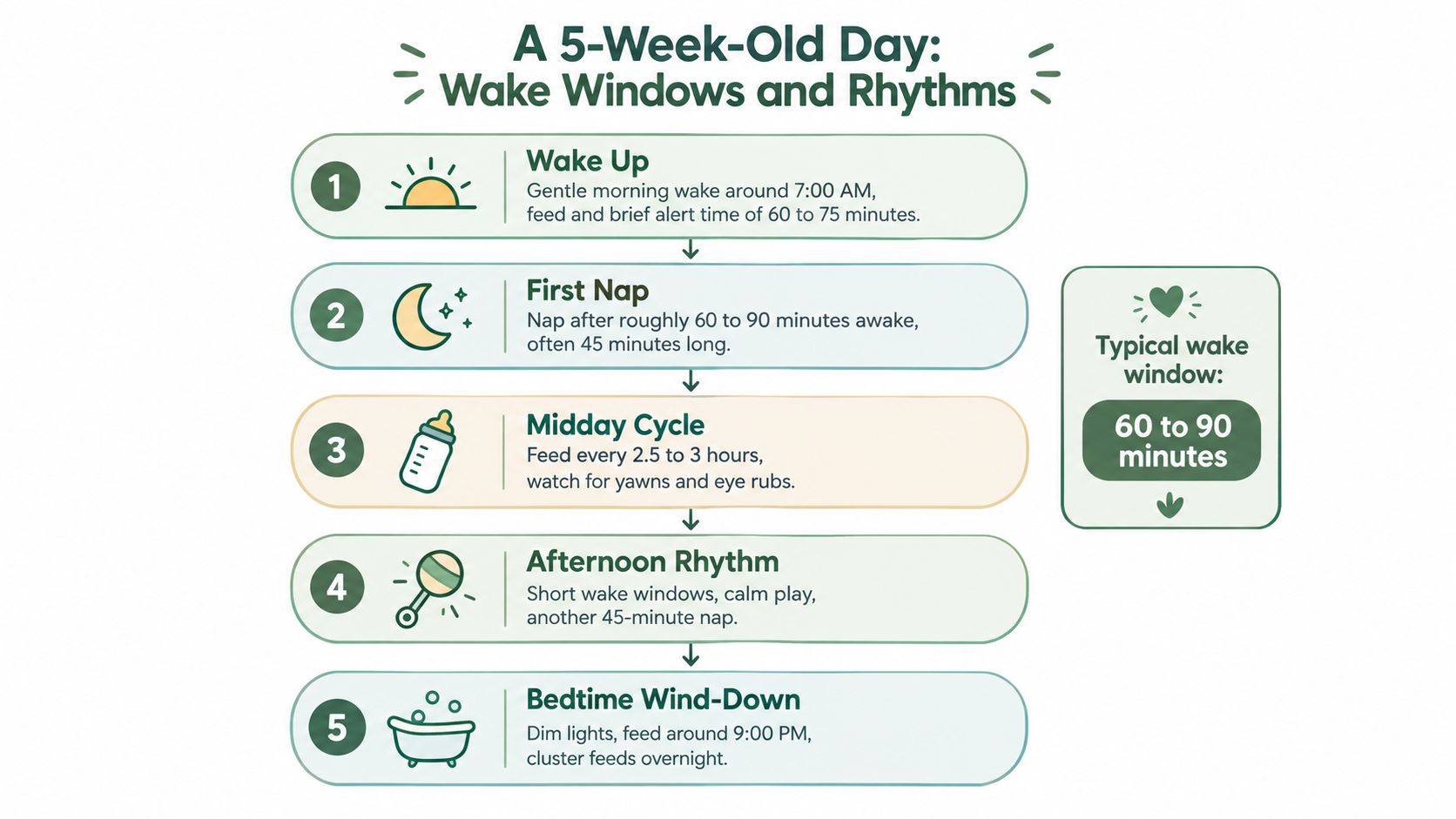
A breastfed rhythm might begin with a morning feed, include several wake-feed-sleep cycles, and become more crowded with cluster feeds in the evening. Overnight, the same sequence can repeat without a clean distinction between “nap time” and “bedtime.” A formula-fed rhythm may sometimes show more space between feeds, but it still needs to remain responsive rather than dictated by the clock.
Two flexible examples
Breastfeeding or combination feeding: Morning wake and feed, a brief alert period, then a sleep attempt. Repeat that pattern through the day, offering milk when cues appear. Expect an uneven evening, with feeds close together if the baby asks for them, followed by overnight wake-feed-diaper cycles.
Formula feeding: Offer a feed when hunger cues appear, allow a short calm awake period, and start the next sleep attempt when tired signs emerge. The next bottle may be sooner or later than expected, so record what was offered and how the baby responded rather than assuming the next feed is due at an exact time.
The newborn wake-window guide can help you think in terms of patterns, but the baby's cues and professional feeding plan take priority. A decision schedule is more useful than a clock schedule because it tells caregivers what to do when reality changes.
Troubleshooting common schedule disruptions
A long feed, a short nap, and an evening of close-together feeds can land on the same day. Treat each change as information about the next decision. Watch the baby's cues, then adjust the immediate plan rather than rebuilding the whole day.
After a long feed, offer sleep if tired signs appear. A demanding feed can leave a baby ready to sleep straight away. Note whether the baby actively fed, dozed early, or finished calmly, then offer milk again when hunger cues return. A longer feed does not automatically call for a longer awake period.
After a short feed, look at the circumstances before drawing conclusions. The baby may want milk again soon, or the feed may have ended because of a wet diaper, discomfort, or sleepiness. Follow the plan from your pediatrician or lactation professional. Reviewing the broader pattern is safer than trying to make up the difference by insisting on more milk.
After a brief nap, try settling again if the baby still looks tired. If the baby is calm and alert, quiet interaction can come first, followed by another sleep attempt when tired signs return. Extend awake time only when the baby seems ready. A sample schedule cannot determine how much sleep this particular nap required.
“One short nap only rewrites the next hour, not the whole day.”
Newborn sleep commonly comes in 2–3-hour periods, during the day and overnight, as noted in the earlier NHS guidance. Cluster feeding can make an evening feel especially crowded. Keep responding to hunger and comfort cues instead of treating the pattern as evidence that bedtime has failed. Share the observation with the next caregiver so everyone interprets the changing rhythm in the same way.
Syncing the schedule across caregivers
A routine only helps when every caregiver can interpret it. “The baby ate recently” isn't enough information for a partner taking the next shift, a nanny arriving in the afternoon, a grandparent settling a nap, or a daycare worker receiving the baby after a broken night.
Use one shared timeline and keep entries practical:
- Record the last complete feed: Include breast, expressed milk, formula, approximate volume when relevant, and whether the baby stopped showing interest.
- Add the sleep attempt: Note when settling began, when sleep started if known, and whether the baby woke quickly.
- Log diaper changes: Include wet or dirty output and any skin concern that the next caregiver should notice.
- Add observations, not judgments: “Rooting and hands to mouth” is more useful than “hungry again too soon.”
- Leave a handoff note: Mention soothing attempts, unfinished feeds, and any clinician-directed plan.
CDC guidance for babies approaching two months identifies hunger cues such as bringing hands to the mouth, turning toward the breast or bottle, and smacking or licking the lips. Fullness may look like closing the mouth or turning the head away, and the CDC says it's okay to stop when the baby isn't hungry CDC two-month milestone guidance.

Identity-specific entries reduce duplicate logging and clarify who saw what. For Spanish-speaking families, having guidance and shared notes available in Spanish can make handoffs easier across relatives and caregivers. Cradlo is one option for recording feeds, sleep, diapers, pumping, and caregiver observations across iPhone, Android, and the web, with separate caregiver identities and English and Spanish support.
When to adjust the plan and consult a professional
A five-week-old baby may feed, sleep, and wake differently from one day to the next. Contact a pediatrician or lactation professional when those changes involve feeding, alertness, diaper output, jaundice, vomiting, or weight, rather than trying to correct the clock first.
By around day five, a breastfed baby should generally have at least 6 wet diapers and 3 or more bowel movements daily. Fewer than 6 wet diapers or fewer than 3 stools can warrant attention, according to CDC guidance on newborn diaper output and feeding frequency. These figures are information to share with the baby's clinician, not a diagnosis or a target that should create pressure.
By the end of the first month, many babies take about 3–4 ounces per bottle feed every 3–4 hours, based on American Academy of Pediatrics information included in the same CDC resource. Cues, effective feeding, and steady growth matter more than making every bottle match that pattern.
Questions to raise promptly
Contact your pediatrician or lactation professional about:
- Poor feeding: The baby repeatedly struggles to feed, cannot stay engaged, or takes much less than usual.
- Markedly fewer wet diapers: Output has dropped noticeably or falls below the guidance your clinician provided.
- Persistent lethargy: The baby is unusually difficult to wake or does not respond as expected.
- Repeated vomiting or worsening jaundice: These changes need professional assessment.
- Weight concerns: You are unsure whether birth weight was regained or growth is progressing.
Mayo Clinic notes that most newborns regain birth weight within 1–2 weeks after initially losing weight. Once birth weight has been regained and growth is established, a clinician may allow longer sleep stretches. Before then, waking for feeds may be recommended if more than 4 hours have passed, so follow the individualized plan given to your family.
Sleep safety remains separate from schedule decisions. Place the baby on their back in a clear, firm, flat sleep space in the caregiver's room. Keep sofas, armchairs, loose bedding, overheating, and face or head coverings out of that space. A longer sleep stretch alone is not a reason to change a feeding plan. When caregivers share what they observed and know which changes require help, they can adjust the rhythm without forcing the baby into a fixed timetable.
Building a calm daily rhythm that actually fits your family
The most sustainable rhythm at five weeks has three parts: responsive feeding, flexible sleep attempts, and clear handoffs. The clock can help you recognize patterns, but it shouldn't overrule hunger cues, tired signs, output, growth information, or a clinician's instructions.
Track the details that help someone else care well. A start time, feed type, approximate amount when relevant, diaper observation, sleep attempt, and brief note about the baby's mood can be enough. You don't need a perfect record of every minute to make the next handoff easier.
Consistency at this age means the caregivers respond in similar ways, not that the baby performs the same routine every day. One evening may be quiet. Another may include repeated feeds and short sleep attempts. Both can fit a healthy, developing rhythm when the baby's needs and professional guidance remain central.
A useful schedule should leave parents, partners, grandparents, nannies, and daycare with less guesswork. If the record helps everyone know what happened last and what to watch for next, it's doing its job.
Cradlo gives families one shared place to log feeds, naps, diapers, pumping, and caregiver notes, so the next person can understand the baby's day without relying on memory or repeated questions. Visit Cradlo to try the shared tracker with a 7-day free trial on the monthly plan.