Growth Spurt 3 Weeks Signs Feeding and Sleep Help
At around three weeks, you may finally feel that feeding is becoming familiar, then your baby suddenly wants to eat again before you've even cleared the last bottle or settled after nursing. The evening stretches on with frequent feeding, shorter naps, and fussing whenever someone tries to put the baby down. One caregiver remembers the last feed, another remembers a brief nap, and the next person is left asking, “Was the baby hungry, overtired, or just unsettled?”
That confusion is common. A growth spurt at 3 weeks is often described as a short period when feeding and sleep seem to change together, but the timing isn't a precise appointment. This guide will help you recognize possible signs, understand why feeding may become more frequent, notice sleep changes without labeling every difficult night, and share observations across parents, partners, grandparents, nannies, and daycare caregivers.
A baby's behavior can overlap with ordinary newborn variation, comfort-seeking, colic, or illness. If feeding, growth, sleep, or behavior concerns worry you, contact your pediatrician or a lactation professional. You haven't caused this phase, and you don't need to respond perfectly to support your baby.
Table of Contents
- Understanding the 3 Week Growth Spurt Pattern
- Signs Your Baby May Be in a 3 Week Growth Spurt
- Feeding and Soothing Through More Frequent Feeds
- Sleep Changes During the 3 Week Window and When to Pause
- How Shared Tracking Helps You Spot Patterns Without Guessing
- A Calm Way Forward After the 3 Week Burst
Understanding the 3 Week Growth Spurt Pattern
You may hand off the baby after a feed, only to hear another caregiver ask when the last feed happened. Around 2 to 3 weeks, a burst of feeding, fussiness, or disrupted settling can make each person's memory feel like a separate piece of the day. A shared log connects those pieces, so parents, nannies, and daycare caregivers can see what changed instead of guessing.
Reported growth-spurt windows vary. Cleveland Clinic includes early infancy among common periods for these shifts, while Quebec public-health guidance places newborn spurts most often around 7 to 10 days, 3 to 6 weeks, and 3 to 4 months. These ranges overlap without creating a fixed appointment. A baby's pattern can differ from another baby's, and the overview of newborn growth spurts and changing routines offers broader context.
A growth wave is a useful comparison. Like a wave, the change rises, affects the usual rhythm for a while, and recedes. Your baby may seem ready to feed sooner, need more help settling, or show a different combination of changes. A shared record can show whether those changes happened together, how long they lasted, and which caregiver observed them.
For breastfeeding families, increased demand can signal the body to produce more milk over the following days. That supply-and-demand process does not mean anyone has done something wrong. Bottle-fed and combination-fed babies can also have periods when they seem ready to feed more often. Questions about feeding are best discussed with a pediatrician.
Why the window can feel so intense
Newborn routines are still taking shape, so a small shift can feel enormous. A baby who usually settles after a nap may wake upset, while another may cue for feeding sooner than expected. Those observations can fit a growth wave, but they can also occur during ordinary newborn variation.
Early growth is rapid, which helps explain why this period can feel especially noticeable. It still should not be treated as a diagnostic rule. Recording feeds, naps, fussiness, and soothing across every caregiver creates one shared view of the day, making patterns easier to discuss without relying on scattered memories.
Signs Your Baby May Be in a 3 Week Growth Spurt
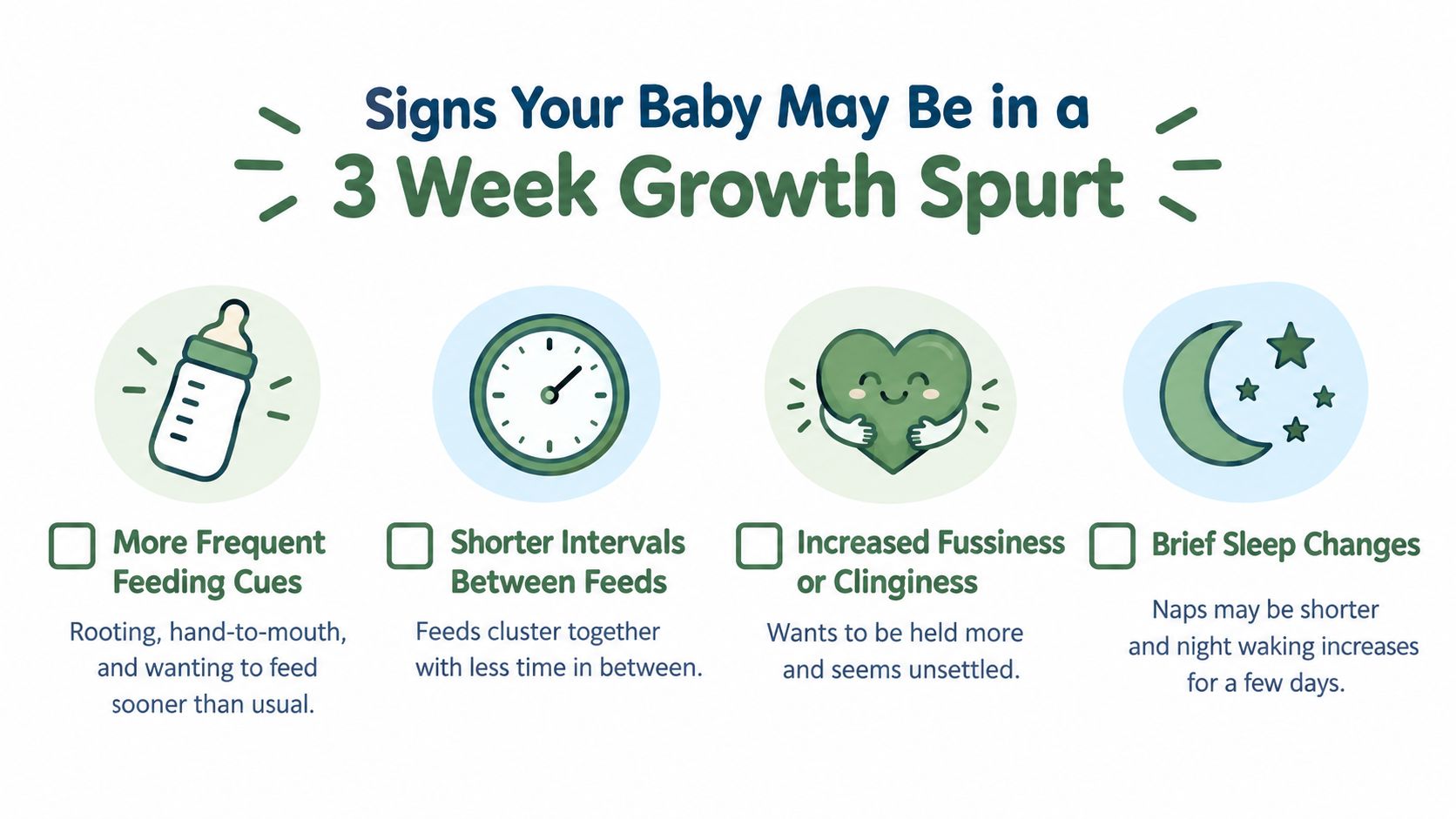
A baby who usually settles after feeding may suddenly root again, fuss when placed down, or wake sooner from a nap. One change does not confirm a growth spurt. Look for several changes appearing together, then notice whether your baby gradually returns toward their usual pattern.
Feeding cues may arrive sooner
Your baby may bring their hands to their mouth, root, turn toward a breast or bottle, or show interest in feeding earlier than expected. Some babies seem satisfied briefly and then cue again soon afterward. These signals describe what your baby is communicating, not whether you are feeding correctly.
Feeding intervals may cluster
Feeds can seem packed together, particularly during a busy evening. Compare this shift with your baby's recent routine rather than another infant's schedule. Newborn feeding naturally varies, so a shorter interval alone does not establish a growth spurt.
Mood and contact may change
Your baby might be harder to settle, ask to be held more, or protest when placed down. Fussiness can accompany tiredness, hunger, discomfort, or the ordinary work of adjusting to life outside the womb. A calm baby who suddenly wants extra contact may be going through a temporary developmental change, though closeness alone cannot identify its cause.
Sleep may shift either way
Naps may shorten, night waking may increase, or your baby may sleep more than usual for a while. Feeding and sleep changes are often associated with the early growth-spurt window, but rigid timing is not a reliable rule. The three-week label works better as a prompt to observe than as a diagnosis.
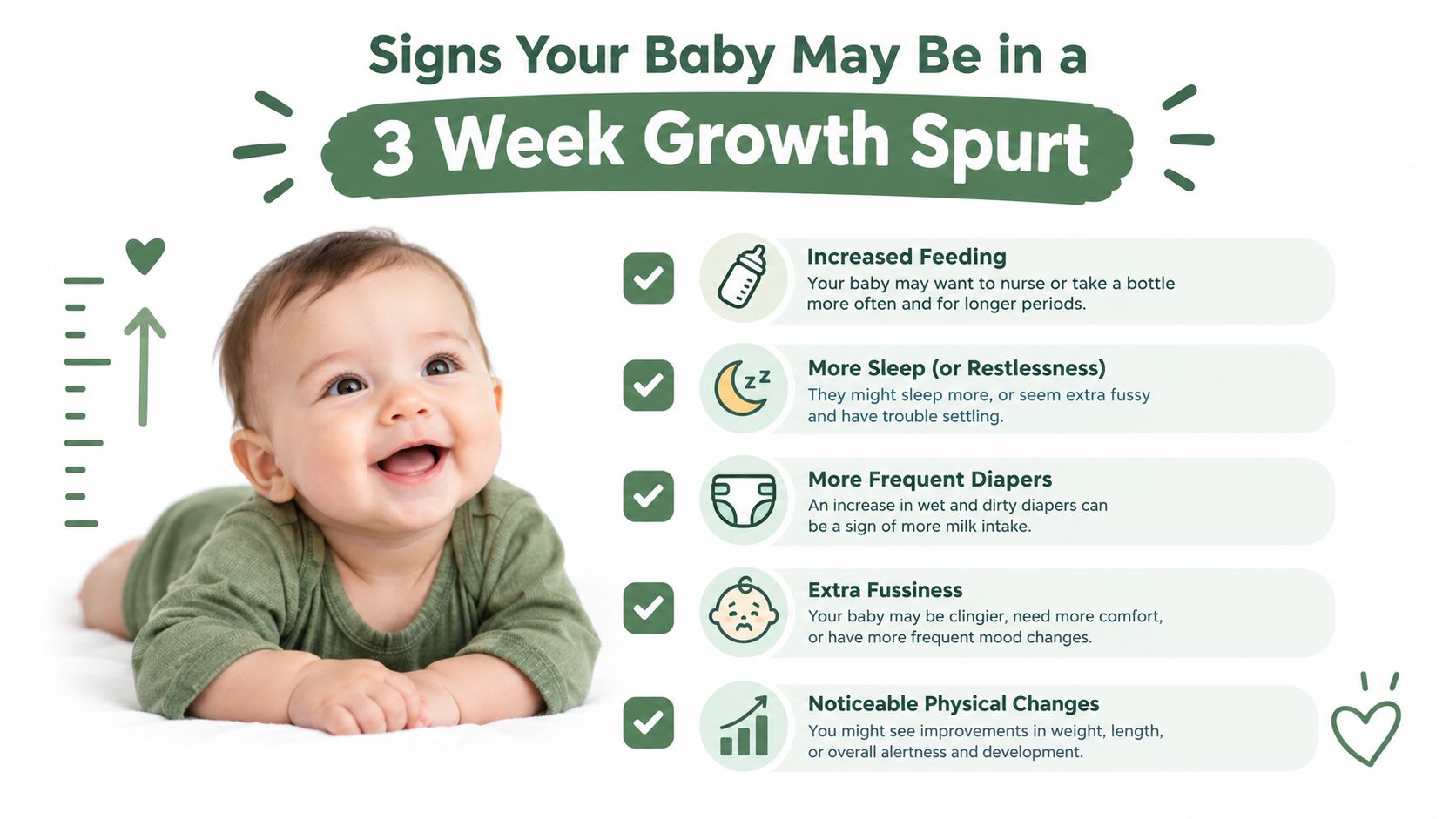
Diaper patterns may seem different when feeding changes, yet one diaper or feed can be hard to interpret without the rest of the day. A shared log gives parents, nannies, and daycare staff the same picture. Record feeding cues, sleep, mood, and diapers across two to three days, along with who observed each change. The record can also keep communication clear in Spanish-speaking households where several caregivers share responsibility.
Observation rule: Look for a pattern across the day, not a diagnosis hidden in one difficult moment.
Feeding and Soothing Through More Frequent Feeds
When a baby wants to feed again soon after a previous feed, start with the baby's cues rather than trying to force the day back into its earlier shape. Responsive feeding can include offering the breast, bottle, or combination your family already uses, while allowing your pediatrician or lactation professional to guide questions about amounts, technique, supply, or growth.
A quieter environment can help when frequent feeding and fussiness arrive together. Dim the lights, reduce background noise, hold your baby gently, or try skin-to-skin contact if that feels comfortable and safe for your family. Some babies need food, some need contact, and some need both before they can settle.

Share the work, not just the worry
The caregiver who feeds may not be the person who handles the next nap or diaper change. A partner can prepare the feeding space, a grandparent can hold the baby while someone rests, a nanny can record what happened during the day, and daycare staff can pass along a clear summary instead of a vague “the baby was fussy.”
Try dividing the support into small, concrete roles:
- During feeding: One caregiver focuses on the baby while another keeps water, a snack, or clean supplies nearby.
- Between feeds: A partner, grandparent, or nanny can take over holding, burping, or settling when the feeding caregiver needs a pause.
- At handoff: Record what happened in plain language, such as “cued soon after the last feed” or “settled while being held,” rather than guessing at the cause.
- For professional questions: Bring your observations to a pediatrician or lactation professional, especially if feeding feels difficult or your baby seems unwell.
A shared record can also reduce repeated conversations. Cradlo's guide to infant feeding patterns offers another way to think about feeding as a pattern rather than a single event.
Contact your pediatrician or lactation professional for health questions, feeding difficulty, concerns about growth, or symptoms that don't fit your baby's usual behavior. Reaching out isn't an admission of failure. It's a way to get context when tired caregivers are asked to interpret too much from too little sleep.
Sleep Changes During the 3 Week Window and When to Pause
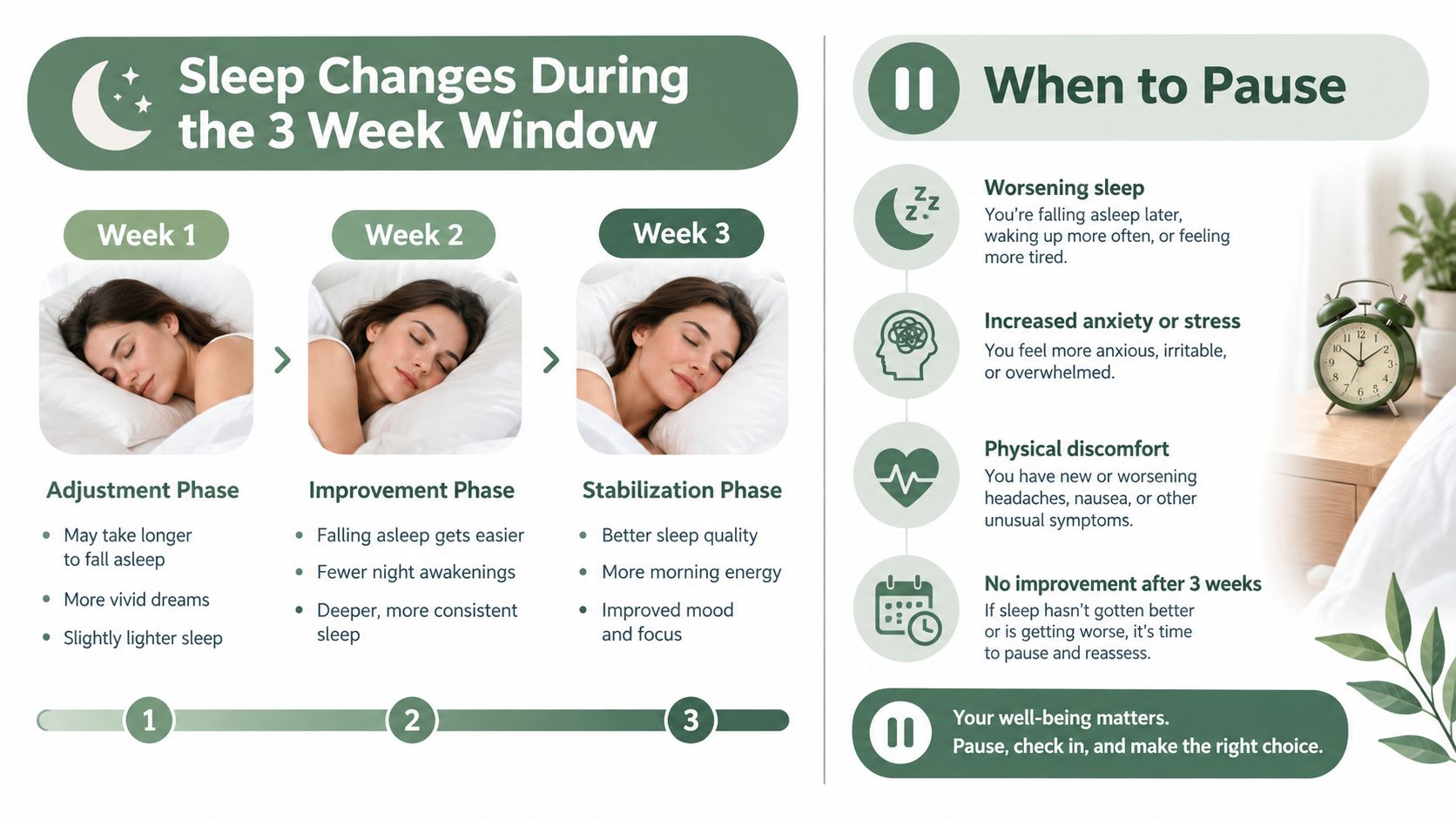
Sleep can become more broken when feeding cues arrive more often. A baby may take shorter naps, wake more at night, or need more holding before settling. Another baby may sleep more for a period, so sleep direction alone can't identify a growth spurt.
A brief change often looks different from a persistent settling problem. During a short-lived shift, feeding or soothing may help for a while, and your baby may still have periods of comfort between difficult stretches. With a longer pattern, sleep remains disrupted after feeding behavior has settled, or settling becomes difficult across most sleep periods rather than mainly during a cluster of hungry, fussy days.
Compare the pattern, not one night
| What you notice | A temporary change may look like | A pattern needing attention may look like |
|---|---|---|
| Feeding | Cues seem more frequent, then become easier to interpret again | Feeding remains difficult or your baby repeatedly refuses |
| Comfort | Holding or feeding offers some relief | Your baby remains unusually distressed or difficult to comfort |
| Sleep | Naps or night waking shift for a short period | Disruption continues without signs of settling |
| Caregiver view | Different caregivers describe a similar short-term change | Handoffs reveal an ongoing concern across settings |
The Cleveland Clinic guidance on infant growth spurts places 2 to 3 weeks among common windows while also acknowledging that babies vary. That overlap matters because normal newborn fussiness, colic, sleep changes, and illness can resemble one another. You don't have to decide the label alone.
Keep familiar calming cues where possible, but loosen expectations about exact nap or bedtime timing. If your baby's sleep disruption persists, feeding becomes difficult, or your baby seems unwell, pause routine experiments and contact your pediatrician. Health questions deserve individual guidance rather than a fixed growth-spurt explanation.
How Shared Tracking Helps You Spot Patterns Without Guessing
At three weeks, the hardest part may not be the feeding itself. It may be remembering what happened before the last handoff. One caregiver saw a short nap, another offered a feed, and daycare later reports fussiness. Without a shared timeline, each person holds one piece of the day.
A single record puts those pieces together. Cradlo lets parents, partners, grandparents, nannies, and daycare caregivers log feeds, sleep, diapers, pumping, growth, and milestones. Each caregiver has an individual identity through a QR-code invite, and entries sync across iPhone, Android, and the web. Daycare can use a bookmarked browser page without installing the app, while offline entries reconcile when the connection returns.
A small logging checklist
You don't need to document every detail forever. For a few days, capture the events that help caregivers compare the baby's current pattern with the recent one:
- Feeds: Note when feeding happens and whether the baby showed cues sooner than expected.
- Sleep: Record the start and end of naps or nighttime stretches, using approximate times when necessary.
- Diapers: Add diaper changes so the day has basic care context.
- Mood: Use a short note such as “settled with holding” or “fussy after waking.”
- Handoffs: Record anything the next caregiver should know without assigning a diagnosis.
Gentle AI can surface nap windows, prepare a daily brief, fill in forgotten logs, and draft daycare summaries. Those features can reduce the burden of reconstructing the day, but they shouldn't replace a pediatrician's or lactation professional's judgment. Behavioral tracking for shared baby care can help families consider what information is useful without turning care into a performance.
The benefit is coordination. Everyone sees the same story, so the question shifts from “What did I miss?” to “What pattern are we noticing together?”
A Calm Way Forward After the 3 Week Burst
The intense part of a three-week growth pattern often eases as feeding and sleep find a new rhythm, though every baby's version looks different. You don't need to prove that a growth spurt caused each change. You only need to observe carefully, respond to cues, and notice whether the overall picture is settling.
For the next few days:
- Watch clusters: Look at feeding, sleep, mood, and diapers together.
- Respond gently: Offer feeding and comfort without guilt or pressure.
- Share the record: Give every caregiver the same practical information.
- Ask for help: Bring health or feeding concerns to a pediatrician or lactation professional.
Cradlo offers shared logging for families, nannies, and daycare, with a 7-day free trial on the monthly plan. It doesn't have a free plan, and its purpose here is simple: keep the care record visible so tired adults can coordinate without blame.
Visit Cradlo to try the shared baby tracker during this changing feeding and sleep period. Invite the caregivers who share your baby's day, then use one synced log to make handoffs clearer and observations easier.