Who Logged the Last Nap? 8 Ways to Track Nap Hours
At 7 a.m., the nanny walks in with her coat still on and asks the question you were hoping you wouldn't have to guess at. Did the baby nap already, or is that yawn the start of the first one. At 3 p.m., your partner texts a grandparent the same thing, and the answer depends on who remembers what, and which notes app it went into.
That's how nap hours get lost. Not because anyone stopped paying attention, but because the details live in several heads, a text thread, and maybe a scrap of paper by the crib. The next caregiver then plans the afternoon around a rough estimate, and bedtime becomes harder to read.
The eight ideas below treat naps as shared information that moves between parents, partners, grandparents, nannies, and daycare. Each one starts with a familiar handoff moment, then gives you a small, repeatable step. You don't need a perfect log or a perfect day to use them. You just need one place everyone can read, written in words everyone understands, so the person taking over can look once and carry on.
Table of Contents
- 1. How do we stop asking who logged the last nap?
- 2. Can we use a nap-window prediction without feeling pressured by it?
- 3. How do we hand off nap details without a long conversation at the door?
- 4. How can daycare share nap hours with parents without another login?
- 5. What do we do when the phone is out of reach or the subway has no signal?
- 6. Which nap details are worth writing down beyond the start and end time?
- 7. How do we review nap patterns together without turning it into a test?
- 8. How can grandparents and extended family stay informed about nap hours?
- How each nap-tracking approach handles sharing, syncing, and offline use
- Start Small and Let the Log Carry the Details
1. How do we stop asking who logged the last nap?
It's 9:20 a.m. and the parent who starts work later is holding a fussy baby, scrolling a text thread for a time that isn't there. One of you logged the morning nap in a notes app. The other mentioned it out loud while making coffee. Neither version helps right now.
A single shared timeline fixes the searching. Every caregiver signs in as themselves, adds the nap as it happens, and sees the same entries the moment they appear. That shared view is the core of building consistent naps across caregivers, because consistency starts with everyone reading the same record.
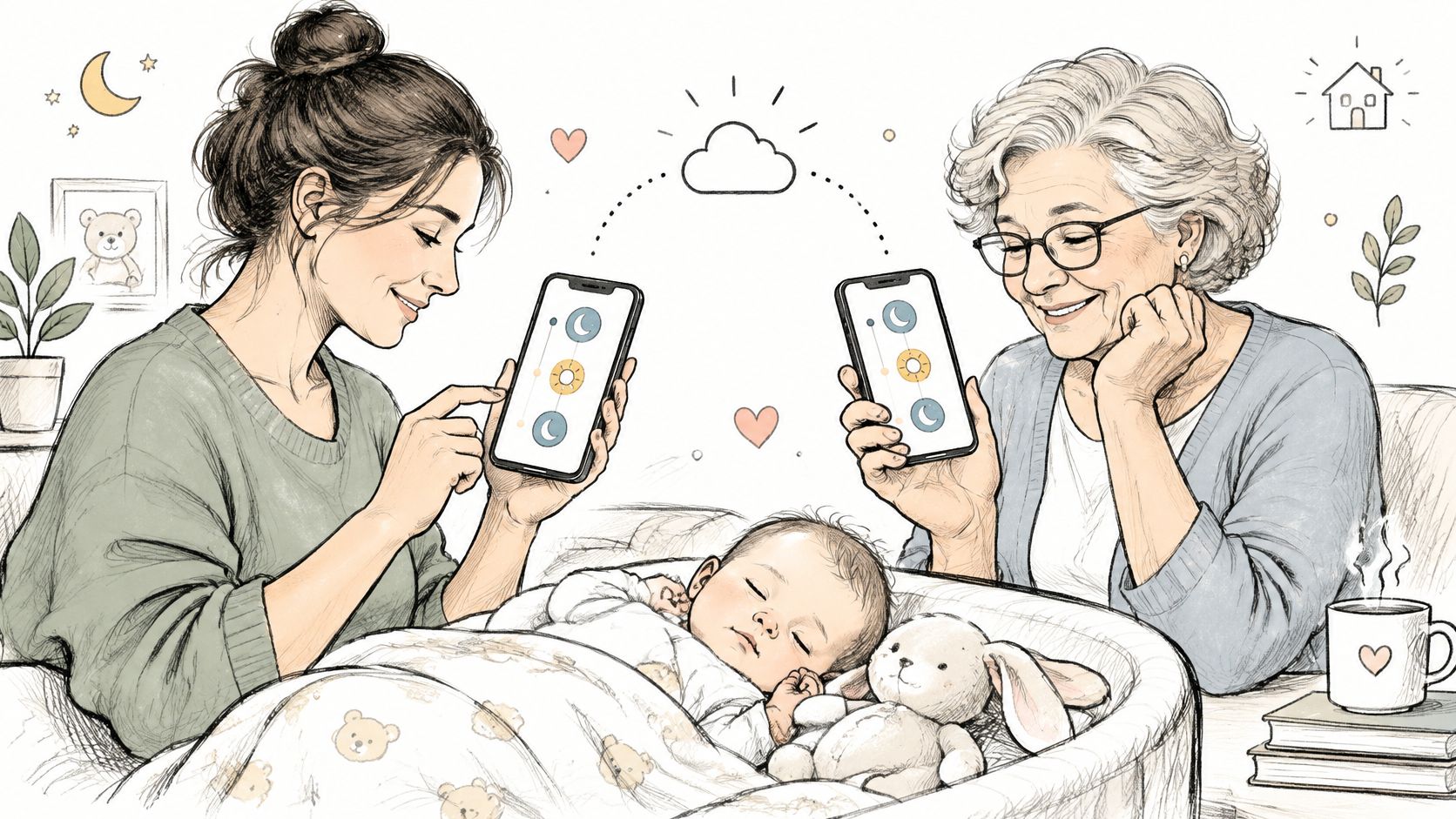
Make entries look the same whoever writes them
Say a grandparent covers Tuesday afternoon. She opens the log, sees started 8:10, woke 9:05, and knows roughly when to watch for sleepy cues again. She doesn't need to call anyone.
- Use two plain words: Agree on started and woke so entries read the same across caregivers.
- Log in the moment: Tap start when the baby goes down rather than rebuilding times from memory at dinner.
- Glance weekly together: A quick shared look catches missing entries before they become a pattern.
The trade-off is simple. A shared log asks for ten seconds at nap time, and it saves the back and forth later.
2. Can we use a nap-window prediction without feeling pressured by it?
You're about to join a midday video call and the baby is rubbing her eyes, or maybe she's just bored. A suggested window based on your own recent logs can help you decide whether to start winding down now or wait a little. It can't tell you what today will bring.
Predictions work best when they reflect the whole household's record, not one person's memory. That's why logging short, late, and odd naps matters too. If only the good naps get written down, the suggestion rests on a version of the week that never quite happened.
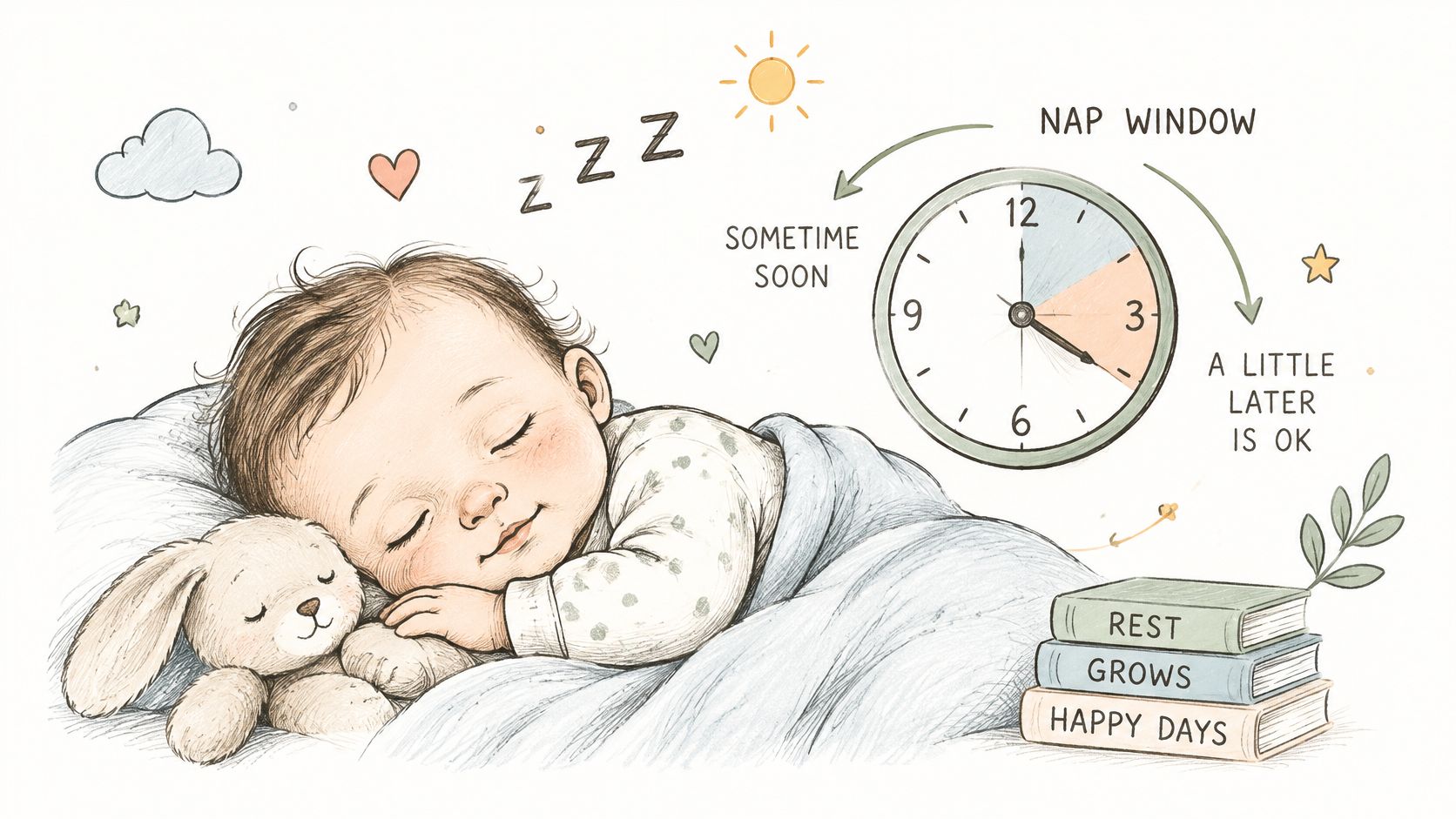
Practical rule: Treat a predicted window as a time to start watching for cues, not a time the baby has to be asleep.
Reading about what a wake window means in everyday terms helps keep that distinction clear. Say the app suggests a window before lunch. You pass that to the nanny, she watches for yawns and a slower gaze, and she starts the routine when she sees them. If the baby is bright and playing, waiting is reasonable.
Share the suggestion with everyone who puts the baby down, and say out loud that a missed window isn't a failure. That one sentence keeps a helpful estimate from turning into pressure.
3. How do we hand off nap details without a long conversation at the door?
The nanny arrives at 8 a.m., you're halfway into your shoes, and the baby is reaching for whoever is closest. There's no time for a full report. There is time for three short lines she can read after you've left.
Write the handoff in the same shape every time. Last nap, cues noticed, what helped. That's enough for the next person to plan the next hour without guessing.
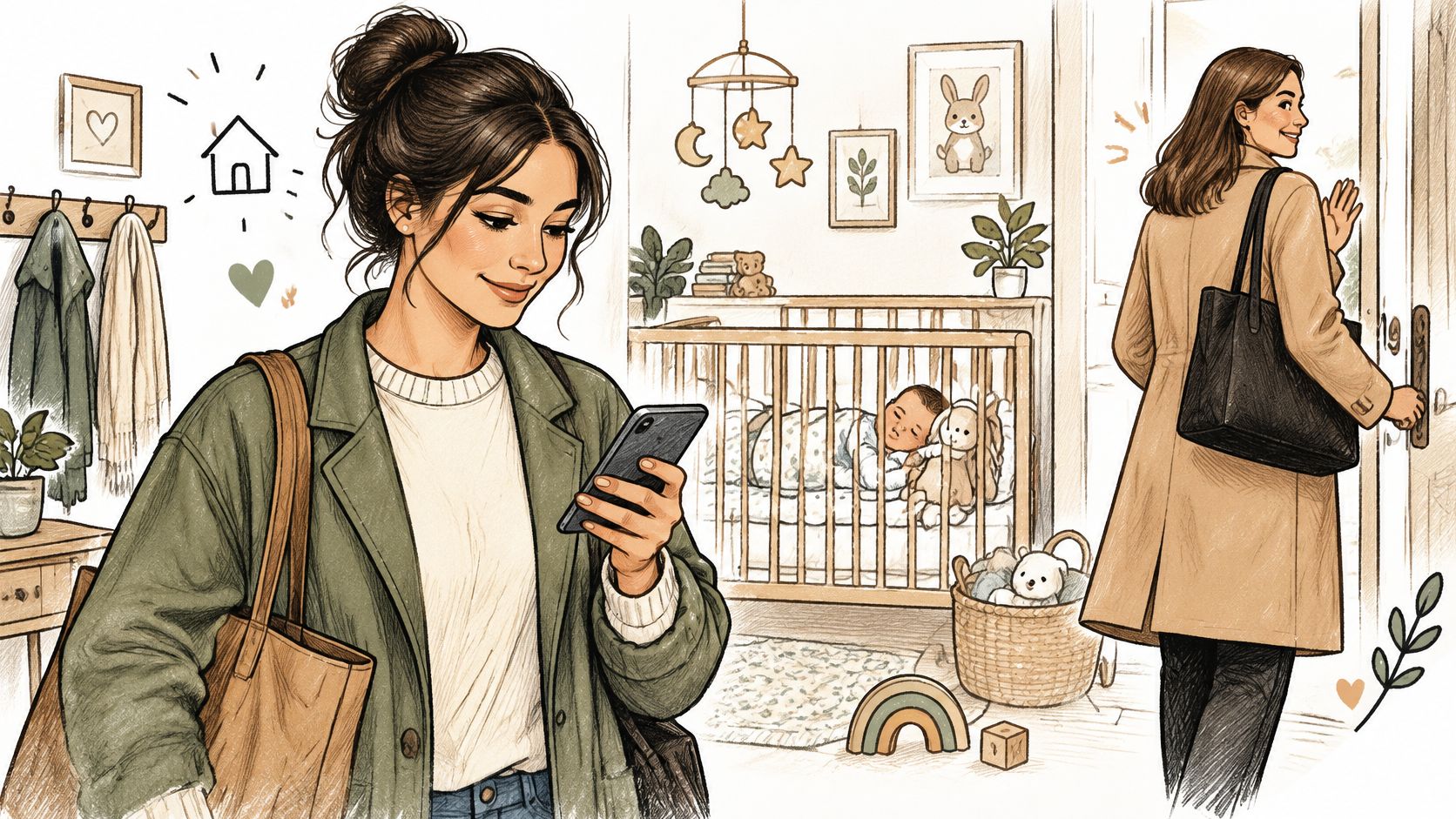
What a useful three line handoff looks like
- Last nap: Napped at 6:40, woke just after 7:15.
- Cues noticed: Rubbed eyes during the last feed, went quiet on the mat.
- What helped: Settled best with white noise and a darker room.
A grandparent picking up at 3 p.m. can read the same format and know whether the afternoon nap already happened. For families who speak Spanish at home, write the note in the language the caregiver reads most comfortably. A clear note about la siesta or the baby's rutina beats a polished note nobody fully takes in.
Keep it boring on purpose. Same order, same place, every shift change. Boring is what makes it findable.
4. How can daycare share nap hours with parents without another login?
At pickup, a teacher is helping three toddlers with jackets while you ask how the nap went. She remembers your child slept, but the exact times are on a paper sheet across the room. You drive home still unsure whether bedtime should move earlier.
Daycare staff log naps for several children at once, often during quiet time with a shared tablet nearby. Asking each teacher to install an app and create an account usually ends the conversation. A single browser link bookmarked on that tablet asks much less. Staff open it, log start and end times, and the entries appear on your phone.
Agree the details before you set it up
Talk with the director first and ask whether a browser based log fits how the room already works. If it does, keep the ask small. Start time, end time, and one settling note cover most of what you need to plan the evening. This approach to sharing a daycare log with parents works because it respects how busy the room is.
Say you check at lunch and see a nap began at 12:30 and lasted about an hour. You don't need to call. The teacher doesn't need to reconstruct the day at pickup. If time is tight, a short daily summary at pickup can carry the same information.
5. What do we do when the phone is out of reach or the subway has no signal?
The baby falls asleep in the carrier somewhere between two subway stops. Your phone has no signal, one hand is holding a rail, and by the time you're home the start time is a guess. That gap is normal, and it's fixable.
Log the nap offline in the moment and let it sync when you're back in range. The entry keeps the time you gave it, so the shared timeline stays in the right order. A car nap logged during a commute works the same way. It appears for your partner once the phone reconnects.
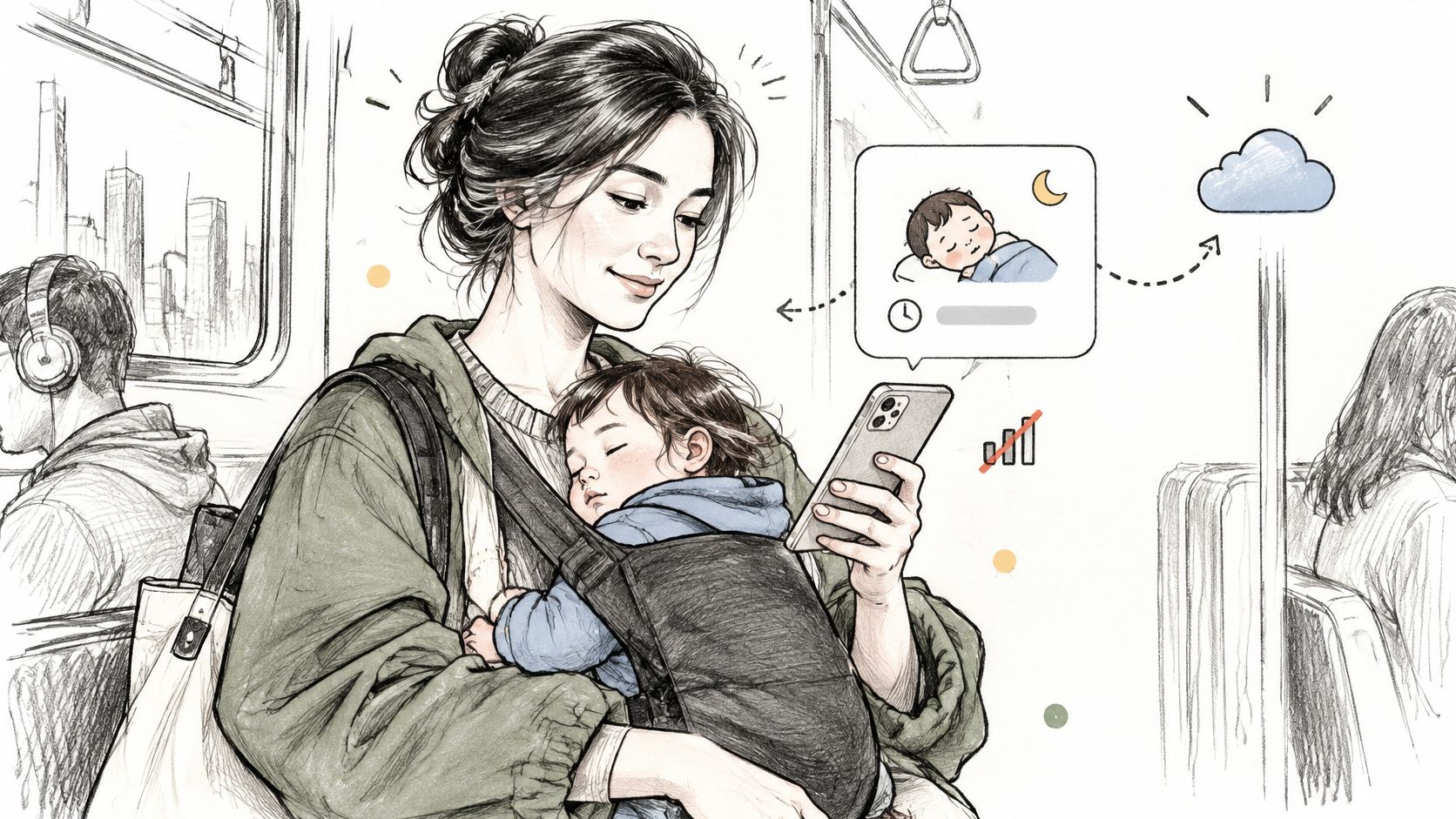
Paper still has a place here. A small card in the diaper bag or a sheet on the fridge catches what a phone can't.
- Keep a backup note handy: A nanny on a park outing can jot the time and add it to the log at home.
- Review once a day: A short evening check moves offline and paper entries into the shared record.
- Accept rough times: An approximate start is more useful than a blank space everyone has to interpret.
You're not chasing a flawless record. You're closing the gaps that cause confusion at the next handoff.
6. Which nap details are worth writing down beyond the start and end time?
Two naps can both last forty minutes and mean very different things for the afternoon. One ended with a baby who woke up smiling and ready to play. The other ended with tears and a long cuddle. The times alone don't tell the next caregiver which one just happened.
A few brief context notes do. Location, how settling went, and how the baby woke are usually enough. Over several days, those notes start to show patterns you can use, like stroller naps tending to run shorter in your family, so you plan a crib nap before a long errand.
Keep notes observational and short
Write what you saw, not a verdict. Woke upset, settled in arms helps the next caregiver. Bad nap doesn't.
Pick a short shared list so nobody has to invent wording each time. Crib, stroller, car, settled quickly, needed rocking, woke happily covers most days. A partner can add that the baby woke happily after a short nap at a grandparent's house, and the afternoon plan gets easier.
It's also worth remembering that naps count toward total sleep rather than standing alone. The CDC sleep guidance by age recommends 12–16 hours including naps for infants ages 4–12 months and 11–14 hours including naps for toddlers ages 1–2 years. Treat those ranges as background context, not a daily pass or fail. Questions about your child's sleep or health belong with your pediatrician.
7. How do we review nap patterns together without turning it into a test?
It's Sunday evening, the baby is down, and you and your partner have ten quiet minutes. That's a better moment to look at the week than the exhausted minute after a short nap, when every entry feels like a grade.
A weekly glance changes the question. Instead of asking whether Tuesday's nap was long enough, you ask what the week tended to look like. Which days felt steadier, where did the morning nap drift, and did bedtime shift after travel or a childcare change.
One question per review is enough
- Pick one focus: When does the longest nap usually happen right now.
- Look across caregivers: Compare home, nanny, and daycare entries side by side.
- Decide one small step: Move the bedtime routine a little earlier, or change nothing and watch another week.
Say you notice the morning nap has shifted since your baby started sitting up more independently. That's a conversation to have with your nanny, not a problem to solve that night. The pattern across several days tells you more than one unusual afternoon.
A calm daily summary helps here because you can scan without scoring each nap. A few off days are normal. They don't need fixing right away, and saying so out loud makes it easier for every caregiver to keep logging.
8. How can grandparents and extended family stay informed about nap hours?
A grandparent across the country doesn't want to text every few hours, and you don't want to answer the same update three times. A short daily summary she can read in the evening keeps her included without adding another job to your day.
Decide in advance who needs what. Some relatives care for the baby on weekends and need full logging access. Others just enjoy following along and only need to view entries. Making that distinction early keeps updates useful and keeps too many hands from editing the same record.
Set relatives up once, in their language
Show them how to read a nap entry and where the daily summary lives. A five minute walkthrough now saves a dozen small questions later.
- Full access for regular caregivers: Grandparents who cover afternoons can log start and wake times themselves.
- View only for followers: Aunts, uncles, and distant relatives can read along without changing entries.
- Use the preferred language: A Spanish speaking abuela can check the log in Spanish during an afternoon of care and see when la siesta happened.
Say a relative takes the baby for a Saturday afternoon. She reads the morning before you leave, logs the nap while you're out, and you come home to a complete day. Nobody had to narrate anything.
How each nap-tracking approach handles sharing, syncing, and offline use
| Item | Best for | Real-time sync | Offline logging | Login needed |
|---|---|---|---|---|
| How do we stop asking who logged the last nap? | Sharing nap logs across caregivers | Yes, across phones and web | Not specified | Yes, caregivers sign in |
| Can we use a nap-window prediction without feeling pressured by it? | Flexible nap planning | Not specified | Not specified | Not specified |
| How do we hand off nap details without a long conversation at the door? | Quick caregiver handoffs | Not specified | Not specified | Not specified |
| How can daycare share nap hours with parents without another login? | Sharing daycare nap updates with parents | Timely updates to parents | Not specified | No account needed for daycare staff |
| What do we do when the phone is out of reach or the subway has no signal? | Logging naps without a connection | Syncs when online | Yes, syncs when reconnected | Not specified |
| Which nap details are worth writing down beyond the start and end time? | Adding context to nap records | Not specified | Not specified | Not specified |
| How do we review nap patterns together without turning it into a test? | Reviewing nap trends collaboratively | Not specified | Not specified | Not specified |
| How can grandparents and extended family stay informed about nap hours? | Keeping extended family informed | Not specified | Not specified | Not specified |
Start Small and Let the Log Carry the Details
You don't need to rebuild your whole routine this week. Pick one handoff, the morning shift change, the daycare pickup, or the hour when a grandparent takes over. That single moment is where a shared record earns its place fastest.
Agree on the three details that matter most for that handoff. For most families, it's the last nap, the cues noticed, and what helped. Write them the same way each time, in the same place, and let everyone involved read and add to that one timeline.
Then give it a week before you judge it. Log the short naps and the odd ones, add rough times when that's all you have, and move paper notes into the shared log in the evening. A record that's mostly complete still removes most of the guessing.
Review it together once, at a calm moment, and ask one question about the pattern you see. Maybe the longest nap has moved. Maybe daycare days look different from home days. Maybe nothing needs to change at all, and that's useful to know too.
Keep the tone gentle as you go. Caregivers log more accurately when nobody treats an entry like a test, and candid entries are what make predictions and summaries worth reading. If questions come up about how much sleep your child needs, or about health concerns that sit behind a rough patch, bring them to your pediatrician rather than trying to answer them from the log alone.
If you'd like to try this with a tracker built for shared care, Cradlo offers a 7-day free trial on its monthly plan, and there's no free plan. That trial gives your household a low pressure way to test one handoff with every caregiver involved, see whether the routine sticks, and decide together what fits before you commit to anything.
If you're tired of asking who logged the last nap, Cradlo keeps one shared timeline where parents, partners, grandparents, nannies, and daycare each log naps as they happen, in English or Spanish. Try it with your whole care team on the monthly plan's 7-day free trial and see how much quieter your next handoff feels.