When Do Babies Start Rolling Over
You're on the floor for two minutes. That's the plan, anyway. Your baby is on their tummy, working hard, wobbling a little, and then suddenly tips to the side and lands on their back with a surprised look that's half triumph, half confusion. You laugh, reach for your phone too late, and immediately wonder if that counted.
That's usually the question behind when do babies start rolling. Not just the age, but what that first flip means. Was it on purpose? Which direction usually comes first? What changes now, especially at sleep time? And when is “my baby only rolls one way” just part of learning, versus something worth bringing up with a pediatrician?
Rolling is one of those milestones that looks simple from the outside. In real life, it's a process. Babies practice pieces of it before they do the whole thing. They rock, twist, kick, tip, and sometimes seem to do it by accident before they can repeat it on purpose.
Most babies start rolling in the middle of the first year, and there's a lot of normal variation within that. What helps most is understanding the sequence, noticing what your baby's body is trying to do, and making a few practical changes when movement shows up in the crib.
Table of Contents
- The Moment Your Baby Flips for the First Time
- What Rolling Actually Involves in the Body
- The Typical Age Range and Directional Order
- Gentle Ways to Encourage Practice on the Floor
- When Rolling Changes Sleep Safety
- One-Sided Rolling and What Asymmetry Really Looks Like
- When to Check In With a Pediatrician
- A Calm Daily Routine for the Rolling Months
The Moment Your Baby Flips for the First Time
The first roll often doesn't look polished. A baby might lift their head during tummy time, shift a little too far to one side, and suddenly be on their back. Parents, partners, grandparents, and nannies often describe the same reaction: delight first, then a quick mental replay of whether the baby really rolled or just sort of fell over.
Both can be true. Early rolling often starts as a body discovering momentum.
Why this moment feels bigger than it looks
Rolling is one of the earliest mobility skills. In a published infant cohort, 81.5% of infants rolled before 6 months of age, while 18.5% rolled at 6 months or later, and that same study places rolling earlier than later gross motor skills like sitting, crawling, standing, and walking (published infant motor milestone cohort).
That's why this tiny-looking movement gets so much attention. It's often the first sign that your baby is starting to link strength, coordination, and curiosity into actual movement across space.
Practical rule: A first roll is less like passing a test and more like seeing practice pay off.
The questions parents usually have right away
Once that first flip happens, confusion tends to cluster around a few very normal points:
- Did it count if it looked accidental? Yes. Early rolling is often messy before it becomes repeatable.
- Which direction should happen first? Usually tummy to back, then back to tummy, but not every baby follows the same order.
- Does sleep change now? Yes. The setup matters more than trying to stop the milestone.
- Should I worry if it only happens one way? Sometimes that's ordinary preference. Sometimes the pattern deserves a closer look.
If you're feeling a little behind because someone else's baby rolled sooner, take a breath. Rolling isn't a one-day event. It's a skill your baby builds in layers, and those layers are usually visible before the roll itself.
What Rolling Actually Involves in the Body
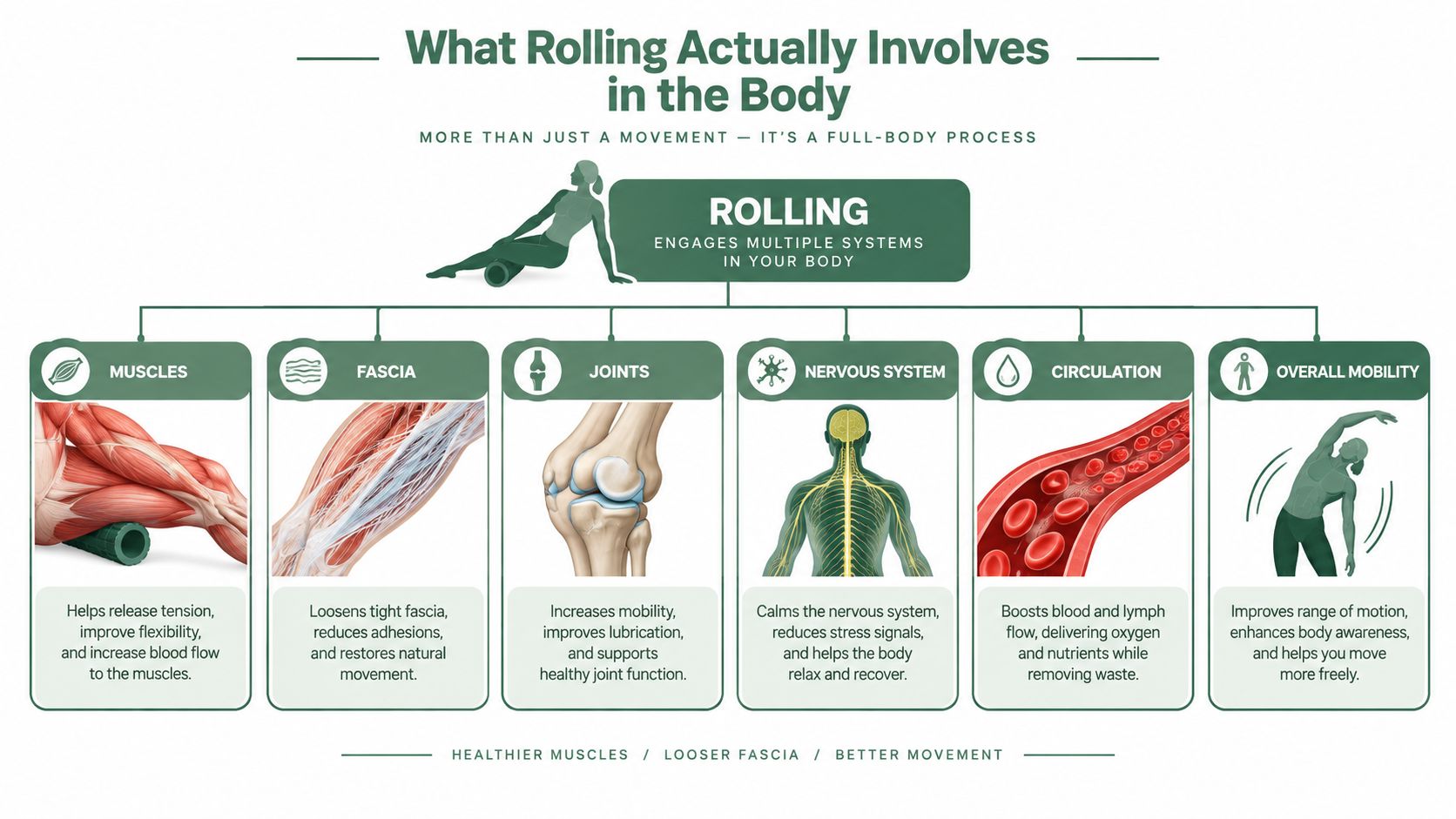
Rolling looks like one motion. It's really a chain of smaller ones.
A baby usually starts with head control. They learn to lift the head, turn it, and keep it steady long enough to look around. That's why tummy time matters so much. It gives the neck and upper body a chance to work against gravity in a simple, everyday way.
The movement starts at the top, then travels down
After head control comes the middle of the body. Your baby needs enough shoulder and trunk control to shift weight onto one side without collapsing. Then the hips and legs join in. A kick, a crossed leg, or a twist through the pelvis can give just enough momentum to carry the rest of the body over.
That's why you may notice little practice moves before a real roll:
- Side tipping during tummy time
- Kicking harder on the back
- Reaching across the body for a toy
- Bringing knees up and twisting the hips
These don't look dramatic, but they're meaningful. Peer-reviewed motor control research describes rolling as a coordinated movement pattern rather than a simple strength task, and places the beginning of supine-to-prone rolling commonly between 4 and 6 months, with earlier practice movements showing up sooner (motor-control study on coordinated rolling patterns).
It's also a weight-shift skill
One part parents don't always get told about is the weight shift. A baby has to move their weight off center first. That's the part that often looks like rocking or leaning. Then the body follows.
The CDC's milestone guidance reflects this staged pattern, noting that by 6 months babies may roll in both directions, with rolling showing the development of trunk control and coordinated movement rather than simple force alone (CDC milestone guidance PDF).
Rolling is a practiced sequence. Head, shoulders, trunk, hips. Not all at once, and usually not neatly at first.
So if your baby looks like they're doing tiny half-rolls for days or weeks, that's often exactly how the full skill gets built.
The Typical Age Range and Directional Order
Parents usually want a simple answer first. The plain-language version is this: rolling commonly shows up between 4 and 6 months, and by about 6 months many babies can roll both ways.
A Cleveland Clinic pediatric review says most babies can roll from tummy to back at about 6 months (Cleveland Clinic review on rolling age). Public guidance from the American Academy of Pediatrics through HealthyChildren.org notes that by the end of the 4-to-7-month period, babies will probably be able to roll in both directions. Independent research also reported an average rolling age of 6.2 months, with a standard deviation of 1.7 months, which is another way of saying there's real room for normal variation around the middle of the first year.
Which direction usually comes first
Most babies first manage tummy to back. That direction tends to be easier because the baby can use head lifting and a small sideways shift to tip over. It may look sudden, and early on it may even seem accidental.
Back to tummy usually comes later. It asks for more active rotation through the trunk and hips. The baby has to generate the movement instead of falling into it.
Here's the quick comparison most families are looking for:
| Direction | Typical Age | Key Body Demand | Common First Trigger |
|---|---|---|---|
| Tummy to Back | Often around 4 to 6 months | Head lift plus sideways weight shift | Pushing up in tummy time and tipping off center |
| Back to Tummy | Often around 6 to 7 months | More trunk rotation and hip drive | Reaching, twisting, or crossing a leg over |
For a broader look at how rolling fits with sitting, reaching, and later movement, Cradlo's infant development milestones guide is a useful place to compare milestones in one timeline.
What if the order is different
A different order doesn't automatically mean something is wrong. Parent-facing pediatric guidance notes that tummy-to-back often appears around 4 to 6 months, while back-to-tummy usually comes later, around 6 to 7 months, and that one-way rolling can still be normal for a while (BabyCentre guidance on rolling direction and asymmetry).
Some babies repeat one direction for weeks before the other catches up. Some seem to skip a tidy sequence entirely. What matters more than perfect order is whether your baby keeps building control over time.
Gentle Ways to Encourage Practice on the Floor
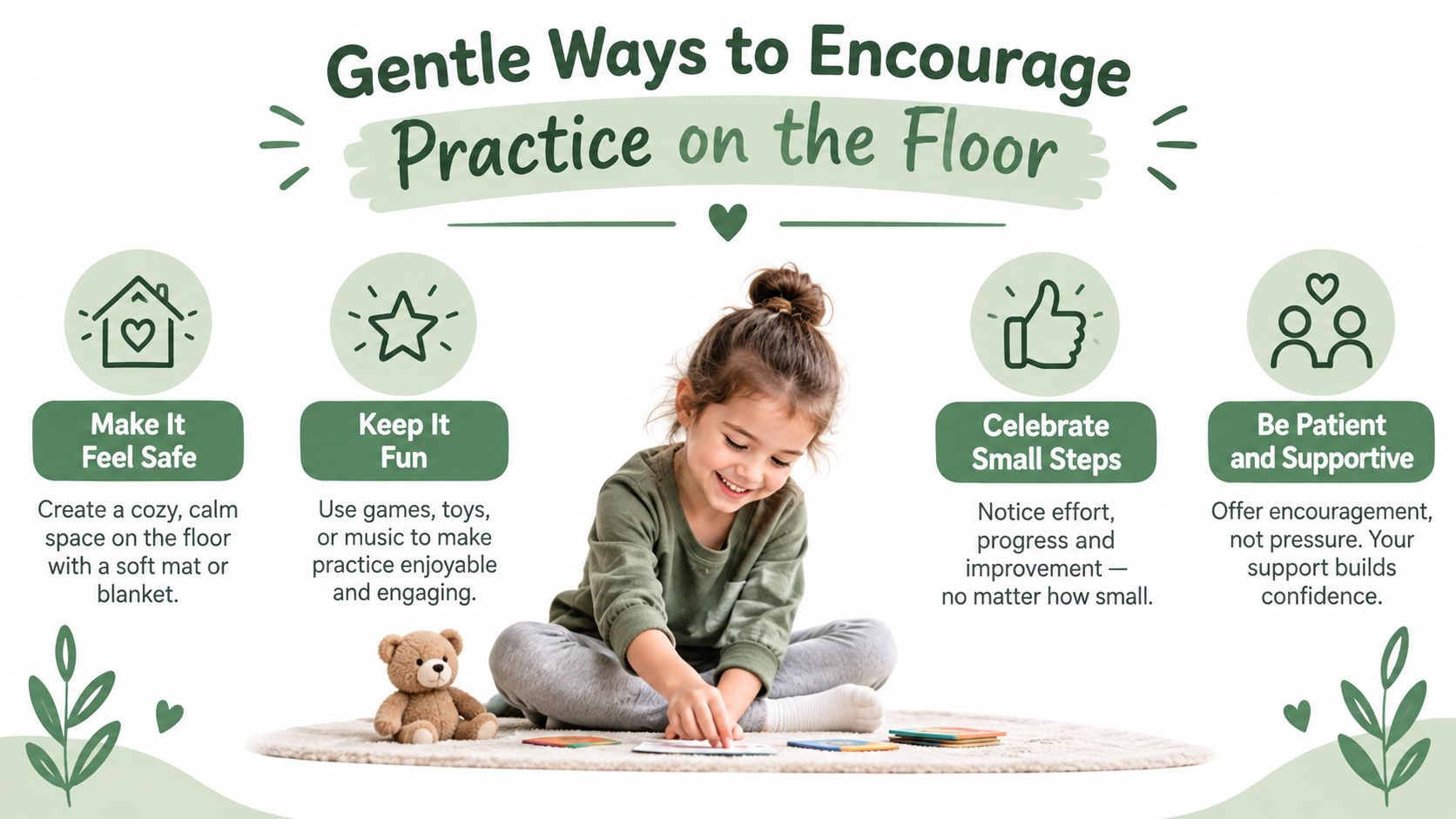
The best support for rolling usually doesn't look like teaching. It looks like giving your baby space, time, and a reason to move.
Short floor play on a firm surface does more than long sessions done when everyone is already frustrated. If your baby lasts a few calm minutes before fussing, that still counts. You're not trying to force the milestone. You're offering chances to practice pieces of it.
Start with positions that make movement possible
Supervised tummy time is still the foundation. Get down at eye level. Talk, sing, make a face, or place a mirror nearby. Babies work longer when someone is with them than when they feel parked there.
Side-lying also helps more than many families realize. It sits between back play and tummy play, so it gives babies a chance to feel that diagonal tipping motion without having to create the full roll from scratch.
A few gentle setup ideas:
- Try shorter, calmer sessions: A couple of minutes after a diaper change can go better than waiting until your baby is already tired.
- Use a rolled towel if needed: Under the chest, it can make early tummy time more comfortable for some babies.
- Switch sides: If you usually place your baby looking one direction, change it up so both sides get practice.
Place motivation slightly out of reach
A toy in the hand ends the problem too quickly. A toy just to the side invites movement.
That small difference matters. When a baby reaches a little across the body, they start finding the shift that rolling needs. The point isn't to make them struggle. It's to let them discover, “If I move this shoulder, that hip follows.”
If you want ideas for building that floor routine, Cradlo's tummy time milestones article gives examples of what caregivers often notice before rolling starts.
Stay close, watch what your baby initiates, and set the toy just beyond that point. That's often more helpful than manually moving their body through the motion.
What not to rush
Try not to lean too heavily on props that hold a baby upright before they can organize their own trunk well on the floor. Seats and containers have their place in family life, but rolling develops from free movement, not from being positioned into more advanced postures.
For many babies, the most useful practice is simple:
- A little tummy time.
- Some side play.
- A toy off to the less-used side.
- Stop before the whole experience turns sour.
That rhythm works well for parents, partners, grandparents, nannies, and daycare staff because it's realistic. No special setup. Just repeatable chances to move.
When Rolling Changes Sleep Safety
Rolling doesn't stay a floor-play question for long. Once a baby can intentionally flip in either direction, sleep setup needs attention too.
This catches a lot of tired families off guard because rolling often starts around the same period that sleep becomes choppier. The milestone is exciting. The crib suddenly feels less simple.
The swaddle transition matters
Current guidance for babies who start rolling emphasizes that caregivers shouldn't focus on stopping the milestone. The priority is a safe sleep setup instead. Parent-facing medical guidance notes that rolling can begin around 3 to 6 months, and that once rolling starts, caregivers should stop swaddling and switch to non-restrictive sleepwear such as a sleep sack, while continuing to place the baby on their back at sleep onset and keeping the crib clear (Medical News Today overview of rolling and sleep safety).
Here's a simple way to think about the transition:
| Rolling Signal | Sleep Adjustment |
|---|---|
| Baby is making strong rolling attempts during awake play | Stop swaddling and use arms-free sleepwear |
| Baby keeps breaking out of the swaddle | Move to a sleep sack rather than re-tightening |
| Baby rolls in the crib independently | Keep placing baby on the back to start sleep, but focus on safe setup rather than repeated repositioning |
What stays the same after rolling begins
Even after your baby can roll, the starting position for sleep is still on the back. The crib should stay simple: firm, flat mattress, fitted sheet, and no loose blankets, pillows, bumpers, or toys.
If you track naps and overnight patterns across multiple caregivers, an infant sleep tracker can help everyone notice when rolling attempts started and whether the sleep setup has already changed at home or daycare.
Once rolling starts, the goal isn't to pin your baby in place. It's to make sure the sleep space is safe for movement.
If you have questions about your baby's specific sleep situation, especially if it involves prematurity or medical concerns, that's a good one to bring to your pediatrician.
One-Sided Rolling and What Asymmetry Really Looks Like
A baby who rolls one way first usually isn't waving a red flag. They're usually showing preference, habit, or a movement pattern they found easier.
Many babies repeat the same direction for a while. That can happen because one side feels more familiar, one hip feels more stable, or they discovered that route first and keep practicing it. As trunk strength catches up, the opposite side often becomes easier too.
Normal preference versus a pattern worth noticing
Ordinary preference tends to look like this: your baby can turn their head both ways, uses both arms and legs during play, and gradually tolerates movement to the less-favored side even if they still choose the easier one most often.
A more concerning pattern looks different. The baby may seem limited on one side rather than less practiced.
Signs worth paying attention to include:
- Persistent head tilt: The head rests tipped to one side a lot of the time.
- Strong turning preference: Your baby consistently looks only one way, even when you change position.
- Uneven limb use: One hand stays fisted more often, or one arm or leg seems less active in play.
- Ongoing body tightness or floppiness: The movement doesn't just look one-sided. It looks hard to organize.
Why the distinction matters
Those patterns can sometimes show up with issues like torticollis or other movement differences that benefit from earlier support. That doesn't mean one-sided rolling automatically points there. It means the whole picture matters more than the roll alone.
What usually helps families most is stepping back and asking: is this a preference, or does one side seem unavailable to my baby?
If you're unsure, take a short video during play and bring that question to your pediatrician. A simple clip often shows more than memory does.
When to Check In With a Pediatrician
Most healthy babies don't follow an exact calendar date for rolling. Still, a few checkpoints can make the question less fuzzy.
The CDC's 6-month milestone checklist includes rolling from tummy to back, which gives families a concrete point of reference rather than a vague sense that it should happen “soon” (CDC 6-month milestones). An NHS resource from Berkshire Healthcare says that if a baby can't roll to either side by around 6 months, parents should speak to a health visitor or GP (Berkshire Healthcare rolling and sitting guidance).
A calm checklist to use
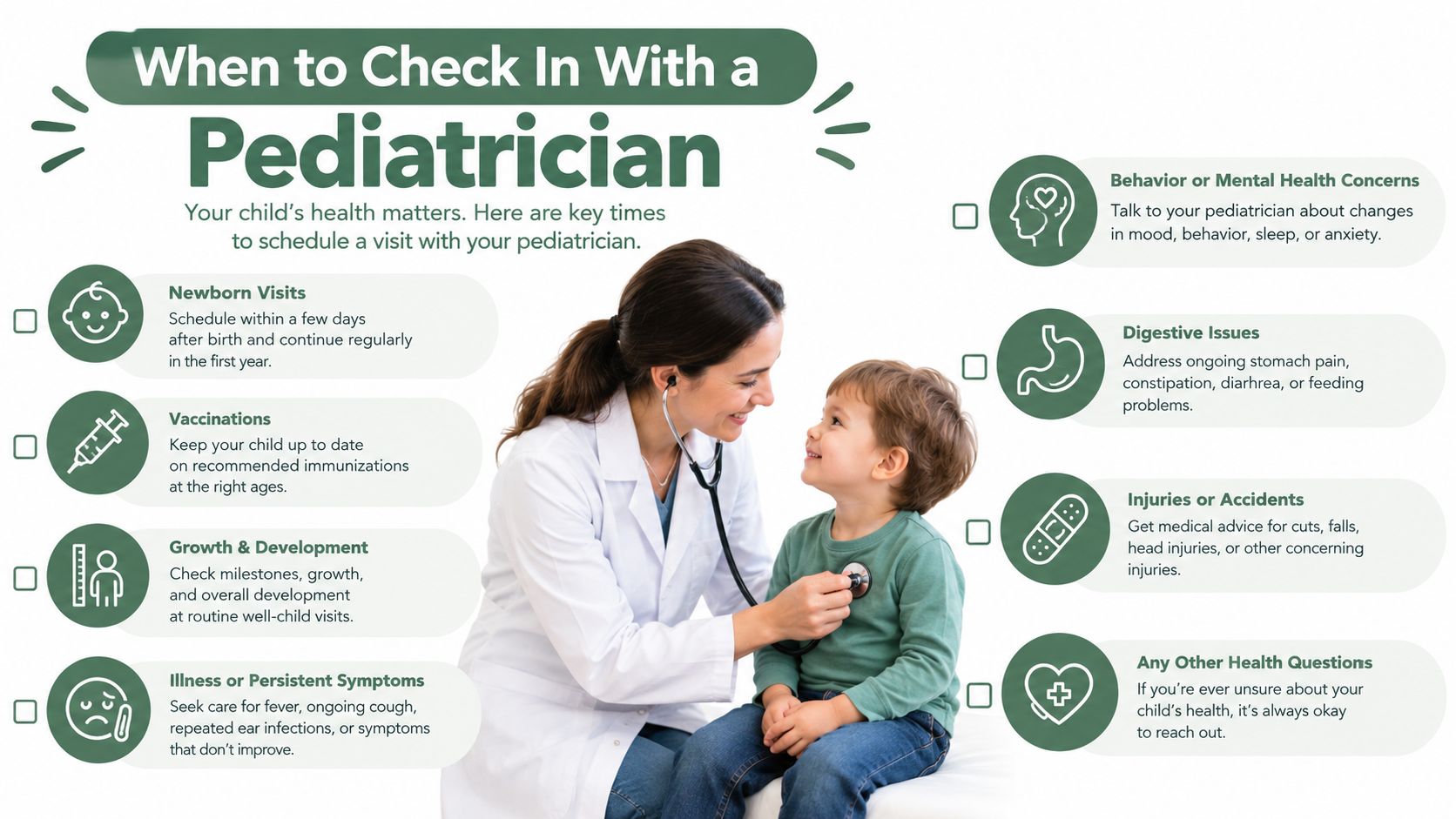
Consider a check-in if you notice:
- No rolling attempts by around 6 months
- Loss of a skill your baby previously showed
- Markedly reduced use of one side during rolling or play
- Ongoing trouble lifting and controlling the head
For babies born early, adjusted age matters. That's a good detail to raise during the visit so expectations stay fair to your baby's timeline.
If you do schedule a visit, bring a few specifics. When you first noticed attempts, how tummy time usually goes, whether one side seems harder, and any birth history you think might matter.
That kind of visit is usually about gathering information, not jumping to worst-case thinking.
A Calm Daily Routine for the Rolling Months
Rolling practice usually works best when it's woven into the day you already have.
After a diaper change, you might try a brief tummy-time moment on a play mat. After a feed and some upright snuggle time, maybe your baby gets a few minutes on their back with a toy placed slightly to one side. Before a nap, when they're calm but awake, you might offer side-lying play for a short stretch and then be done.
A simple rhythm that many families can keep up
You don't need a strict schedule. You need repeatable chances.
A realistic routine might look like this:
- After diaper changes: A short supervised tummy-time try.
- During alert play: Place a toy near the side your baby ignores more often.
- On the mat: Let reachable objects invite turning, kicking, and reaching across the body.
- At the first frustration cues: End early rather than pushing through.
Keeping multiple caregivers on the same page
This is one of those stages where memory gets messy fast. Was that a true roll or just a near miss? Did she go left with grandma and right with daycare? Did the fussing happen before lunch or before the nap?
A shared tracker can help without turning the milestone into a project. Cradlo lets families, nannies, grandparents, and daycare log milestones, sleep, and notes in one place, with entries syncing across iPhone, Android, and the web. For Spanish-speaking families, it also supports English and Spanish, which can make handoffs easier across households.
Small notes are enough. “Rolled tummy to back after two minutes.” “Tried both sides, less frustrated in side-lying.” Over a week or two, patterns usually become clearer.
If you want one place to keep rolling attempts, sleep changes, and caregiver notes together, Cradlo is a shared baby tracker built for families, nannies, grandparents, and daycare. It can be a simple way to spot patterns during the rolling months, especially when different people are seeing different parts of the day.