When to Introduce Rice Cereal to Infant: A Calm Guide
You've wiped down the high chair, mixed a little single-grain cereal until it's thin, and your baby is watching the spoon with wide eyes. One part of you is ready to begin. Another is wondering whether this is the right week, especially after hearing one age from family, another from a pediatrician visit, and a third from an online parenting post.
The question of when to introduce rice cereal to an infant usually isn't about rice alone. It's about timing, developmental readiness, texture, iron, arsenic exposure, and the worry that you'll get a first milestone wrong. You don't need to make this decision from a place of pressure. Use your baby's cues, keep milk feedings central, and bring medical questions to your pediatrician or a lactation professional.
Table of Contents
- The Spoon Moment Most Parents Are Already In
- Age and Developmental Signs That Matter
- Why Rice Cereal Became the Default and What Changed
- A Gentle First Foods Plan You Can Actually Use
- Common Misconceptions Parents Hear
- Logging First Foods Across Every Caregiver
- Your Simple Next Steps This Week
The Spoon Moment Most Parents Are Already In
The first spoonful rarely looks like a polished feeding tutorial. Your partner may be holding the bowl, a grandparent may be taking photos, and the nanny or daycare team may be asking whether today's food was rice cereal or oatmeal. Your baby may accept the spoon, push it out with the tongue, grin, cough, or turn away.
That uncertainty is normal. Older relatives may remember rice cereal as the unquestioned first food, while newer advice emphasizes variety. Online feeds can make the transition look as though babies move neatly from “not ready” to confidently eating solids, with no space for the hesitant middle.
Historically, infant cereals were commonly introduced as first solids, and some clinical guidance described iron-fortified cereal as the “best first food.” A Merck Manual overview of solid foods in infancy notes that many babies could begin solids between 4 and 6 months when they had good head control. It also described starting with 1 to 2 teaspoons of dry cereal mixed thin, then increasing gradually as the baby adjusted.
That history explains why rice cereal still appears in family advice, baby books, and nursery cupboards. It doesn't mean rice has to be first, and it doesn't mean choosing oatmeal instead is a mistake.
A useful mindset: The first food is practice with a new way of eating, not a test your baby has to pass.
The sections ahead focus on the questions that make the decision clearer: the age window, physical signs, why rice became popular, how to offer it without overrelying on it, and how a shared log can help every caregiver follow the same plan. Your pediatrician remains part of that plan, particularly if your baby was born prematurely, has reflux, has eczema, or has other health considerations.
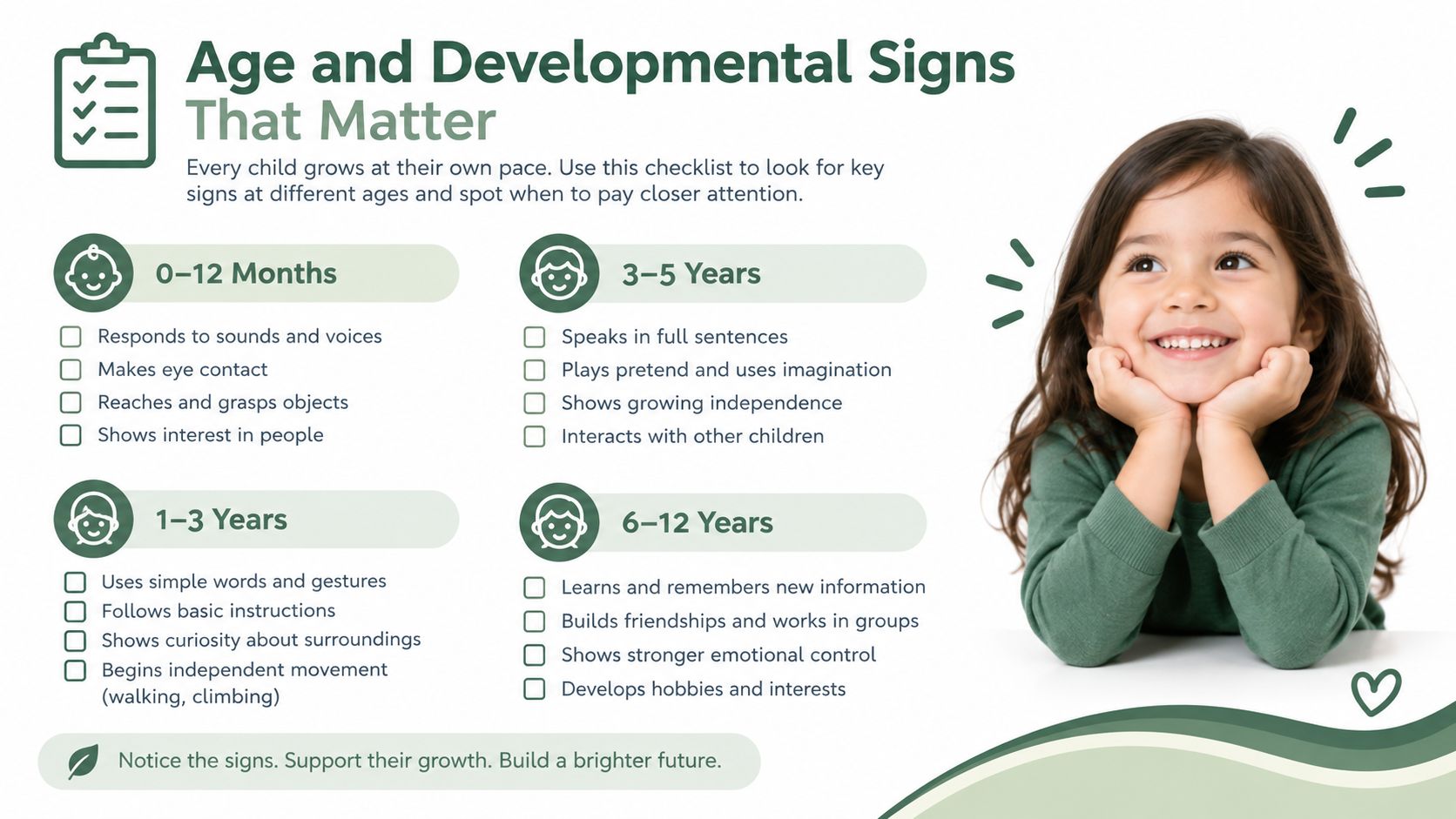
Age and Developmental Signs That Matter
Age gives you a starting point, but readiness signs tell you whether your baby can manage the experience. Public-health guidance commonly places the beginning of solids around 6 months, while clinical guidance has described a broader 4-to-6-month window. Starting earlier than 4 months should only be considered with medical guidance.
Look for several signs together rather than relying on one clue. A baby who watches you eat may be curious, but curiosity alone doesn't show that the mouth, neck, and trunk are ready to coordinate swallowing.
Readiness looks like a combination
Your baby may be ready when they can:
- Hold the head steady: Good head control helps your baby stay safe and coordinate the spoon.
- Sit with support: Your baby doesn't need to sit independently, but they should be stable and upright rather than slumped or reclined.
- Accept the spoon: The tongue-thrust reflex should be fading, so food isn't automatically pushed back out.
- Show focused interest: Reaching toward food or opening the mouth when others eat can support the picture of readiness.
- Stay engaged briefly: A baby who can remain comfortably positioned for a short meal has a better foundation than one who is overtired or upset.
For a plain-language overview of how feeding readiness fits into broader growth, you can review Cradlo's infant development milestones guide. It's still worth asking your pediatrician to assess your individual baby, particularly if the signs don't line up neatly.
Make the first attempts safe and low pressure
Offer food with your baby upright and closely supervised. Keep the first taste small, and stop if your baby turns away, closes the mouth, or becomes distressed. Milk, whether breast milk or formula, remains the primary source of nourishment while solids are getting started.
Many caregivers wait several days before adding another new food. That pause can make it easier to notice a possible rash, vomiting, diarrhea, or a meaningful change in feeding or behavior. If you see concerning symptoms, stop the new food and contact your pediatrician. Trouble breathing, swelling, or severe symptoms require urgent medical attention.
Gagging can happen as babies learn new textures. Choking is different and can prevent breathing, which is why upright positioning, close supervision, and age-appropriate textures matter. A pediatrician or infant-feeding professional can show you what to do if you're unsure how to distinguish the two.
A practical rule is simple: if your baby shows a group of readiness signs and your pediatrician agrees, the exact calendar date doesn't need to be perfect. A few days earlier or later within the advised window usually matters less than whether your baby can sit supported, control the head, and coordinate the spoon.
Why Rice Cereal Became the Default and What Changed
Rice cereal became familiar because it solved several practical problems at once. Infant cereal could be iron-fortified, mixed into a smooth texture, and thinned or thickened with breast milk, formula, or another suitable liquid. For generations of families, that convenience made it an easy bridge between milk feedings and spoon practice.
Iron is an important part of the conversation. As babies grow, families need to offer iron-rich complementary foods, and fortified cereal is one convenient option. Pureed meats, beans, and other fortified grains can also contribute iron once a baby is developmentally ready for them.
The tradeoff is variety, not panic
Rice absorbs inorganic arsenic from its growing environment more readily than some other grains. That concern changed the public-health conversation from treating rice cereal as the automatic default to encouraging families to rotate cereals.
The CDC guidance on introducing solid foods recommends offering a variety of infant cereals, such as oat, barley, and multigrain, rather than only rice cereal because rice cereal can increase arsenic exposure. The same guidance supports variety while families continue offering iron-rich foods.
The FDA has established an action level of 100 parts per billion for inorganic arsenic in infant rice cereal, as described in its guidance on inorganic arsenic in infant rice cereal. An action level isn't a message that one spoonful is dangerous. It's a regulatory limit used to help manage exposure in a food eaten by infants.
Rice can fit without becoming the whole menu
The FDA's final guidance says iron-fortified rice cereal is a good source of nutrients, while also clarifying that it doesn't need to be the only or first infant cereal. Fortified oat, barley, and multigrain cereals are alternatives.
If your family chooses rice cereal because it's familiar, iron-fortified, or easy for your baby to accept, you don't need to feel guilty. The more balanced approach is to use it as one food in a varied rotation. If you're concerned about arsenic exposure, ask your pediatrician how rice cereal fits your baby's overall eating pattern rather than judging the food in isolation.
A Gentle First Foods Plan You Can Actually Use
Start when your baby is rested, upright, and calm. A small amount of breast milk or formula before the spoon can help if your baby is very hungry, but avoid turning the first solid into a replacement for milk.
Choose an iron-fortified infant cereal and prepare it according to the package directions. If you use rice cereal, mix it with breast milk or prepared formula until it has a thin, smooth consistency. Your pediatrician can help you adjust the plan for a premature baby, reflux, swallowing concern, or another medical condition.
A low-pressure starting rhythm
A first attempt might look like this:
- First offering: Begin with 1 to 2 teaspoons of prepared cereal, as described in Mayo Clinic's guidance on introducing solid foods. Let your baby explore the spoon without insisting on a full serving.
- Early repetition: Offer the same cereal again on another calm day, watching your baby's cues and any changes in skin, stool, spit-up, or general comfort.
- Gradual texture change: Once your baby can swallow the runny cereal, make it a little thicker over time. Mayo Clinic advises increasing thickness and serving size gradually as swallowing improves.
- Add variety: After rice cereal has been tolerated, introduce an iron-fortified oat, barley, or multigrain cereal according to your pediatrician's advice.
- Build a broader menu: Add smooth purees such as vegetables, fruit, beans, or meat when appropriate, while keeping cereal as a complementary food rather than the entire solids menu.
There isn't one correct portion that every baby should reach. Appetite, milk intake, developmental skills, and medical history vary. Let your baby decide whether to continue, and stop when they show they're finished.
You can use a simple baby feeding chart for starting solids to coordinate foods and textures, but treat any chart as a planning aid, not a prescription. Spanish-speaking relatives or caregivers may use different terms for cereal, porridge, or puree, so write the food and texture plainly enough that everyone understands the same preparation.
If rice cereal is part of your routine, rotate it with other fortified grains rather than offering rice at every solid-food opportunity. The FDA's practical arsenic guidance says cooking rice like pasta can reduce inorganic arsenic by 40% to 60%, but that preparation advice applies to rice itself and doesn't replace the value of rotating grains. Infant cereal products should be prepared as directed on their labels.
Common Misconceptions Parents Hear
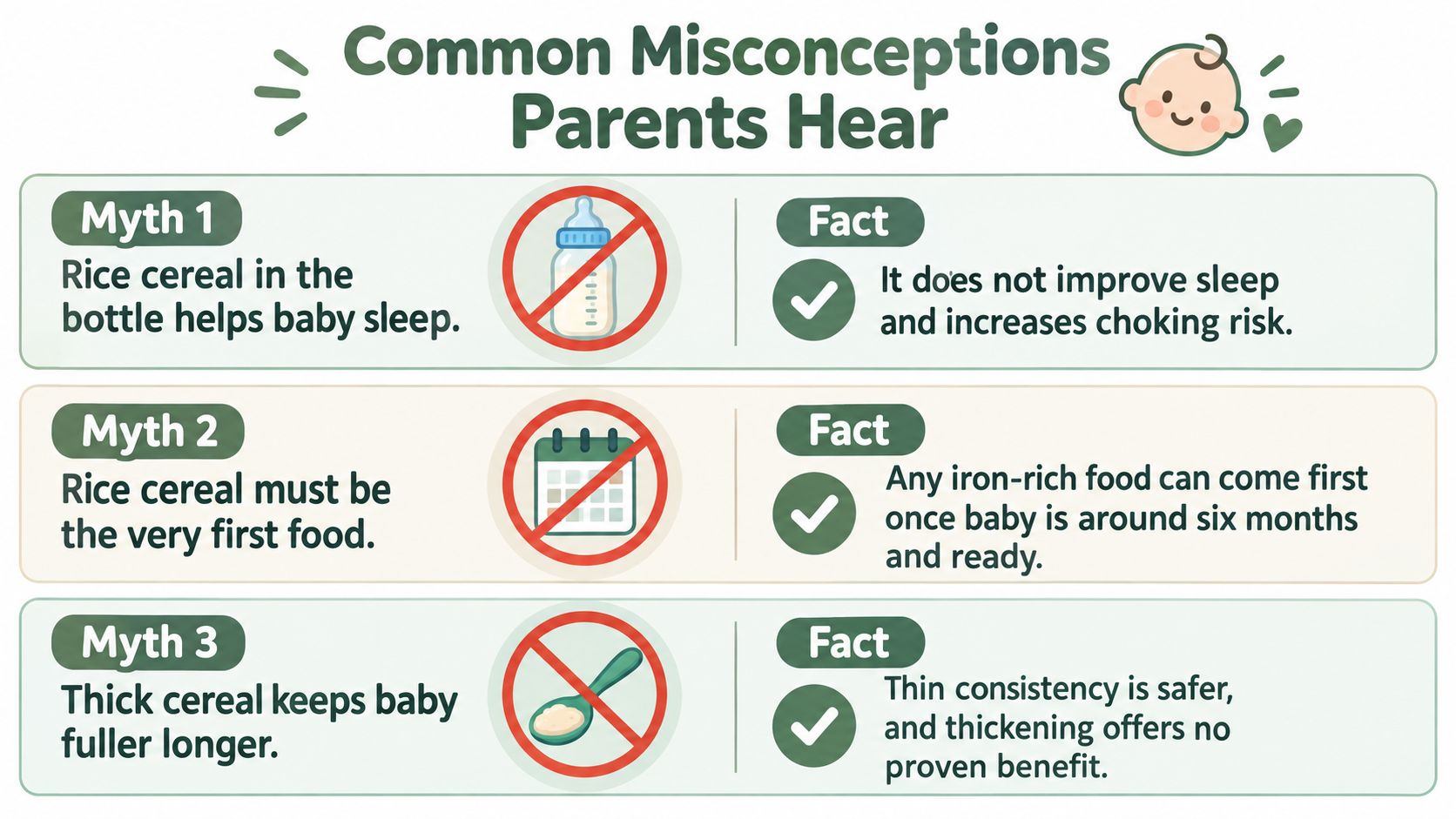
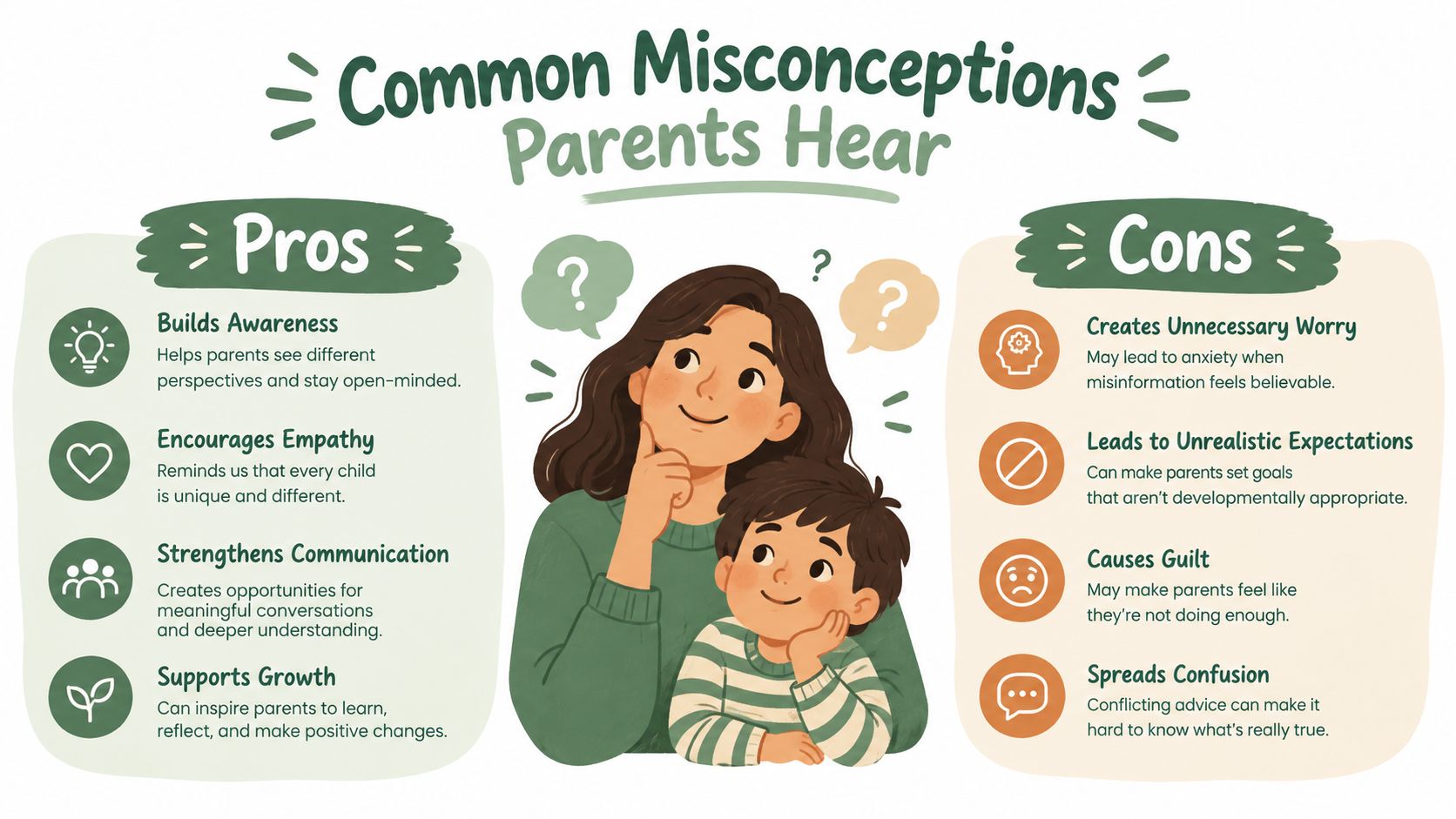
Family advice often arrives with confidence because it worked, or seemed to work, for someone's baby years ago. The trouble is that a familiar practice can still be poorly suited to a young infant's swallowing skills or current guidance.
“Rice cereal in the bottle helps sleep”
Adding cereal to a bottle isn't a safe sleep strategy. It can make the feed harder to coordinate and increase choking or aspiration risk, and it may displace breast milk or formula that still provides important nourishment. Don't add cereal to a bottle unless your pediatrician has prescribed a specific thickened-feeding plan for a medical reason.
Longer sleep isn't a reliable measure of readiness for solids either. A baby may wake for many reasons, and spoon-feeding cereal won't solve every night waking.
“The calendar says my baby is ready”
Age is useful, but it can't replace body control. A baby who is interested in food but can't maintain a supported upright position or still strongly pushes food out with the tongue may need more time.
Weight alone doesn't answer the question. Ask the pediatrician to consider development, swallowing, growth, milk intake, and any relevant medical history together.
“Rice has to be first”
Rice cereal can be one option, but it isn't an obligation. Iron-fortified oat, barley, or multigrain cereal, along with iron-rich foods such as pureed meats and beans, can provide alternatives when your baby is ready for solids.
Skipping rice cereal isn't automatically a nutritional problem. The important question is whether your baby's broader solids pattern includes appropriate iron-rich foods, and your pediatrician can help you make that plan.
Keep the standard flexible: Rotation protects variety without turning any single cereal into a forbidden food.
Logging First Foods Across Every Caregiver
The first-food period gets confusing when several adults share feeding duties. One caregiver remembers a thin rice cereal at breakfast, another remembers oatmeal, and a daycare note says “cereal” without recording which grain or how much. Those small gaps become frustrating when your baby has a rash, a stool change, or more spit-up later.
A shared tracker can keep the record factual. For a rice cereal entry, record the time, product, grain, consistency, approximate amount, and any immediate reaction. If a grandparent feeds the baby after a parent leaves for work, everyone can see what was offered instead of relying on a group text or memory.
Make each entry useful
A clear solids log might include:
- Food: Rice cereal, oat cereal, puree, or a combination.
- Preparation: Mixed thin with breast milk or formula, or prepared according to the product label.
- Amount: A small spoonful, a partial serving, or the amount your baby accepted.
- Response: Turned away, gagged, accepted, spat up, developed a rash, or had a stool change.
- Caregiver: Parent, partner, grandparent, nanny, or daycare team member.
A timeline can also help you notice whether a new food has been offered repeatedly before you introduce another. That doesn't diagnose an allergy or explain every symptom, but it gives your pediatrician a cleaner account of what happened.

Cradlo is one option for this kind of coordination. It lets families, nannies, and daycare caregivers record care details in a shared timeline, with each caregiver using their own identity rather than sharing one login. Its solids log can keep food, timing, and reaction notes visible across the care circle, while the service supports English and Spanish.
For a printable alternative, Cradlo's baby feeding log template can help your family decide which details to record. Bring the log to a pediatrician visit if you have questions about a reaction, feeding pattern, portion, or transition from milk to solids.
Your Simple Next Steps This Week
You don't need a perfect menu or a perfectly timed first spoon. Use this short plan to organize the next conversation and keep everyone caring for your baby aligned.
-
Check readiness together. Look for several signs, including steady head control, supported sitting, fading tongue thrust, and active interest in food. Ask the pediatrician before starting, especially if your baby was premature, has reflux, eczema, swallowing concerns, or a family history of allergy.
-
Choose two cereal options. Pick one iron-fortified rice cereal and one iron-fortified oat, barley, or multigrain cereal. Compare the ingredient labels and follow the preparation directions.
-
Offer a small first taste. Prepare the cereal thin and offer it from a spoon when your baby is calm and upright. Stop when your baby signals they're finished.
-
Keep a shared record. Log the food, preparation, amount, time, caregiver, and any changes in skin, stool, spit-up, or behavior in Cradlo or on a shared written chart.
-
Rotate thoughtfully. Once your baby has tolerated the first cereal and your pediatrician supports the plan, add another fortified grain or an iron-rich puree such as beans or meat. Don't make rice the only cereal.
-
Call before reintroducing a concern. If a food seems connected with a reaction, pause it and contact the pediatrician rather than testing it again on your own.
Starting solids is a gradual learning process for your baby and for the adults feeding them. The safest plan is the one that respects readiness, keeps textures appropriate, protects milk intake, includes variety, and leaves medical decisions with your baby's care team.
Cradlo gives parents, partners, grandparents, nannies, and daycare caregivers one shared place to log solids, textures, portions, and reactions in real time. Visit Cradlo to start the 7-day free trial on the monthly plan and make your baby's first-food record easier for the whole care circle to follow.