How to Get Your Toddler to Nap Without the Daily Battle
The nap starts with a clean crib, half-drawn curtains, and a caregiver who's already tiptoeing toward the door. Then comes “one more story,” followed by water, another hug, and a very determined toddler standing up before the caregiver reaches the hallway. The nap disappears. A short stroller doze takes its place, and by midafternoon everyone is tired, cranky, and somehow too wired to settle.
If you're learning how to get your toddler to nap, start here: this usually isn't defiance. It's often a mismatch between timing, sleep pressure, surroundings, and the different ways adults handle the handoff. I've lived through the 18-month nap transition, and the answer wasn't a stricter speech or a longer battle. It was a simpler routine, a more realistic schedule, and clear information shared between everyone caring for the child.
Table of Contents
- The Afternoon That Never Quite Happens
- How Much Sleep Your Toddler Actually Needs
- Build a Nap Routine That Repeats Itself
- A Realistic Toddler Nap Schedule by Age
- What to Do When Your Toddler Fights the Nap
- When the Problem Is the Handoff, Not the Nap
- A Gentle Plan to Start This Week
The Afternoon That Never Quite Happens
Nap trouble often begins slowly. A child who used to sleep after lunch starts singing in the crib. A nanny offers a later nap because the morning ran long. A grandparent adds an extra snack. At daycare, the toddler sleeps perfectly, then refuses the same opportunity at home.
That pattern can make parents feel singled out. It's easy to think the child is testing you, especially when the toddler seems cheerful in one setting and furious in another. More often, the child is responding to different cues, different timing, and different expectations.
Practical rule: Don't ask whether your toddler is “good” at napping. Ask whether every caregiver is offering the same conditions at roughly the same point in the day.
The 18-month transition is particularly messy because many toddlers move from two naps to one during this stage. A child may need enough awake time before the afternoon nap, but not so much that they arrive overtired and agitated. A missed nap can then turn into a late car sleep, a difficult bedtime, or a child who looks exhausted but fights sleep with impressive commitment.
The fix starts with removing the daily guessing game. Write down when the child woke, when the nap was offered, whether sleep happened, and what bedtime looked like. Share that information between parents, partners, grandparents, nannies, and daycare. Once the adults stop changing the experiment every day, the child gets a clearer rhythm.
You're not trying to force sleep into existence. You're making sleep easier to recognize.
How Much Sleep Your Toddler Actually Needs
Think in terms of a 24-hour sleep budget, not a nap target that has to be hit perfectly every afternoon. The American Academy of Sleep Medicine recommends 11 to 14 hours for children aged 1 to 2 years and 10 to 13 hours for children aged 3 to 5 years, including naps, as outlined in its pediatric sleep duration recommendations.
That total includes nighttime sleep, naps, and the occasional imperfect day. A toddler who sleeps well overnight may need a shorter nap. A toddler with early waking or a restless night may need more daytime sleep. Look at the pattern across a typical stretch of days instead of judging the entire schedule by one unusually long nap or one missed nap.
| Age range | Total sleep in 24 hours | Typical daytime nap length | Typical number of naps |
|---|---|---|---|
| 1 to 2 years | 11 to 14 hours | Often about 1 to 2.5 hours | Often moving from two naps toward one |
| 2 to 3 years | Within the broader toddler range | Often one afternoon nap, if still needed | Usually one |
| 3 to 5 years | 10 to 13 hours | Varies, and may gradually disappear | One nap or no nap |
Nap patterns can change quickly. Guidance from the Sydney Children's Hospitals Network notes that two naps often become one between 12 and 18 months, while many children stop napping somewhere between the preschool years, as described in its toddler sleep recommendations. That makes resistance a possible developmental transition, not automatically a behavior problem.
Watch the whole day for clues. Crankiness, early waking, falling asleep in the car, or a second wind at bedtime can suggest that daytime rest is still useful. A bedtime that becomes difficult, or a child who lies awake for a long time, can suggest that the nap is too late, too long, or no longer fits.
The goal isn't precision. It's a total that supports a reasonably rested child without turning every nap into a performance review.
Build a Nap Routine That Repeats Itself
A nap routine works best when it's short enough for every caregiver to repeat. It shouldn't depend on one parent's exact voice, a particular chair, or a twenty-minute negotiation. The child needs the same sequence, not a perfect performance.
Start the wind-down 20 to 45 minutes before sleep, depending on how quickly your toddler shifts gears. Keep it to a few low-arousal steps:
- Give a visible cue. Close the curtains, put away active toys, or use the same phrase each day.
- Choose one calm activity. Read a short book, complete a simple puzzle, or listen to quiet music.
- Handle practical needs. Offer water, change a wet diaper, and use the bathroom if appropriate.
- Prepare the room before the final goodbye. Make it dark while allowing airflow, keep white noise at a steady low volume, and use the same sleep space.
- Repeat the ending. Use one phrase or song, offer the same comfort object if your child has one, and leave with a predictable goodbye.
Pediatric guidance supports consistent routines around waking, meals, naps, and play, while child-sleep guidance commonly recommends relaxing cues such as reading, soothing music, or massage. The American Academy of Pediatrics sleep guidance also emphasizes that naps count toward total daily sleep and that regular habits matter.
The room should look and feel familiar whether your toddler is at home, with a nanny, or in daycare. A comfort object can travel with the child, but the routine needs to travel too. If the daycare caregiver says, “It's nap time,” then reads the same kind of short book and uses the same closing phrase, the toddler gets a recognizable signal even in a different room.
Use a wake-window calculator for nap planning as a starting point, not a command. If your toddler is consistently wide awake at the offered time, adjust gently rather than extending the struggle. The best routine is the one a tired adult can run on an ordinary day.
A Realistic Toddler Nap Schedule by Age
Clock times help, but wake-up time is the better anchor. A child who wakes early may be ready for rest earlier than a child who sleeps late, so build the day from the morning rather than forcing every family into one timetable.
A younger toddler may still manage a midmorning nap, perhaps around 9:30 to 10:00, especially when the day begins early. By around 18 months, many children are ready for one nap that drifts toward 12:30 to 1:00. The shift can feel abrupt, but it often works better than trying to preserve a late second nap that interferes with nighttime sleep.
| Age range | Typical wake-up | Nap start window | Nap length | Suggested bedtime |
|---|---|---|---|---|
| Around 12 months | Based on the child's usual morning | Around 9:30 to 10:00 for a midmorning nap | Varies by the child | Based on total sleep and the final nap |
| Around 18 months | Based on morning wake-up | Around 12:30 to 1:00 for a single nap | Often one afternoon nap | An earlier bedtime may help during the transition |
| Around 2 years | Often a morning that allows a longer first wake period | Around 1:00 | About 1 to 2.5 hours if sleep still comes easily | Set bedtime so the nap ends well before night sleep |
| Around 3 years | Flexible morning start | Early afternoon rest period | Sleep may happen, or may not | Move bedtime earlier on no-nap days |
For a two-year-old, an example day might include a single nap from 1:00 to 2:30. That's only a model. Some children need a shorter rest, and some need a longer one. The important question is whether the nap supports the entire day.
Many sleep experts recommend leaving roughly 3 to 4.5 hours between nap wake-up and evening bedtime, as described in this guidance on naps for two-year-olds. A nap that ends too late can make bedtime harder, while a nap offered too early may produce a happy toddler who is not yet ready.
At three, some children still need a daily rest even when they no longer sleep. Keep the quiet period. The schedule serves the child, not the other way around.
What to Do When Your Toddler Fights the Nap
Don't assume every nap refusal means you need to push harder. First, troubleshoot the routine. Shorten it if your child gets more wound up during the lead-up. Lower the lights and stimulation. Move the nap offer by about 15 minutes in either direction. Check hunger, thirst, a wet diaper, room temperature, and whether the morning contained enough active time.
Then watch what happens after you leave. A toddler who complains briefly and settles needs a different response from a toddler who stays cheerful and awake for a long time. A child who plays happily in the crib for 30 minutes or more before falling asleep may be showing that the nap timing needs adjustment or that the nap is beginning to fade, as noted by Cleveland Clinic's guidance on when children stop napping.
Signs the nap may be ending
The clearest sign isn't one dramatic refusal. It's a stable pattern:
- Happy during rest: Your toddler plays contentedly rather than becoming distressed.
- No clear evening crash: Bedtime remains reasonably smooth without the nap.
- Night sleep stays solid: The child isn't compensating with early waking or repeated overnight disruption.
- The refusal continues: The nap doesn't return after you simplify timing and the environment.
If your toddler is still melting down by midafternoon, falling asleep in the car, or struggling badly at bedtime, don't rush to drop the nap. Offer it consistently for a while, but remove the pressure to perform. The fallback can be quiet books, soft music, dim light, and calm play in the sleep space.
A quiet rest is useful even when sleep doesn't happen. It protects a pause in the day without turning the crib into a battleground. For more ideas around this transition, see these sleep regression tips for toddlers.
When the Problem Is the Handoff, Not the Nap
A toddler who naps at daycare but refuses at home is giving you useful information. The child may not be ready to stop napping. The home routine may start too early, include too much attention, or change depending on which adult is present.
Treat nap care as a shared process. Every caregiver should record the same small set of details:
- Morning wake-up: When the child was out of bed.
- Nap offer: When the wind-down began and when the child entered the sleep space.
- Sleep result: Whether the child slept, rested, or never settled.
- Mood on waking: Cheerful, clingy, tearful, or immediately dysregulated.
- Bedtime: When the routine started and how easily sleep followed.
Keep the log across a consistent stretch of days, including home days and daycare days. A pattern may appear quickly. If the toddler sleeps in a busy daycare room but not in a quiet bedroom at home, the issue could be the amount of attention available, the timing of the offer, or the difference in boundaries. If every caregiver reports a refusal, the nap itself may be changing.
Shared language matters too. Use one line in the family chat: “Woke early, nap offered after lunch, rested but didn't sleep, mood was good.” That's more useful than “Nap was bad.” In a multilingual family, choose the same simple phrase in English, Spanish, or whichever language each caregiver uses most naturally. The wording doesn't need to match perfectly. The cue and expectation should.
Parents, partners, grandparents, nannies, and daycare staff don't need identical personalities. They need matching signals. A consistent wind-down phrase, the same comfort object, and a shared approach to leaving the room can make the nap feel familiar regardless of who is there.
This is the coordination piece many families miss. More ideas for making the routine consistent appear in this guide to consistent naps across caregivers.
A Gentle Plan to Start This Week
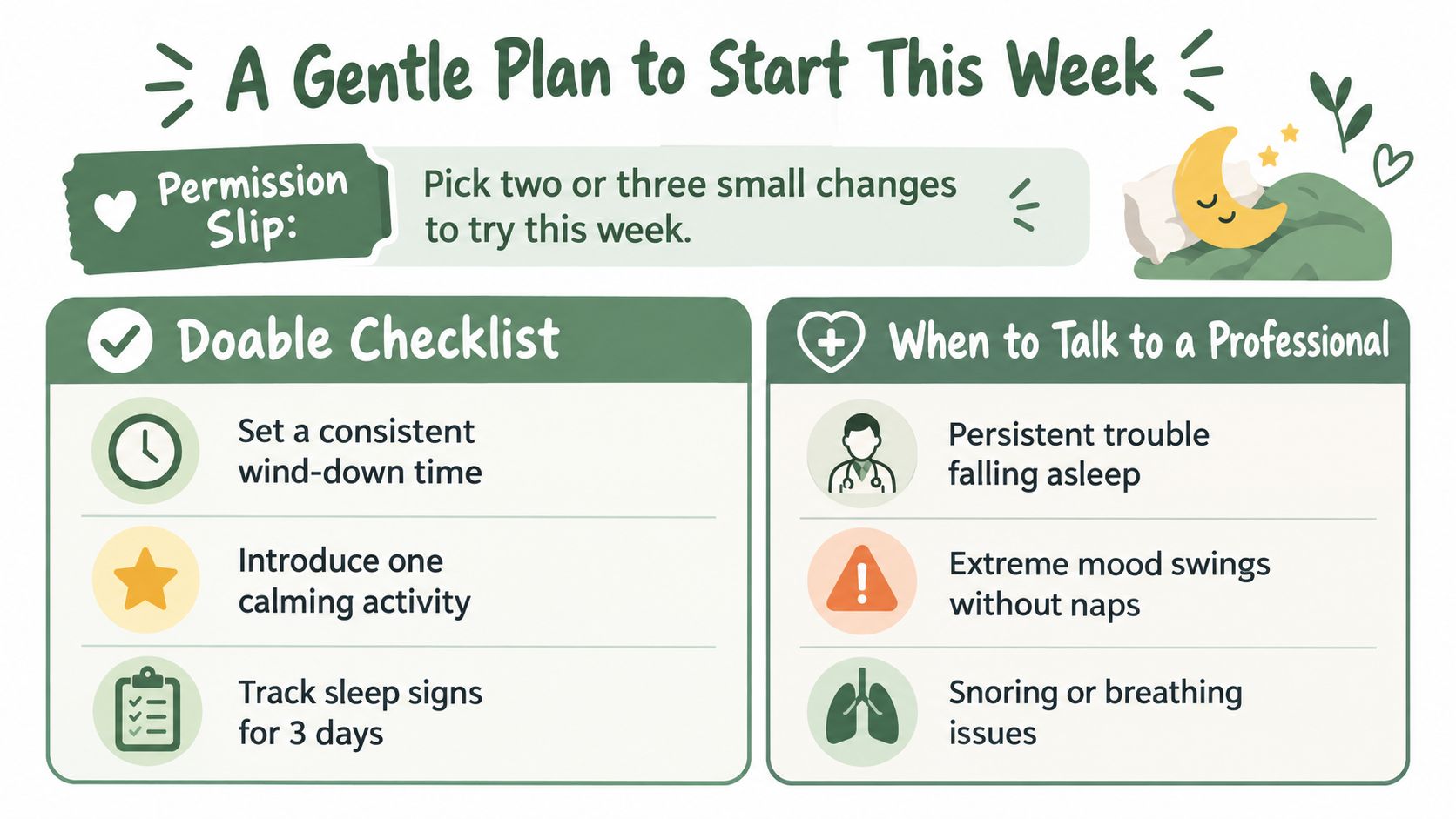
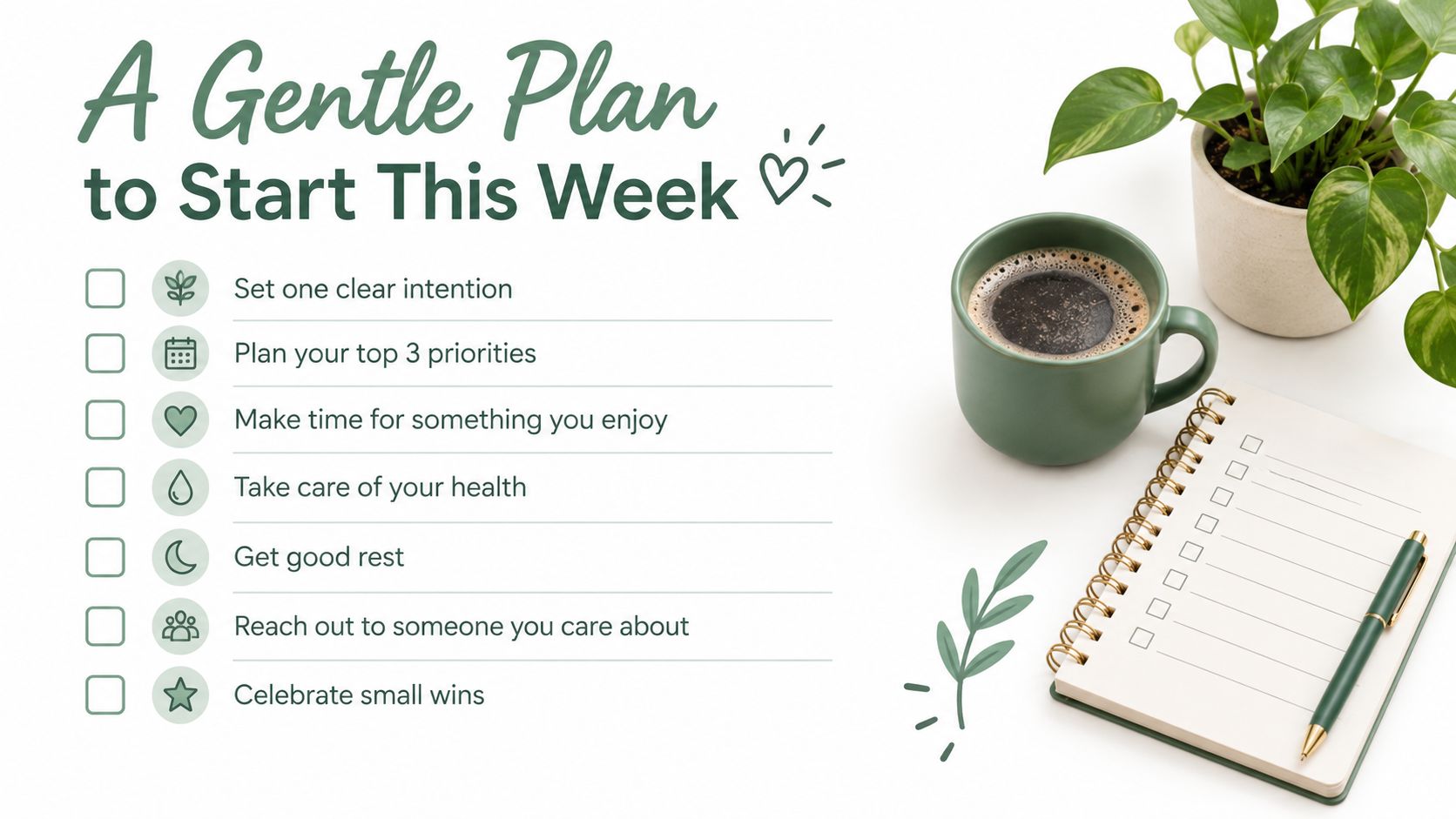
Give yourself permission to choose two or three changes, not every suggestion at once. If you change the wake time, nap timing, routine, bedtime, room, and caregiver response together, you won't know what helped.
Days 1 and 2: Lock the morning wake-up as consistently as practical. Offer the nap at the first reliable tired window rather than waiting until your toddler is already falling apart. Record what happened without judging it.
Days 3 and 4: Shorten or simplify the wind-down so any caregiver can repeat it. Keep the same book or calm activity, prepare the room in advance, and use one clear goodbye.
Days 5 and 6: Stabilize bedtime. A nap that ends late, or a bedtime that drifts later after a missed nap, can make the following day harder. Protect nighttime sleep and consider an earlier bedtime when the child has had no daytime sleep.
Day 7: Review the pattern. Keep the two changes that helped most, and drop the rest. If the nap remains inconsistent but your toddler is cheerful and sleeping well overnight, replace the nap battle with a dependable quiet period.
Talk with your pediatrician about a sudden nap regression after illness, gasping or long pauses during sleep, extreme daytime sleepiness despite adequate overnight sleep, or persistent refusal across caregivers alongside weight or mood concerns. Health questions belong with a pediatrician, and feeding or lactation concerns belong with a qualified lactation professional. Asking for help isn't overreacting.
Cradlo gives parents, partners, nannies, grandparents, and daycare one shared place to log naps, wake-ups, mood, and bedtime, with real-time syncing across phones and the web. Visit Cradlo to try the shared tracker during its 7-day free trial on the monthly plan and make the next nap handoff less of a guessing game.