Sleep Regression Tips: 7 Ways to Restore Calm
One caregiver reports a short nap. Another says bedtime was unusually difficult. At pickup, nobody knows whether the baby's sleep has changed or whether someone merely forgot to log what happened. That uncertainty can make an already tiring stretch feel much bigger.
A rough patch doesn't mean anyone has failed. Sleep changes often appear during normal developmental shifts, and the most useful sleep regression tips usually involve coordination rather than a perfect technique. The seven strategies below focus on building a reliable picture, aligning routines, adjusting nap expectations, accounting for feeding and health context, and creating one flexible response across home, daycare, and every caregiver. Health concerns belong with a pediatrician, and feeding questions belong with a pediatrician or lactation professional, not an app.
Table of Contents
- 1. Track sleep patterns across all caregivers to spot regression signs early
- 2. Maintain consistency in sleep routines even when caregivers rotate
- 3. Communicate sleep changes immediately across your caregiving team
- 4. Adjust expectations and schedules during regression windows without guilt
- 5. Consolidate overnight and daytime sleep data to recognize regression type
- 6. Coordinate feeding, teething relief, and symptom tracking with all caregivers
- 7. Create a shared sleep regression playbook so caregivers respond consistently
- 7-Point Caregiver Sleep Regression Comparison
- Make the Next Handoff Easier
1. Track sleep patterns across all caregivers to spot regression signs early
A baby wakes repeatedly overnight at home, yet naps normally with the nanny. At daycare, the afternoon nap ends early, and a grandparent remembers only the difficult bedtime. Each report may sound unrelated until caregivers record the affected sleep period, timing, and setting in one place. That shared view helps distinguish a broad change from a problem limited to naps, nights, or one routine.
Sleep regression is not a medical term or a predictable stage that every infant experiences. It commonly describes a temporary disruption, with timing that varies by child, as Cleveland Clinic explains in its overview of the four-month sleep change. Parents commonly report disrupted sleep around four, six, eight, twelve, and eighteen months. Babies may begin sleeping stretches of five to six hours between three and five months and sleep through the night sometime between four and nine months, according to BabyCenter's guidance on infant and toddler sleep regression. These ranges describe common observations, not a timetable your baby must follow.
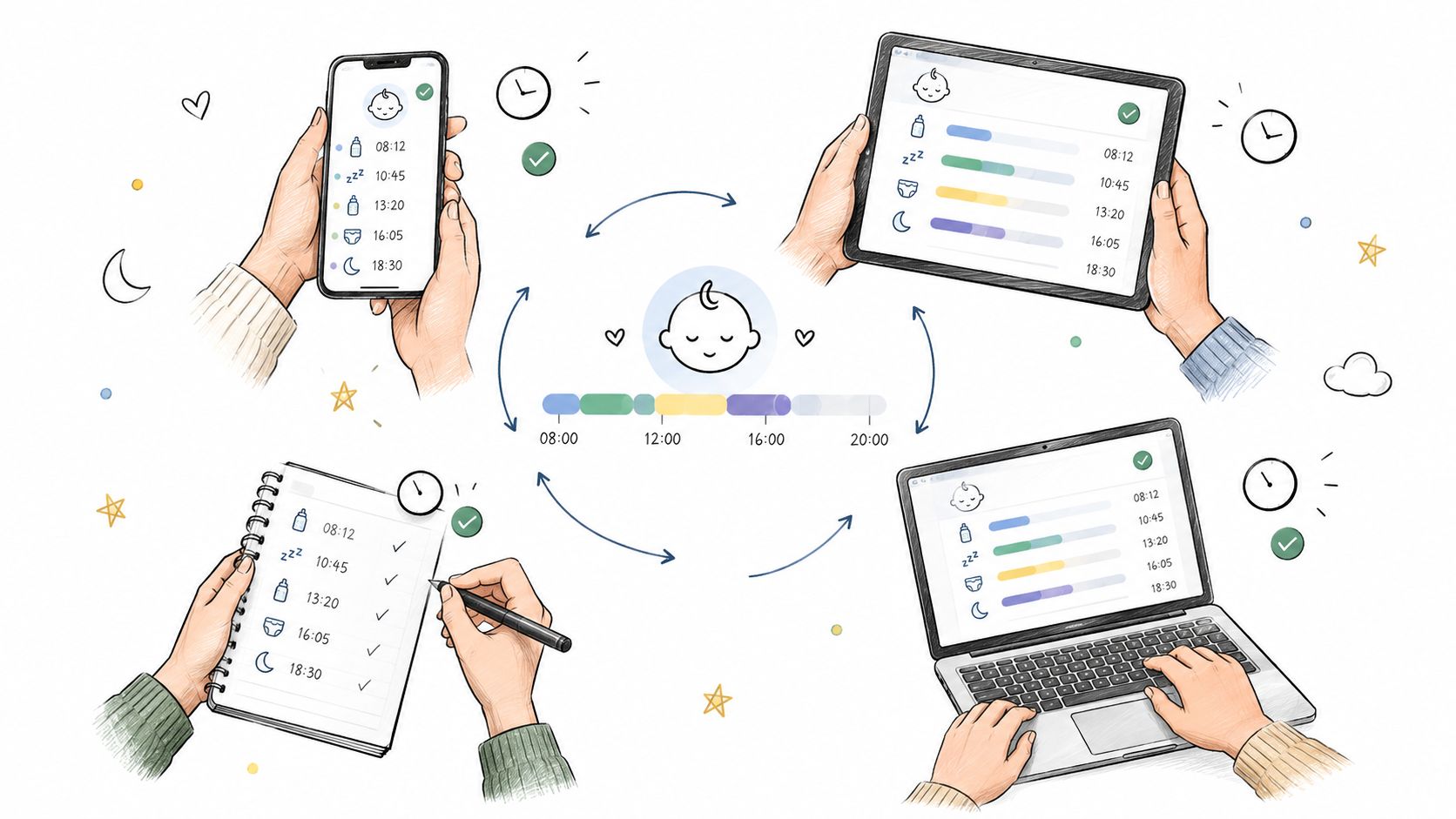
A shared record, such as a baby diary app for coordinated caregiving, lets caregivers log events soon after they happen. Keep entries brief:
- Log the sleep period: Record when sleep started and ended, using approximate times when needed.
- Add the context: Note daycare changes, travel, feeding differences, teething concerns, illness signs, or a new skill.
- Review the pattern: Compare several days before changing the routine because of one difficult night.
- Use neutral language: “Short nap and fussy on waking” gives the team more usable information than “Something is wrong.”
The goal is a shared picture, not constant monitoring. Clear records help caregivers coordinate nap timing, feeding context, and responses across home and daycare without blame.
2. Maintain consistency in sleep routines even when caregivers rotate
A baby doesn't need every caregiver to perform bedtime in exactly the same style. They do benefit from recognizing the same sequence. Bath, pajamas, feeding, a short story, and sleep can work as a familiar signal even when one caregiver sings and another reads.
A rotating care team can accidentally create several different versions of bedtime. A parent may offer a bottle and cuddles, a nanny may move straight from play to the crib, and grandparents may skip the wind-down because the baby appears tired. During a difficult sleep phase, those differences can make it harder to tell whether the child is resisting sleep or responding to an unfamiliar sequence.
A consistent routine is one of the most practical sleep regression tips because it gives caregivers a shared starting point. A baby routine chart that can be shared with caregivers can keep the sequence visible without requiring anyone to remember a long set of instructions.
Keep the sequence stable, not perfect
Write the routine in four or five simple steps, then agree on approximate timing. Minute-by-minute precision usually creates stress, especially when daycare pickup runs late or a sibling needs attention. What matters most is that the child encounters familiar cues in a familiar order.
Practical rule: Keep the steps recognizable, then let each caregiver bring their own warmth to them.
For example, everyone might follow:
- Wind down: Move from active play to quieter interaction.
- Prepare: Change clothes, dim the room, and complete the usual hygiene steps.
- Connect: Offer a short book, song, or cuddle.
- Settle: Use the family's agreed response when the child protests.
If the routine stops working, change one part at a time. A family might move quiet time earlier, shorten a stimulating activity, or add more connection before sleep. Avoid replacing the entire sequence after one hard night. Consistency gives caregivers a baseline, while flexibility leaves room for the child's changing needs.
3. Communicate sleep changes immediately across your caregiving team
A sleep disruption often starts as a small observation. The baby takes less of a nap, resists the crib, wakes earlier than usual, or needs more help settling. If that information waits until pickup, the evening caregiver may interpret the child's behavior without knowing what happened earlier.
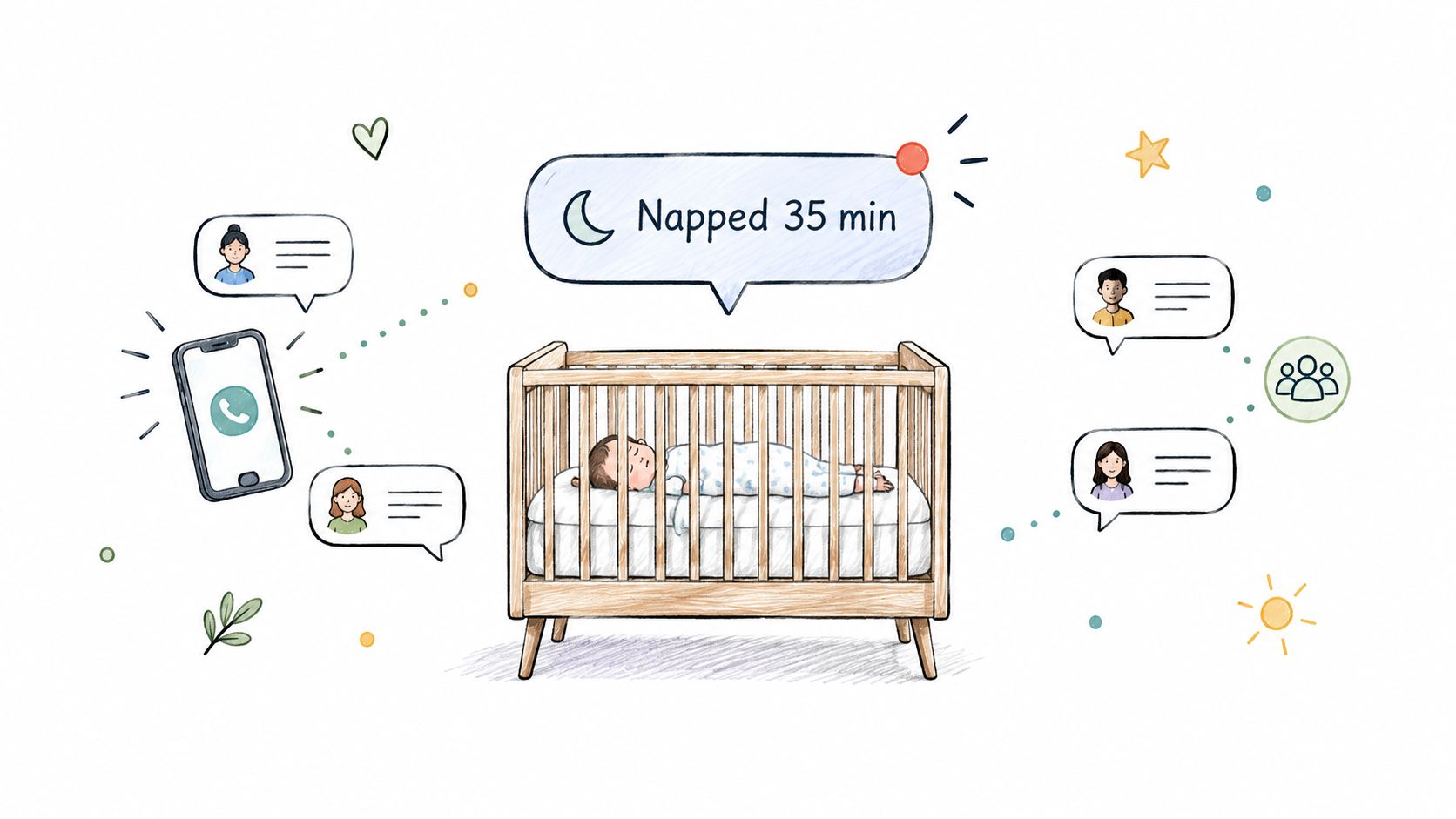
Immediate communication doesn't require a long report. A nanny can write, “Nap was shorter than usual and baby seemed fussy on waking.” A daycare caregiver can note that the toddler woke repeatedly during rest time. A partner working a late shift can read the update before deciding whether to keep the usual bedtime or allow a quieter evening.
The quality of the note matters more than its length. Factual language keeps the team curious instead of alarmed.
- Describe what happened: Write what the caregiver saw, not a diagnosis.
- Include the setting: Note whether the change happened at home, daycare, or during travel.
- Flag relevant context: Mention a new tooth, schedule change, or unusual separation.
- Set a communication threshold: Decide together which concerns need an immediate call rather than a routine update.
Make handoffs useful for the next caregiver
A handoff should answer three practical questions: What happened? What changed? What should the next caregiver know before the next sleep period? That format works for partners, grandparents, nannies, and Spanish-speaking caregivers who may prefer updates in English or Spanish.
A shared tracker can reduce the “who did the last nap?” confusion by keeping entries in one place. It doesn't determine why sleep changed, and it can't replace judgment. It gives each caregiver access to the same timeline, which makes a calm response more likely.
If the change includes unusual sleepiness, intense distress, difficulty consoling, or signs of illness, contact a pediatrician rather than treating the update as a routine regression note. A short message can still help the medical conversation, but it shouldn't be used to diagnose the child.
4. Adjust expectations and schedules during regression windows without guilt
A baby may sleep well overnight yet refuse the afternoon nap. A toddler may cope at daycare, then become overtired and irritable at pickup. In each case, the schedule problem is specific. Identify the affected sleep period before changing the whole day.
The caregiver response also needs coordination. If one adult moves bedtime earlier, another should know why and what signs to watch for. Otherwise, a well-meant adjustment can become a late nap, a rushed outing, or a bedtime that shifts again the next night. Keep the main anchors where possible, then change one part of the day that matches the child's current signals.
Developmental timing varies widely. A digital-trace analysis found that sleep declines around four, eight, and twelve months can fall within normal variation rather than indicate a strict medical stage, as described in the published analysis of infant sleep patterns. Its developmental map connects disruption with emerging mobility, separation, walking, language, and nap transitions. Use a sleep regression chart to track developmental timing, while remembering that timing alone does not explain every difficult sleep period.

Choose one adjustment the team can repeat
Start with the smallest change that fits the situation:
- Protect quiet time: Reduce stimulating play before the planned nap.
- Move bedtime modestly: Try an earlier or later bedtime when the child repeatedly seems overtired or not ready.
- Shorten the outing: Choose a simpler afternoon after a poor night.
- Review regularly: Check whether the change helps before adding another.
Feeding changes, teething discomfort, or illness can alter the right response, so schedule adjustments should not replace health judgment. Do not promise a specific end date. Independent pediatric guidance notes that regressions can last about one to two weeks, although timing varies by child, as BabyCenter's sleep regression guidance explains. Treat that range as perspective, not a deadline. A child who remains unusually distressed or unwell needs medical advice rather than more schedule experimentation.
5. Consolidate overnight and daytime sleep data to recognize regression type
Not every sleep disruption affects the whole day. One child may resist bedtime while naps remain easy. Another may nap normally but wake repeatedly overnight. A third may be moving from one nap pattern to another, making the change look like a regression when the underlying issue is a transition in sleep needs.
Compare daytime and overnight sleep before deciding what to change. Record sleep starts and ends, then look at the child's usual baseline. Ask, “Which period changed?” rather than “Is this normal for every baby?” That distinction keeps the response specific.
A simple comparison can clarify the next step:
- Bedtime resistance with steady naps: Review the wind-down, stimulation, and the timing of the last nap.
- Shorter naps with settled nights: Consider whether daytime sleep is consolidating or whether the child needs a different nap opportunity.
- More overnight waking with normal daytime sleep: Look at feeding context, room conditions, discomfort, or developmental changes.
- Disruption across every period: Review the full routine and check for illness, travel, or another environmental change.
One longitudinal study followed 313 infants from birth to six months and found that a non-dark sleep environment was associated with about thirty minutes less nighttime sleep and about forty minutes less for the longest sleep period. The study also associated checking without touching with longer, more continuous sleep, as reported in the open-access infant sleep study. Those findings don't tell you what your child needs tonight, but they support reviewing the sleep environment and response style before assuming the issue is behavioral.
Keep the data light. You're looking for a pattern that helps the team choose one reasonable adjustment, not building a perfect record.
6. Coordinate feeding, teething relief, and symptom tracking with all caregivers
A difficult night can mean hunger, pain, illness, or a new developmental skill. The response depends on the cause, yet sleep notes rarely show the full context. Feeding changes, teething, constipation, reflux concerns, allergies, medication, and illness may all change how caregivers interpret waking.
At handoff, share observations that affect care. For example, a parent can report that a feed was dropped, medication started, or discomfort followed eating. A daycare caregiver might notice less interest in food, fewer wet diapers, congestion, or behavior that seems unusual for that child. A clinician can help the family decide which details need attention and what to monitor.
Keep the record factual and leave medical decisions to the appropriate professional:
- Feeding context: Note changes in breastfeeds, bottles, pumping, or solids, including whether the child fed less than usual.
- Symptoms: Record observations such as congestion, fever, unusual sleepiness, vomiting, or difficulty consoling.
- Treatment details: Follow the prescribing clinician's directions. Share the medication name, timing, and instructions only as needed for safe coordination.
- Questions for the clinician: Write down whether a condition, symptom, or medication could affect sleep or feeding.
“Describe what happened before deciding why it happened.” That rule helps prevent one caregiver from treating every waking as a sleep problem.
A bedtime feed may relate to overnight sleep, but a sleep log cannot determine what an individual baby should eat or when. Feeding plans should not change solely because sleep has worsened. If feeding is painful, supply is a concern, the baby is feeding differently, or hunger is difficult to distinguish from discomfort, contact a pediatrician or lactation professional.
Teething or illness may temporarily require more comfort and a different response from each caregiver. Meeting those health needs does not mean the family has failed at consistency. Share the same symptom notes across home, daycare, and every caregiver so the team can adjust safely without guessing.
7. Create a shared sleep regression playbook so caregivers respond consistently
At 2 a.m., one caregiver offers another feed, another changes the room, and a third tries a new settling method. By morning, the child has received several different responses, while each adult is trying to help. A shared playbook reduces those split-second decisions without blaming anyone for adapting under pressure.
Keep it where every caregiver can reach it: a shared tracker, family message thread, or printed note in the daycare bag. It should fit on one page and describe the plan currently in use, including what parents, partners, grandparents, nannies, and daycare staff should do at bedtime, during night waking, and at the next handoff.
Use the same five prompts at each changeover:
- Try first: Name the first calming response, such as a quiet check, cuddle, or familiar wind-down.
- Change one variable: Agree whether to adjust timing, comfort, or the sleep environment first. Changing one factor makes the result easier to interpret.
- Avoid for now: Record approaches the family is pausing during this phase, so another caregiver does not introduce them by accident.
- Review together: Choose a regular time to compare observations and decide what to keep, change, or stop.
- Escalate appropriately: State when the child's symptoms or behavior warrant contact with a pediatrician or lactation professional.
Keep the guidance reversible. A caregiver should still respond when a child seems ill, unusually sleepy, frantic, difficult to console, or unlike themselves. The playbook coordinates care. It does not replace clinical judgment or decide feeding and treatment.
“We're observing a change, keeping the response calm, and checking the context before we add another intervention.”
After the difficult period, keep the parts that reduced confusion and remove steps that created stress. Update the note before the next shift, especially when care moves between home and daycare or among English- and Spanish-speaking relatives. A shared response gives the child greater predictability while leaving room for comfort, context, and reassessment.
7-Point Caregiver Sleep Regression Comparison
| Approach | Implementation complexity 🔄 | Resource & time ⚡ | Expected outcomes ⭐📊 | Ideal use cases 💡 |
|---|---|---|---|---|
| Track sleep patterns across all caregivers to spot regression signs early | Medium–High, needs real‑time sync, individual logins and historical data | High, multiple devices, consistent logging commitment | ⭐⭐⭐⭐, reveals true patterns; improves pediatric assessment and reduces anxiety | Multiple caregivers (parent/nanny/daycare); when conflicting logs exist |
| Maintain consistency in sleep routines even when caregivers rotate | Low–Medium, shared templates and timestamping; requires agreement | Medium, time to establish and onboard caregivers | ⭐⭐⭐, reduces bedtime resistance; clarifies critical routine elements | Rotating caregivers, shared custody, daycare + home handoffs |
| Communicate sleep changes immediately across your caregiving team | Medium, real‑time notes/threads and brief discipline needed | Medium, ongoing logging during shifts; notification management | ⭐⭐⭐, early detection of issues; prevents cross‑purpose care | Parents working offsite, staggered schedules, urgent changes |
| Adjust expectations and schedules during regression windows without guilt | Low, policy and mindset shift; simple shared notes | Low, flexibility rather than new tools; occasional negotiation | ⭐⭐⭐, lowers guilt and burnout; enables short‑term accommodations | Known regression windows, short‑term developmental phases |
| Consolidate overnight and daytime sleep data to recognize regression type | Medium–High, separate fields, filters, summaries and pattern views | High, consistent logging of naps + nights and weekly review | ⭐⭐⭐⭐, pinpoints which sleep domain is affected; guides targeted response | Ambiguous sleep problems, preparing data for pediatric guidance |
| Coordinate medication, teething relief, and symptom tracking with all caregivers | Medium, health fields, timeline views, privacy considerations | Medium–High, pediatric coordination and selective sharing | ⭐⭐⭐, prevents misattribution; aligns comfort measures across caregivers | Illness, medication changes, teething or other medical contributors |
| Create a shared "sleep regression playbook" so caregivers respond consistently | Low, single shared document with agreed steps; iterative updates | Low, initial drafting and occasional revisions | ⭐⭐⭐, reduces decision fatigue; builds institutional memory | Teams needing a consistent plan during regressions; new or substitute caregivers |
Make the Next Handoff Easier
The practical goal isn't perfect sleep. It's a calmer response when sleep suddenly stops making sense. Start by observing the pattern across daytime and overnight sleep. Align the routine across caregivers. Adjust one variable at a time instead of replacing everything after one difficult night. Record feeding, medication, symptoms, travel, and developmental context so the team can distinguish a likely sleep change from a reason to contact a clinician. Then review the information together.
Cradlo can keep sleep, feeds, notes, and caregiver handoffs in one shared timeline across home and daycare. Parents, partners, grandparents, nannies, and daycare caregivers can log with their own identities, while the shared record helps everyone see what happened before the next nap or bedtime. The app can support coordination, but tracking itself won't solve a regression, identify an illness, or determine a feeding plan.
Cradlo supports shared entries across caregivers, English and Spanish use, daycare access through a browser, and offline logging that reconciles later. Its nap-window predictions and daily summaries can help organize information, but caregivers still need to use judgment and seek professional guidance when something feels medically different.
Cradlo offers a 7-day free trial on the monthly plan, followed by a paid plan. It isn't a free app or a replacement for medical care. Contact a pediatrician for health concerns, and reach out to a lactation professional for feeding questions.
If your family is losing track of naps, feeds, or handoffs, Cradlo brings those updates into one shared timeline for home and daycare. Start the 7-day free trial on the monthly plan and use the record to coordinate one calm, consistent response to the next sleep change.