Putting Newborn to Sleep: Gentle Routines That Work
At 2 a.m., you've fed the baby, changed the diaper, walked the hallway, and finally felt their body go heavy against your shoulder. Then the transfer fails. Your partner is asleep, the bassinet looks impossibly far away, and you're wondering whether putting newborn to sleep is supposed to feel this difficult.
In the first weeks, fragmented sleep is normal. Newborns may sleep 14–17 hours per day, often in short periods shaped by feeding and comfort rather than a dependable clock schedule, as WHO guidance on newborn sleep explains. The practical challenge isn't creating a perfect timetable. It's making the plan visible enough that parents, partners, grandparents, nannies, and daycare can follow the same safe sequence.
Table of Contents
- What the First Weeks of Newborn Sleep Actually Look Like
- Setting Up a Safe Sleep Space Every Caregiver Can Agree On
- A Calm Wind-Down You Can Hand Off at 2 a.m.
- Soothing Techniques That Are Safe to Use Every Night
- Reading Patterns When Sleep Feels Random
- Keeping Every Caregiver on the Same Page
What the First Weeks of Newborn Sleep Actually Look Like
The baby wakes after a short stretch. One parent feeds, another changes the diaper, and someone else takes over the burping. The baby dozes on a chest, wakes during the transfer, then settles again just as the person holding them starts nodding off. By morning, everyone remembers the exhaustion, but nobody is sure what really occurred.
That uncertainty can make normal newborn behavior feel like a problem. A baby may sleep peacefully for a grandparent and protest with a parent, or settle quickly after one feed and stay awake after another. Those differences don't necessarily mean anyone is doing something wrong. They often reflect hunger, gas, stimulation, tiredness, temperature, and the particular way each caregiver holds or transfers the baby.
A helpful starting point is learning about newborn wake windows, while remembering that newborn cues matter more than forcing a rigid clock. The early rhythm usually follows feeding and soothing. A brief log can show what happened without turning every nap into a test.
Newborn sleep is a team sport, not a personal failing.
The question that changes the whole experience is who has the plan in their head. If only one exhausted caregiver knows which side was last fed, how the baby likes to be burped, or what usually helps after a diaper change, every handoff becomes a fresh puzzle. A shared routine gives everyone the same starting point and lets the family look for patterns instead of blaming the person who couldn't settle the baby.
Setting Up a Safe Sleep Space Every Caregiver Can Agree On
Start with one sleep setup that every adult can recognize immediately. The American Academy of Pediatrics recommends a separate, safety-approved crib, bassinet, or play yard with a firm, flat, level, non-inclined surface. The mattress should be covered only with a fitted sheet, as described in the AAP safe sleep recommendations.
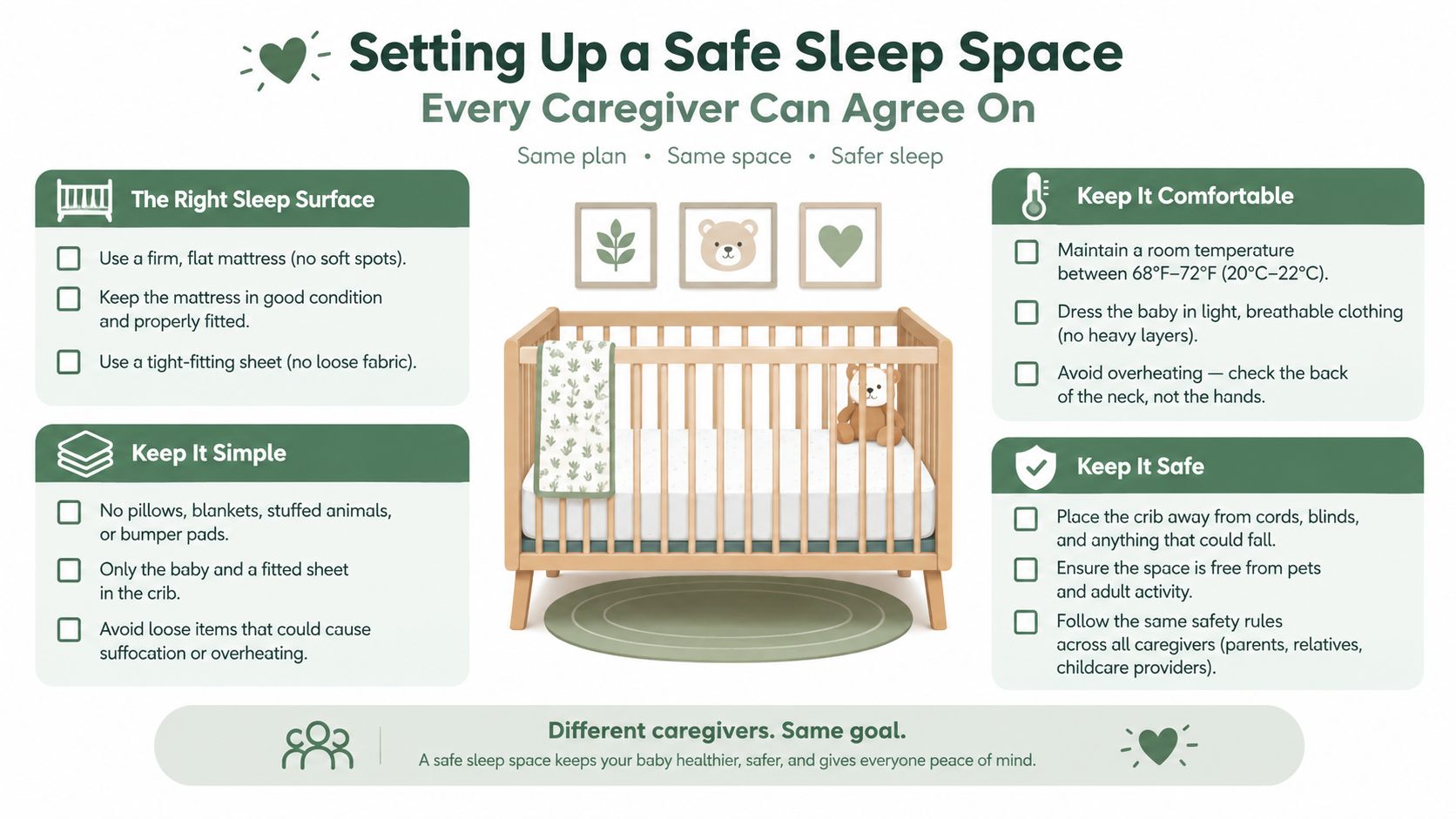
The anchor is simple: back, firm, flat, empty. Place the baby on their back for every nap and night sleep. Keep pillows, loose blankets, bumper pads, stuffed toys, positioners, and other soft items out of the sleep space. A firm surface returns quickly to its original shape when pressed, while a flat surface resembles a table rather than a hammock, according to NIH safe-sleep guidance.
Make the setup visible
A safe space should answer the question “Is this okay?” without requiring a tired caregiver to remember a long explanation. If a grandparent arrives for the overnight shift, they should see the same uncluttered bassinet that a parent uses. If a daycare teacher records a nap, the infant should still be transferred to a separate, firm, flat sleep surface rather than an adult bed, sofa, recliner, swing, or car seat.
Room-sharing without bed-sharing is recommended, preferably for at least the first six months. If feeding or comforting happens in an adult bed, return the baby to their own sleep space before the caregiver sleeps.
Visual consistency helps adults avoid improvising. It also makes a handoff clearer for Spanish-speaking relatives or caregivers who may prefer simple, shared labels such as “back, flat, empty” rather than a complicated written plan. Keep the setup boring. Boring is easier to repeat at home, during travel, and in childcare.
A Calm Wind-Down You Can Hand Off at 2 a.m.
At night, the most useful routine starts with a pause. Before reaching for rocking or bouncing, the caregiver checks hunger, burping, temperature, illness concerns, and the diaper. Health questions about breathing, feeding, temperature, or unusual behavior belong with a pediatrician or lactation professional, not with another change to the bedtime routine.
Once those basic needs are addressed, lower the stimulation. Dim the room, reduce conversation and eye contact, and handle the baby slowly. A consistent cue, such as a quiet hum or the same short phrase, can make the sequence familiar without pretending that a newborn will respond on a schedule.
The transfer comes next. When the baby is drowsy or asleep, place them on their back in the approved crib, bassinet, or play yard. Keep the surface empty and flat. A gentle night light for feeding a baby can help a caregiver see what they're doing while keeping the room calm.

The handoff that protects everyone
Suppose your partner starts the routine but feels too tired to finish it. They can say, “The baby fed, had a clean diaper, and is calm but drowsy,” instead of passing over a crying mystery. The next caregiver can continue with low stimulation, hold briefly if needed, and complete the transfer without restarting the entire evening.
The common danger appears when soothing lasts too long. A caregiver falls asleep on a sofa or armchair with the baby on their chest, often because contact worked and nobody had enough energy left to move. Couches, armchairs, loungers, swings, and car seats aren't appropriate routine sleep locations. If you feel yourself getting sleepy, stop contact soothing and place the baby in the crib or bassinet.
This routine fits on a note beside the bed: check, quiet, soothe, transfer, back. It doesn't guarantee an uninterrupted stretch. It gives every caregiver a clear way to respond when the night is already foggy.
Soothing Techniques That Are Safe to Use Every Night
No single soothing method works for every newborn, and the method that fits one caregiver may exhaust another. Holding, gentle rocking, feeding, calm vocal sounds, and skin-to-skin contact can all be useful while an alert caregiver is present. The safety boundary is the sleep location. Contact soothing should lead back to the baby's own approved sleep surface, especially when the adult feels drowsy.
White noise may help some babies settle, but it should be used cautiously, with safe sound levels and appropriate placement. It isn't a substitute for a safe sleep space, and it shouldn't become so loud that a caregiver can't easily hear the baby.
Swaddling is optional. It doesn't have evidence showing that it reduces SIDS, and it needs to stop when the baby shows signs of trying to roll. The wrap shouldn't restrict breathing or hip movement, and caregivers should watch for overheating, including sweating or a hot-feeling chest. Weighted sleepers, weighted swaddles, weighted sleep sacks, and weighted blankets aren't safe for infants, according to CDC safe-sleep information.
Choose methods that survive the night
Motion can settle a baby while someone is awake and attentive, but a swing, car seat, or inclined product isn't a routine sleep destination. Rocking can work beautifully for one caregiver and aggravate a sore back for another. Feeding may be the right response to hunger, but caregivers shouldn't change overnight feeds without clinician guidance.
If a soothing method only works while the baby is being held, and there's any chance the caregiver will fall asleep, it isn't a routine method.
Look for a short toolkit rather than a winning technique. One family might use feeding, burping, a quiet hum, and a back-to-sleep transfer. Another might use holding, slow rocking, and a brief swaddle while the baby remains on their back. The useful question is whether the method is safe, repeatable, and sustainable at 3 a.m., not whether it produces instant sleep. For more context on frequent waking, see why a baby may wake every hour at night.
Reading Patterns When Sleep Feels Random
A shared log isn't a scoreboard. It's a way to replace “the baby was up all night” with details that can support a calmer conversation.
Record the practical context around each sleep episode:
- Feeding context: Note whether the feed seemed full or partial, which side was offered when relevant, and how long ago feeding happened.
- Settling method: Write down whether the baby fell asleep while held, rocked, fed, or in an unsafe location that needs correcting.
- Next wake: Capture how long the baby slept before waking, without treating the interval as a pass or fail.
- Diaper details: Mark whether it was wet, dirty, or both.
- Distress cues: Record whether the baby seemed hungry, uncomfortable, overheated, unusually upset, or alert.
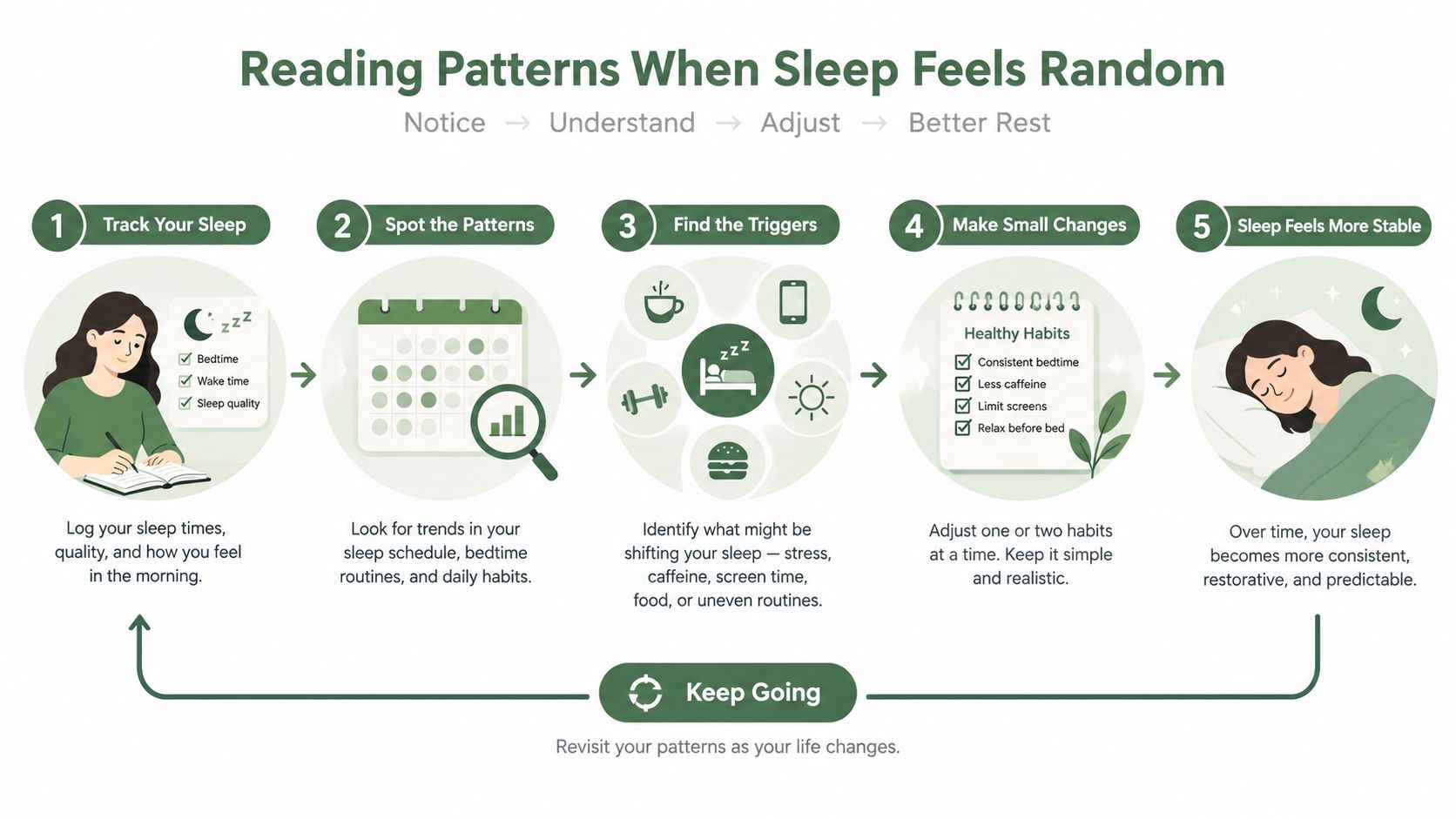
Consider a baby who fights the 7 p.m. bedtime for two evenings. Without notes, the family may decide the baby needs more rocking, a later bedtime, or a new sleep product. With a short timeline, they might notice that the afternoon nap ended at 5:15 and that the baby was already overtired by the time the wind-down began. That doesn't mean the family has discovered a permanent schedule. It gives them a small, testable adjustment.
Read the pattern, don't fix the baby
Compare observations across caregivers rather than judging them. The parent may notice hunger cues, the nanny may notice that the baby settles after burping, and daycare may report that the late nap ended earlier than usual. A written record lets those observations sit together.
Cradlo can hold that shared log across parents, partners, grandparents, nannies, and daycare. It offers a 7-day free trial on the monthly plan, but it isn't a free app. The useful part here is not a promise of perfect sleep. It's keeping sleep, feeding, diaper, and settling context in one place so caregivers can interpret the day together.
Patterns can guide questions, but they can't diagnose illness or replace professional care. If the baby's feeding, breathing, temperature, or behavior concerns you, contact a pediatrician or lactation professional.
Keeping Every Caregiver on the Same Page
A good handoff is specific enough that the next adult doesn't have to reconstruct the day. At daycare pickup, “She was fussy” leaves a parent guessing. “She fed, had a wet diaper, slept briefly after the afternoon routine, and woke calm” gives the parent a usable picture without turning normal newborn behavior into a problem.
The same principle applies at home. A partner shouldn't need to ask which side was last fed. A grandparent shouldn't have to remember whether swaddling has stopped because the baby is showing signs of rolling. A nanny should know that the family uses the same flat, empty bassinet routine for every nap.
One timeline, several caregivers
Cradlo is a shared baby tracker for families, nannies, and daycares. Each caregiver can have their own identity through a QR-code invite, while daycare can bookmark a browser page on an iPad without installing the app or creating an account. Its gentle AI predicts nap windows, fills in forgotten logs, and writes a calm daily brief, with no streaks and no guilt.
A sustainable weekly routine is small:
- Same sleep space: Every caregiver uses the approved crib, bassinet, or play yard.
- Same wind-down: Everyone checks basic needs, lowers stimulation, and transfers the baby on their back.
- Same short log: Caregivers record sleep, feeding context, diapers, and settling method.
- Same escalation point: Health-specific concerns go to the pediatrician or lactation professional.
- Same expectation: Fragmented sleep is normal, and the aim is coordination rather than perfection.
That shared picture matters more than making every caregiver soothe in exactly the same personal style. The safety setup and transfer should stay consistent. The voice, rocking rhythm, or holding position can remain human.
Cradlo brings sleep, feeds, diapers, and caregiver handoffs into one shared timeline, with gentle summaries that help you notice patterns without chasing a perfect schedule. Visit Cradlo to start the 7-day trial on the monthly plan and make putting newborn to sleep a clearer team practice.