Toddler Having Nightmares: Calm Steps for Parents
The crying starts before you're fully awake. Your toddler is sitting up, reaching for you, and trying to explain something frightening that happened in a dream. At 2 a.m., it's easy to wonder whether the episode means something is wrong, whether you caused it, or whether tonight will become a pattern.
Take a breath. A toddler having nightmares is usually experiencing a common part of early childhood, not a failure of your bedtime routine or your parenting. The immediate task is simple: help your child feel safe, then look for patterns gently rather than trying to solve everything in the dark.
Table of Contents
- Understanding the 2 a.m. Wake-Up
- Common Triggers and Daytime Connections
- Nightmares Versus Night Terrors
- How to Respond and Adjust the Routine
- Tracking Patterns Across Caregivers
- When to Seek Professional Guidance
Understanding the 2 a.m. Wake-Up
Your child wakes crying, but the fear is real even though the dream wasn't. A cuddle, a familiar voice, and your calm presence can help your toddler move from “something scary is happening” to “I'm safe in my room with my caregiver.”
Research following 987 children from 29 months to 6 years found that occasional bad dreams were common and remained fairly stable across early childhood. At 29 months, 65.2% of children were rated as having bad dreams “sometimes,” compared with 66.3% at 6 years, while the “often” category stayed low, ranging from 1.3% to 3.9% across those ages. You can read the study details in this longitudinal research on nightmares in preschoolers.
That pattern matters at home. It means an occasional frightening dream isn't an unusual event that you need to explain away. Many children experience this kind of wake-up during the toddler and preschool years, while frequent episodes are much less common. The same study found that the share of children rated as never having bad dreams stayed close to one-third, including 31.4% at both 29 months and 6 years, so children vary widely too.
At 2 a.m., reassurance is more useful than investigation.
You don't need to conduct a long search for monsters, ask your child to retell every detail, or make a permanent change to the sleep arrangement because of one difficult night. Sit close, name the feeling, and offer a short reminder that the dream is over and your child is safe. If your family shares nighttime responsibilities, a clear two a.m. handoff plan can also help the next caregiver respond consistently.
A child who wakes after a nightmare may need extra help settling back down, especially if the dream felt vivid. That doesn't mean you've created a bad habit or made sleep worse. It means your toddler's developing imagination and emotional system sometimes need support before sleep can resume.
Common Triggers and Daytime Connections
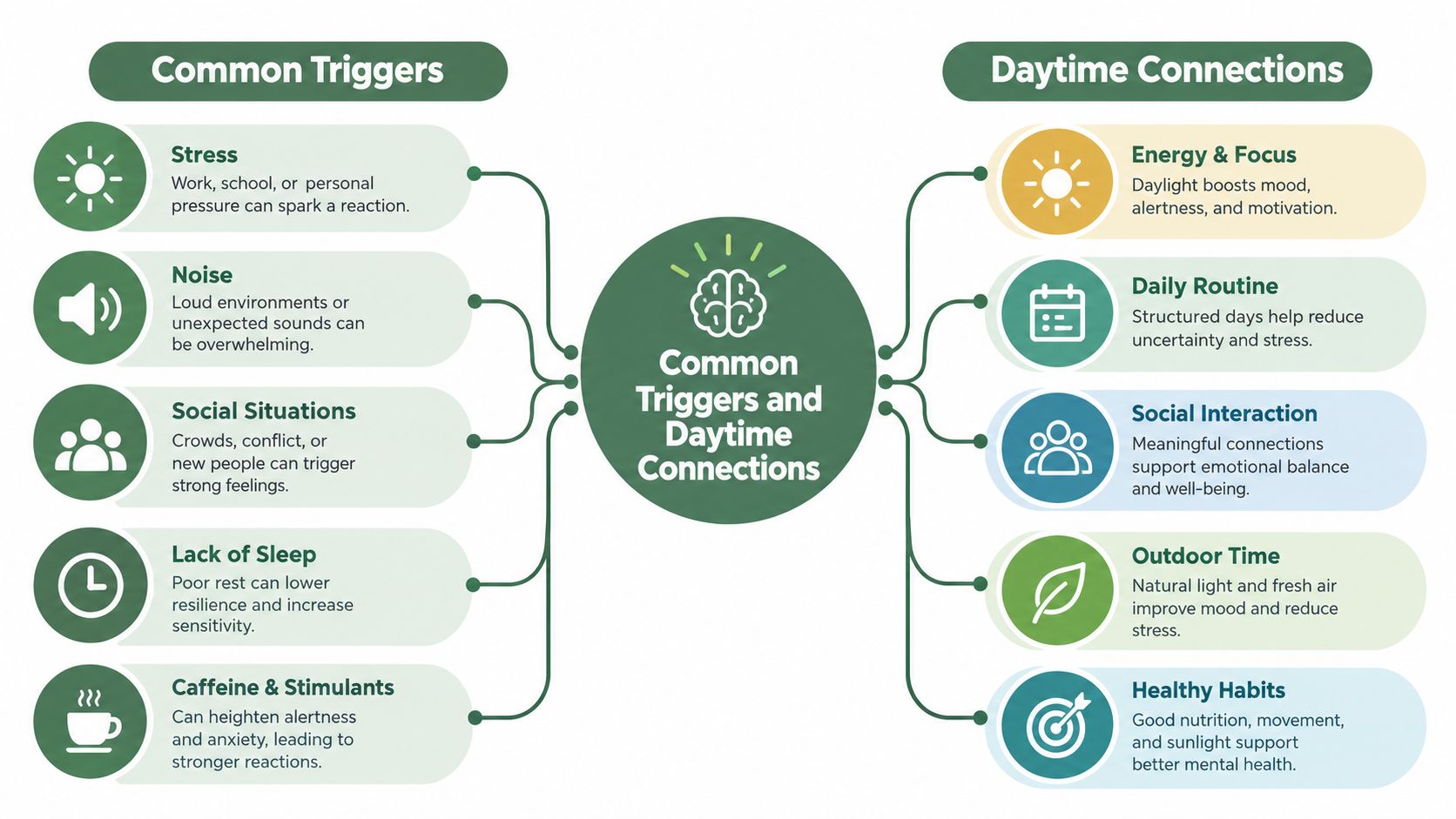
Nightmares rarely belong only to the night. A toddler's sleep pressure, emotional load, and surroundings can all shape what happens after bedtime. Pediatric guidance links nightmares with sleep deprivation, anxiety or fear, stress, traumatic events, fever, and frightening media exposure, as described in this clinical overview of nightmares in children.
A missed nap may leave your child overtired by bedtime. A new sibling, a change in daycare rooms, separation from a familiar caregiver, or tension at home may create feelings your toddler can't yet explain. Developmental changes can matter too. Language growth, greater independence, and separation worries may make the day feel full, even when nothing obviously upsetting happened.
Start with the whole day
Instead of asking, “What caused the nightmare?” try reviewing the day in sequence:
- Sleep pressure: Did your toddler nap normally, or was the nap short, late, or skipped?
- Emotional transitions: Were there goodbyes, new people, unusual childcare arrangements, or a difficult drop-off?
- Sensory input: Did your child see frightening images, hear intense stories, or encounter media that felt too stimulating?
- Physical comfort: Was your toddler ill, feverish, uncomfortable, or unusually unsettled?
- Developmental demands: Is your child practicing a new skill or coping with a major change in independence?
This isn't a search for blame. It's a way to notice connections without assuming that every difficult day will produce a bad dream. A single episode may have no clear trigger. Several episodes, viewed alongside daytime notes, may reveal that your child needs more rest or a gentler transition.
For families navigating separation worries, this guide to when stranger anxiety starts can provide useful developmental context. Keep the response flexible. The aim isn't to control every variable, but to reduce avoidable overtiredness and help your toddler feel emotionally held throughout the day.
Nightmares Versus Night Terrors
The words often get mixed together, but the events look different. A nightmare is a frightening dream during REM sleep, usually in the second half of the night when REM periods are longer. The child typically wakes fully, appears afraid, recognizes the caregiver, and may remember or describe part of the dream. This timing and response pattern are outlined in this guide to nightmares in children.
A night terror happens during sleep, not after a child has fully awakened. A toddler may scream, sit up, look panicked, sweat, or move around while remaining difficult to reach. The child may not recognize you, may resist comfort, and usually won't recall the episode later. In the moment, that can look terrifying to an adult, but it isn't the same experience as waking from a bad dream.
Nightmares vs. Night Terrors Quick Reference
| Feature | Nightmares | Night Terrors |
|---|---|---|
| Sleep state | REM sleep | Deep sleep or a partial arousal from sleep |
| Usual timing | More often in the second half of the night | More often earlier in the night |
| Responsiveness | Child wakes fully and can usually recognize you | Child remains partly asleep and may not respond normally |
| Emotional presentation | Fear after waking, often seeking comfort | Screaming, panic, confusion, or sudden movement |
| Memory afterward | Child may recall the dream | Child usually doesn't remember the event |
| Helpful response | Reassure, comfort, and help the child return to sleep | Keep the child safe and avoid trying to force full awakening |
You don't need to diagnose the event perfectly while standing in a dark bedroom. Ask yourself three questions: Did my child wake fully? Do they recognize me? Can they tell me about a scary dream? “Yes” answers point more toward a nightmare. Limited responsiveness, intense movement, and no memory later point more toward a night terror or another partial arousal.
If you're unsure, write down what you saw and discuss it with your pediatrician, especially if the episodes are escalating or creating safety concerns. Avoid shaking or repeatedly trying to wake a child who appears to be in a sleep terror. Stay nearby, remove hazards, and wait for the event to pass while keeping your voice and movements calm.
How to Respond and Adjust the Routine
At night, your toddler doesn't need a lecture about dreams. They need a predictable response that lowers stimulation and communicates safety.
Use a short nighttime sequence
-
Go in calmly. Keep the lights low and speak in a quiet, familiar voice. Your own calm body language gives your child fewer alarming cues to absorb.
-
Acknowledge the fear. Say something simple, such as, “That dream scared you. You're awake, and I'm here.” You don't have to insist that the dream was silly or tell your child to stop being afraid.
-
Offer brief comfort. Hold your toddler, sit beside the bed, or provide the kind of reassurance that normally helps. Clinical guidance recommends comforting the child, staying nearby, and helping them return to sleep without turning the episode into a dramatic investigation. See this pediatric guidance on nightmares and night terrors.
-
Return to the usual sleep setting. Once your child is calmer, guide them back toward their normal bed and routine. An occasional longer cuddle is okay. Try not to introduce an elaborate ritual that your toddler will need to repeat every night.
Make daytime adjustments gently
Talk about the dream in daylight if your child wants to. Daytime gives your toddler enough light, language, and emotional distance to say what happened. You can listen without validating the dream as real, then remind them that dreams can feel frightening even though they cannot hurt them.
Review the bedtime runway. A quieter wind-down, familiar books, and fewer stimulating activities before sleep may help your child shift out of a highly activated state. If frightening media appears to be a trigger, remove it from the evening and choose content that matches your toddler's emotional readiness.
Avoid promising that nightmares will never happen again. A better message is, “If you have a scary dream, I'll help you.” That builds confidence without making you responsible for preventing every dream. It also leaves room for different caregivers to offer the same reassuring response, whether the child wakes after an evening with a parent, partner, grandparent, nanny, or daycare nap.
Tracking Patterns Across Caregivers
A toddler's sleep story is often scattered across several people. One caregiver knows that the nap was skipped, another notices a difficult pickup, and a parent handles the nighttime waking without knowing what happened earlier. By morning, everyone has part of the picture, but nobody has the full timeline.
A shared tracker can bring those observations together. Parents, partners, grandparents, nannies, and daycare staff can record sleep, naps, mood changes, illness, and notable events in one place. The point isn't to turn your child into a data project. It's to replace “Maybe the day was unusually hard” with a clearer record of what really happened.
Build one shared timeline
Start with observations that caregivers can record consistently:
- Sleep: Note when your toddler slept, woke, napped, or appeared unusually tired.
- Daytime context: Add skipped naps, difficult transitions, new childcare settings, illness, or emotionally intense events.
- Night response: Record when the waking happened, whether your child was fully alert, and what helped.
- Morning information: Add whether your toddler remembered a dream, seemed anxious, or returned to their normal mood.
A daycare provider might note that a nap was shorter than usual. A nanny might mention repeated separation worries. A parent may then see that nighttime distress follows those days, while ordinary naps are associated with easier evenings. That doesn't prove a cause, but it gives the family a sensible pattern to discuss and test through gentle routine changes.
A shared timeline also protects caregivers from duplicated effort. If one person already logged the nap or bedtime, another doesn't need to guess, text several people, or repeat the same questions during a rushed handoff. Guidance on behavioral tracking for children can help families decide which observations are useful and which details create unnecessary work.
Look for repeated relationships, not isolated entries. One nightmare after a missed nap may be coincidence. A recurring sequence of difficult daycare days, overtired bedtime behavior, and nighttime fear deserves attention, without turning it into a reason for guilt. Use the record to make small adjustments and share a concise history with your pediatrician if concerns continue.
When to Seek Professional Guidance
Not every nightmare needs medical attention, but “wait it out” isn't the right answer for every repeated or disruptive episode. Clinical guidance recommends contacting a healthcare professional when episodes are frequent, dangerous, prolonged, or associated with daytime fears. Seek help promptly if you observe concerning physical signs such as drooling, jerking, or stiffening, as noted by Children's Hospital of Philadelphia guidance on nightmares and night terrors.
A pediatrician can help you sort out whether the event resembles a nightmare, night terror, another sleep behavior, illness, or a concern that needs further evaluation. You don't need to arrive with a perfect explanation. Bring a clear description of what happened before, during, and after the episode.
Prepare useful details
Write down:
- When your child fell asleep and when the event began
- Whether the child woke fully and recognized caregivers
- What movements, sounds, or physical symptoms you observed
- Whether your toddler remembered a dream afterward
- Any daytime fear, mood change, injury, illness, or safety concern
- Relevant changes in naps, childcare, routines, media, or family circumstances
A shared log can make this history easier to assemble, especially when different caregivers see different parts of the day. Health questions belong with your pediatrician or another qualified healthcare professional, and feeding or lactation concerns belong with a lactation professional. Seeking guidance isn't an admission that you handled the night badly. It's a practical way to understand a pattern and support your child safely.
Cradlo brings sleep, naps, caregiver notes, and nighttime wakings into one shared timeline for parents, partners, nannies, grandparents, and daycare teams. Visit Cradlo to try the monthly plan for 7 days at no cost, then choose the option that fits your family, with no free plan required.