When Can You Give a Baby Water? a Month-by-Month Guide
Healthy babies generally don't get plain water before about 6 completed months (around 180 days), and small sips usually begin alongside first foods around then. But if milk already covers a baby's thirst, why do some families hear that water is necessary on hot days?
That's where the question “when can you give a baby water” becomes more complicated than a birthday milestone. Feeding method, readiness for food, illness, and local guidance all matter. When parents, partners, grandparents, nannies, and daycare share care, agreeing on the same plan matters, too.
Table of Contents
- Water Timing by Age at a Glance
- Why Babies Under Six Months Skip Plain Water
- Water Amounts From Six to Twelve Months
- How to Offer Water With Meals and a Cup
- Hot Weather and Conflicting Advice on Water
- When Illness Changes the Answer
- Confirm the Right Time for Your Baby Before Offering Water
Water Timing by Age at a Glance
Plain water guidance by age
| Age | Plain water | Main fluid | Role of water |
|---|---|---|---|
| 0-5 months | No, not recommended | Breast milk or prepared formula | None; extra feeds instead of water in heat |
| About 6 months | Small sips begin | Breast milk or formula | Practice cup drinking with meals |
| 6-12 months | Small daily amounts | Breast milk or formula | Complement to meals and feeds |
| 12 months and older | Regular everyday drink | Water and milk | Everyday beverage; juice not recommended before 12 months unless medically indicated |
These stages reflect the infant-feeding guidance in the CDC's early childhood drinking water toolkit; the amounts and cup-drinking recommendations receive more detail below.
The table gives you a starting point, not a schedule every baby must follow. Starting solids isn't a race, and introducing water isn't a drinking test. Your pediatrician can help connect general guidance to your baby's development, feeding pattern, and health.
Check the feeding picture, not just the calendar
Before changing what's in your baby's cup, check these basics:
- Regular feeds are continuing. Breast milk or correctly prepared formula still needs its usual place in the day.
- You know where first foods stand. Has your baby started complementary foods, or are you still discussing readiness with the pediatrician?
- Everyone knows whom to contact. Parents and other caregivers should have the pediatrician's contact details and the current feeding plan.
For a young baby who seems thirsty, the usual response is another milk feed, not a separate drink of water. Fussiness alone doesn't tell a caregiver which fluid a baby needs.
A calendar reminder can help you prepare a cup or write down questions. It shouldn't automatically trigger a change in feeding. If your baby has feeding difficulties or a clinician-directed plan, ask before using a general age chart.
A useful distinction: Water readiness is about adding a small learning experience, not graduating away from milk feeds.
For families sharing care, write down the current stage in plain language. “Practicing cup sips with meals” is clearer than “water allowed,” which could mean something different to every adult.
Why Babies Under Six Months Skip Plain Water
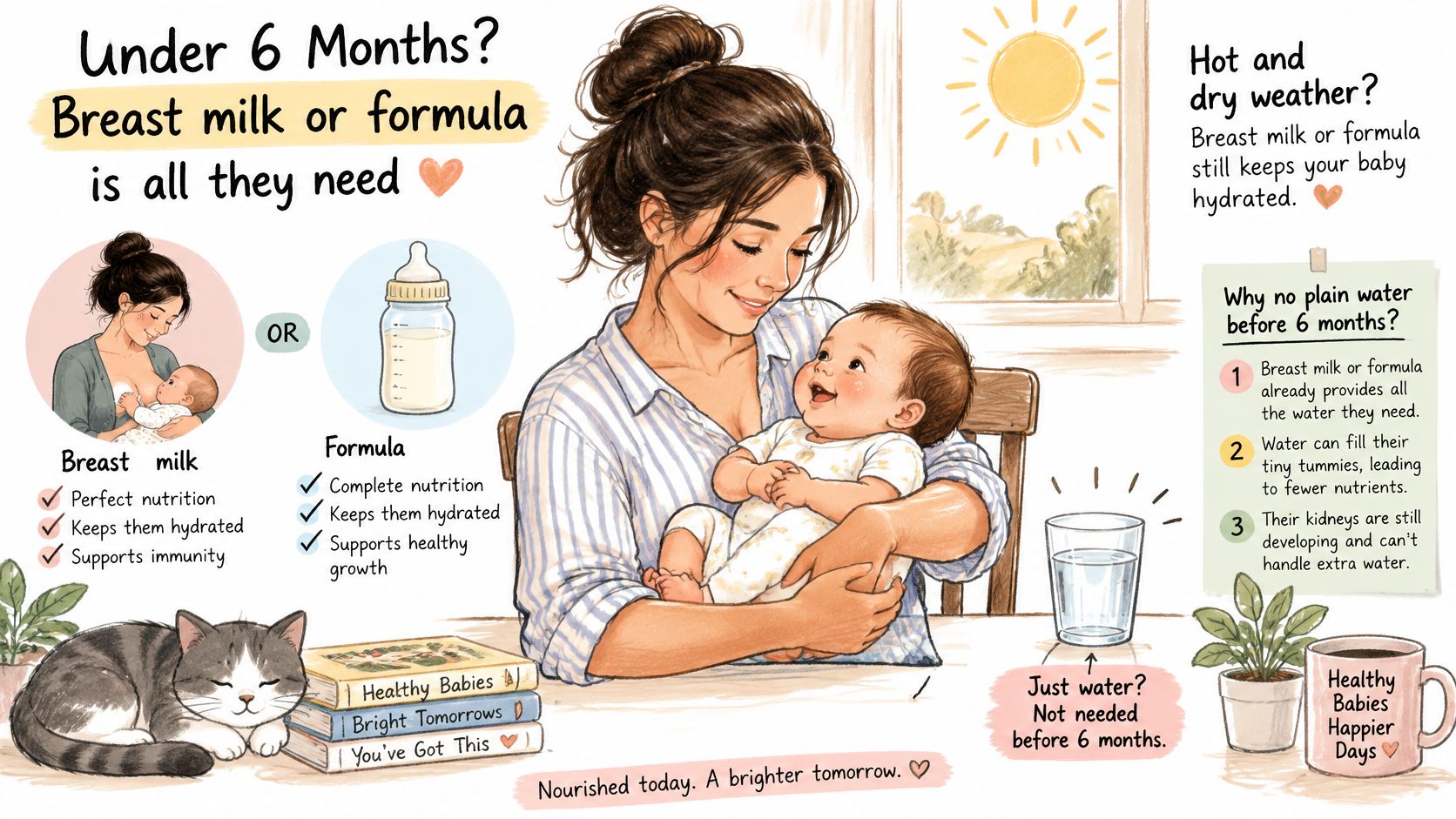
Milk already does two jobs: it provides hydration and nutrition. Breast milk supplies water along with nutrients, and correctly prepared formula provides both, too. Warm, dry, or humid conditions don't turn plain water into a nutritional substitute.
The WHO complementary-feeding guidance supports waiting until 6 completed months, about 180 days, and reports that introducing fluids other than breast milk during the first six months is associated with increased gastrointestinal and respiratory illness.
Why a little fullness matters
Think of filling up on bread before dinner. Your stomach may feel satisfied before you eat the rest of the meal. For a baby, filling up on water can mean taking less of the milk that provides needed calories and nutrients.
The analogy has a limit: bread provides energy, while plain water doesn't. That's why water isn't just an extra, harmless version of a milk feed.
Plain water waits because milk already covers thirst and growth.
Say a grandparent is caring for a fussy baby on a warm July afternoon. Offering water may feel caring and familiar, especially if that was common advice when they raised children. The general guidance favors an additional milk feed instead, with a call to the pediatrician if the baby seems unwell or isn't feeding normally.
Formula water isn't the same as drinking water
Water used to prepare formula is part of a measured recipe. It isn't permission to offer additional plain water separately.
Never add extra water to stretch formula or make it seem lighter. That changes the balance of nutrition the baby receives. Every caregiver preparing bottles should use the product's directions, rather than a remembered scoop-to-water ratio from another formula.
If your young baby seems persistently thirsty, bring that concern to a pediatrician or lactation professional. They can review feeding and hydration rather than leaving you to guess whether water would help.
Water Amounts From Six to Twelve Months
Water amounts by source and age
| Source | Age range | Plain water per day | Note |
|---|---|---|---|
| American Academy of Pediatrics | 6-12 months | About 4-8 fl oz (120-240 mL) | Milk or formula remains the main fluid |
| CDC | 6-12 months | 4-6 fl oz | General range, not a target every baby must reach |
| WHO and CDC | 0-5 months | None | Breast milk or formula supplies all fluid |
The earlier-infant row provides a comparison with the general guidance already described. It isn't an instruction to start measuring water before your baby is ready for complementary foods.
Why the ranges aren't identical
The American Academy of Pediatrics gives a broader range, while the CDC gives a narrower one. Neither turns water into the main drink during infancy, and neither means that a baby needs to finish a prescribed cup every day.
These are general reference points, not individualized fluid prescriptions. A pediatrician can help you interpret them alongside breastfeeding, formula intake, meals, growth, and medical needs. Don't average the ranges or choose the larger amount just because your baby enjoys the cup.
For example, a baby who has recently started solids might take a few sips at lunch and a few more from an open cup at dinner. That's a practice opportunity, not an unfinished daily assignment. Some of the poured water may end up on the bib rather than in the baby.
Our baby feeding chart for solids can help you organize questions about how meals fit around existing feeds.
Keep amounts in perspective
The practical limits are straightforward:
- Avoid large bottles of water. They make water look like a replacement feed rather than a small accompaniment to food.
- Avoid unrestricted sipping. A cup available all day can make it harder to notice how much water a baby drinks.
- Keep formula correctly prepared. Extra mixing water isn't another way to meet a water allowance.
Too much plain water can lower the sodium concentration in the blood, a condition called hyponatremia. Excess water and over-diluted formula can also leave a baby without enough nutrition. Those are reasons for measured, clinician-informed decisions, not reasons to feel anxious about ordinary cup practice.
Keep the priority clear: A water range isn't a goal to reach at the expense of a milk feed.
A reassuring feeding pattern is one your pediatrician considers appropriate: growth is progressing, regular feeds remain in place, and water isn't crowding them out. If you're unsure what counts as too much for your baby, ask rather than adjusting amounts on your own.
How to Offer Water With Meals and a Cup
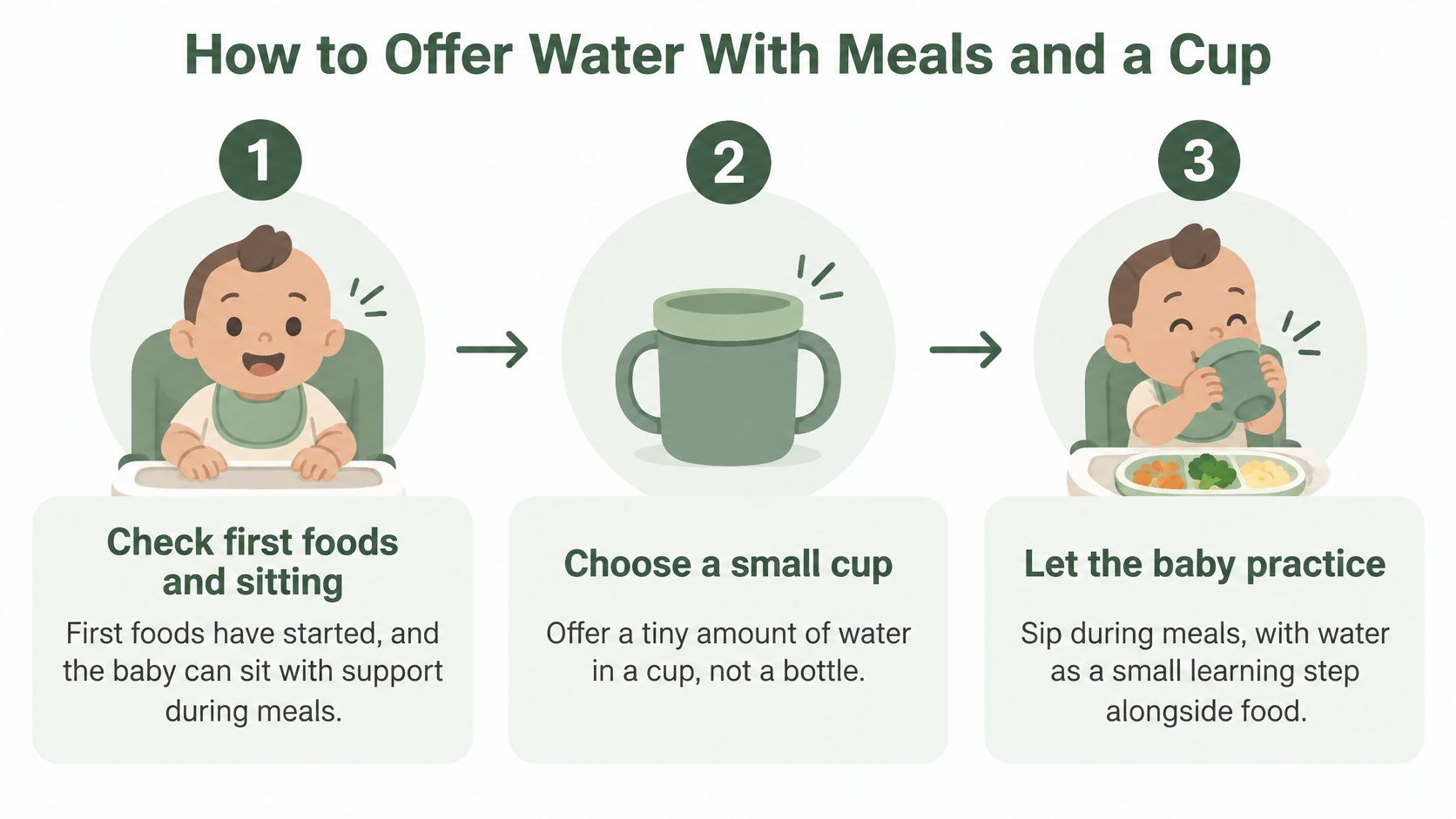
Once your pediatrician has confirmed that your baby is ready, keep the first cup experience simple. You're offering a chance to learn, not asking your baby to master a new skill immediately.
A repeatable mealtime routine
-
Check readiness first. First foods should have started, and your baby should be able to sit with support during meals. A common slip is treating age alone as proof of readiness instead of discussing development with the pediatrician.
-
Choose a small open cup or a straw cup that you can help your baby handle. Skip the large bottle, which can encourage a feed-sized drink rather than a few practice sips.
-
Pour a small amount of plain water at room temperature. Leave room to tilt the cup gently without flooding the rim. Filling the cup because it looks nearly empty is an easy mistake; the container doesn't need to be full.
-
Offer the cup with food or during the mealtime routine, without interrupting a milk feed. A common slip is inserting a bottle of water midway through feeding, making it harder to judge whether the baby has finished their milk.
-
Let your baby set the pace. Pause when they turn away, close their mouth, or lose interest. Don't keep tipping the cup to obtain another sip; spills and exploration are part of learning.
-
Keep the usual breast milk or formula schedule unless your clinician changes it. Cup practice shouldn't become a reason to delay a feed or alter formula preparation.
-
Clean the cup after use and discard leftover water. Take apart removable cup pieces according to the manufacturer's cleaning directions. Don't leave the same partly used cup circulating between caregivers throughout the day.
Our baby-led weaning meal ideas can help you think about where a supported cup moment fits into a meal.
Make the routine understandable to everyone
For Spanish-speaking families, keep a written Spanish version alongside the English routine so grandparents, nannies, and daycare staff receive the same instructions. Ask the pediatrician for guidance in Spanish or with an interpreter, especially when discussing readiness or individualized amounts.
An encouraging start looks ordinary: small sips, some spills, and curiosity without pressure. If cup practice repeatedly causes frustration, pause and ask your pediatrician about the cup, positioning, or readiness rather than pushing through.
Hot Weather and Conflicting Advice on Water
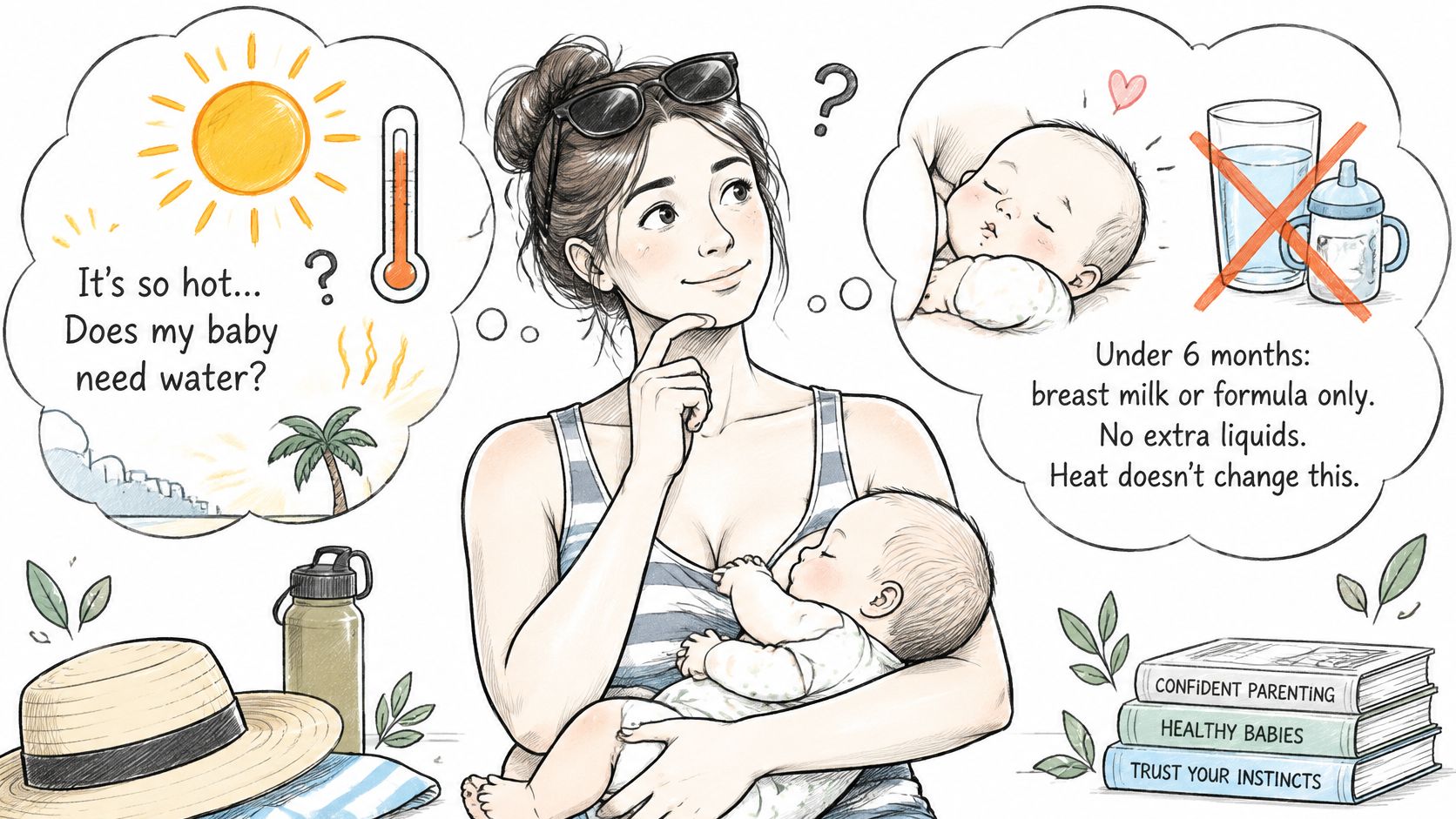
Heat doesn't produce a single, universally worded rule, especially for formula-fed babies. Parents aren't imagining the disagreement between reputable sources.
WHO guidance says babies under six months don't need additional water, even in hot weather; its breastfeeding questions and answers recommends an additional breastfeed when an exclusively breastfed baby seems thirsty. The NHS drinks and cups guidance allows small amounts of cooled, boiled water between feeds for formula-fed babies in hot weather, but doesn't provide a specific amount.
The missing amount matters
“Small amounts” leaves a practical gap. A parent may picture a sip, while a grandparent pictures a bottle. Neither caregiver should have to invent an amount or decide independently when heat requires a medical call.
The useful question for your pediatrician is specific: “Given our baby's feeding method and the weather we're experiencing, should anything change?” Feeding method, local clinical guidance, heat exposure, and possible dehydration all belong in that conversation.
While seeking guidance, simple comfort measures include using a cool room and light clothing. General infant-feeding guidance favors additional breast milk or correctly prepared formula rather than replacing a feed with water.
Share observations, not guesses
A shared caregiver log can keep related details together:
- Milk feeds. Record bottle amounts or breastfeeding sessions and any unusual difficulty.
- Wet diapers. Note changes from the baby's familiar pattern.
- Temperature. Distinguish a measured body temperature from a warm room or outdoor conditions.
- Caregiver observations. Describe what happened, such as refusing a usual feed, rather than labeling the baby dehydrated.
A record helps caregivers describe the situation. It doesn't diagnose dehydration or decide the treatment.
Bring the heat question to your pediatrician, particularly for a formula-fed baby. Write down their response so parents, partners, grandparents, nannies, and daycare follow the same individualized guidance instead of choosing between conflicting general recommendations.
When Illness Changes the Answer
A baby with vomiting, diarrhea, fever, or possible dehydration may need a clinician-directed fluid plan, not a household decision about water. Illness changes the question from routine cup practice to how the baby should be assessed and supported.
Plain water isn't automatically the right response to lost fluids. A clinician may recommend an oral rehydration solution or another feeding approach, but caregivers shouldn't improvise a treatment, mix homemade solutions, or assume that advice for an older child applies to an infant.
A handoff during a sick night
Say a nanny notices that a baby feels unwell overnight and measures a fever. Instead of introducing water, the nanny contacts the parent and pediatrician promptly, records the time and measured temperature, and notes whether the baby accepts their usual feed. Feeding should follow the current plan while the clinician gives further guidance.
The record should describe what happened without delaying the call:
- What changed. Note vomiting, diarrhea, unusual feeding behavior, or a change in wet diapers.
- What was offered. Record the usual feed and whether the baby accepted it.
- What the clinician said. Write down the fluid plan, follow-up instructions, and any advice about seeking urgent care.
Calling for guidance is a normal part of caring for a sick baby. It isn't evidence that a caregiver has done something wrong. If the baby appears seriously unwell, seek urgent medical help rather than waiting to complete a log.
Don't let a new caregiver inherit uncertainty
Anyone taking over care should receive the current feeding instructions directly. A vague handoff such as “try to get more fluids in” leaves too much room for interpretation.
Changes after starting solids can also raise questions. Our discussion of constipation after starting solids can help you organize observations for the pediatrician, not choose a water treatment yourself.
This is educational information, not medical advice. Illness and hydration decisions belong to your pediatrician; a lactation professional can also support breastfeeding questions. Keep their instructions with the shared record so the next caregiver doesn't have to guess.
Confirm the Right Time for Your Baby Before Offering Water
You don't need to resolve every possible feeding question today. A short, shared plan is more useful than collecting conflicting advice.
-
Write down your baby's current stage. Note whether they're still exclusively milk-fed, beginning first foods, or moving into toddler meals. Include any clinician-directed feeding instructions.
-
Prepare specific questions. Ask your pediatrician about water amounts, hot weather, cup readiness, and what to do during illness. Bring breastfeeding concerns to a lactation professional as well.
-
Agree on a shared record. Parents, partners, grandparents, nannies, and daycare staff should know where to find the current plan and record what happened.
We started Cradlo at 2am, after repeated texts between two tired parents asking whether the other had already fed the baby. In our shared tracker, every feed, nap, and diaper logged by any caregiver shows up instantly for everyone, keeping everyday care visible across handoffs.
There isn't a single individualized answer for every baby. A clear record and your pediatrician's guidance offer a dependable way to make decisions without relying on memory or feeling pressured to start water early.
Cradlo gives families, nannies, and daycares a shared place to record feeds and care notes, so everyone can follow the baby's clinician-confirmed plan. Visit Cradlo to explore the shared tracker and its 7-day free trial on the monthly plan.